
Diseases
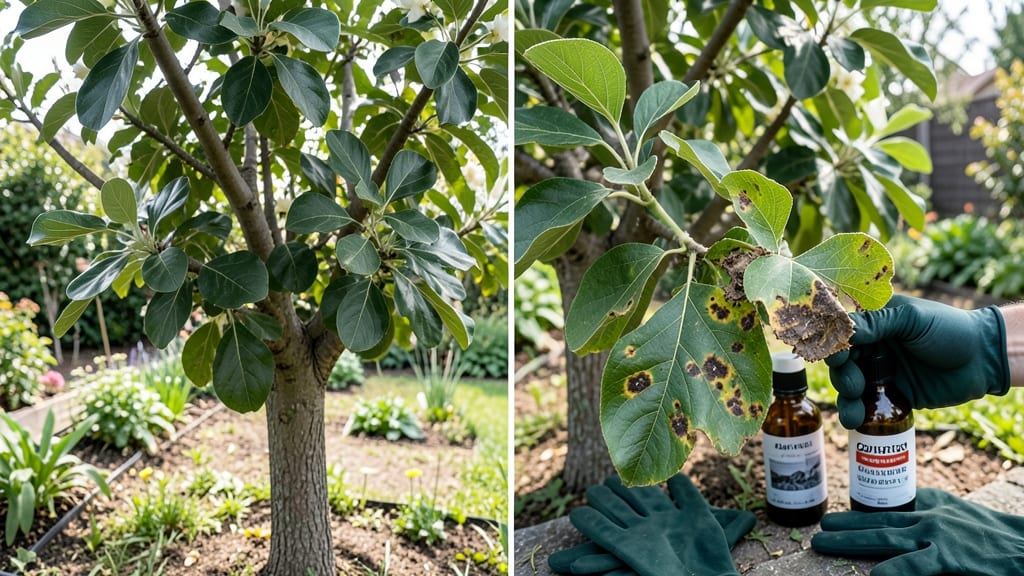
Quince trees with leaf blight look like they’ve been attacked by a mysterious disease—brown spots spreading, leaves curling, and fruit dropping before ripening. 🌿 I’ve seen this happen three times in my backyard, and I’ve learned the 7-day rescue plan that stops it without harsh chemicals.
The key is acting fast before the fungus takes over.
Most leaf blight starts with Guignardia or Cercospora fungi, thriving in damp, warm conditions. You’ll spot small brown spots with yellow halos that grow into larger patches, often on older leaves first.
The confusion? Bacterial blight looks similar, but it oozes instead of just spreading. Prune infected branches immediately and dispose of them—don’t compost them—and space out watering to keep foliage dry.
Within a week, you can reverse the damage with a mix of copper fungicide (for severe cases) and neem oil spray (organic option). Add mulch to improve airflow, and thin dense branches to reduce humidity.
Resistant cultivars like ‘Melee’ quince handle stress better, but even sensitive varieties recover if you catch it early. The goal? Save your tree and next year’s harvest.
This works in zones 5-9, but adjust timing for rainier climates—leaf blight loves moisture. The secret? Vigilance. Check leaves weekly during peak growing months, and you’ll spot trouble before it spreads. Trust me, your quince tree will thank you.
Root Causes of Leaf Blight
Quince leaf blight isn’t just a random plant pest—it’s a symptom of specific environmental and biological stressors that create the perfect storm for fungal or bacterial pathogens. Understanding these triggers is the first step to stopping the spread. Let’s break down the why behind this destructive disease.
Fungal pathogens like Guignardia aesculi (a common cause of leaf blight) thrive in high humidity and prolonged leaf wetness. Here’s how it happens:
- Poor air circulation: Dense foliage or crowded quince trees trap moisture, creating a damp microclimate that fungi love. 🌧️
- Rain or overhead watering: Water droplets linger on leaves for hours, giving spores time to germinate and infect. Splashing water can even spread spores from infected to healthy leaves.
- Morning dew: While natural, dew on leaves that stays until late morning (especially in cool, cloudy weather) extends the fungal “window of opportunity.”
Actionable insight: If your quince is in a shady, low-lying area, it’s at higher risk. Fungi need moisture + warmth—remove one, and you disrupt their lifecycle.
A quince tree under stress is like an open door for pathogens. Common stressors that invite leaf blight include:
| Stressor | How It Helps Fungi |
|---|---|
| 🌞 Sunburn or nutrient deficiency | Weakened leaves can’t fight off infections. Yellowing or scorched foliage signals poor health. |
| 💧 Overwatering or drought | Both extremes disrupt root function, making the tree vulnerable. Fungi exploit imbalanced moisture levels. |
| 🪴 Physical damage (pruning wounds, hail) | Open wounds provide entry points for spores. Fungi like Venturia (another blight culprit) invade through cuts. |
| 🐛 Pest infestations (aphids, mites) | Pests damage leaves and spread fungal spores on their bodies. Aphids, for example, excrete honeydew—a fungal buffet. |
Pro tip: A healthy quince tree with strong bark and vibrant leaves can often resist blight. Focus on balanced care to bolster defenses.
Leaf blight spores are everywhere—in soil, air, and even on tools. But they only cause disease when conditions align. Here’s the science:
- Primary spores: Fungi like Guignardia produce ascospores in infected leaves or fruit mummies (dried-up blighted fruit). These spores wait in dormant structures until wet conditions trigger release. 🌧️➡️🍃
- Secondary spores: Once active, fungi release conidia (asexual spores) that spread rapidly in humid air. A single infected leaf can produce thousands of spores in days.
- Wind and water as vectors: Spores hitch rides on raindrops or breezes, landing on healthy leaves to start new infections.
Key takeaway: If your quince was near an infected tree last season, spores may still lurk in mulch, bark, or even the soil. Cleanup is critical to break the cycle.
Not all soil is equal when it comes to blight risk. These factors tip the scales toward fungal dominance:
- Compacted or waterlogged soil: Poor drainage forces roots to struggle, weakening the tree’s immune response. Fungi love soggy conditions.
- High organic matter without balance: While compost is great, too much can create a fungal-friendly environment. Aim for a mix of organic and inorganic matter.
- Acidic soil (pH < 6.0): Some blight-causing fungi prefer acidic conditions. Test your soil—amending with lime may help.
💡 Quick fix: Improve drainage with gypsum or perlite, and mulch with straw or wood chips (not fresh sawdust, which can introduce spores).
Quick Fixes for Blighted Quince Leaves
Blighted quince leaves can feel like a losing battle, but with the right approach, you can restore your tree’s health in just 7 days—without harsh fungicides. The key is acting fast, targeting the root cause, and preventing future outbreaks.
Below, we break down practical solutions for each common trigger of leaf blight, from fungal infections to environmental stress, plus prevention tips to keep your quince thriving.
If your quince leaves are yellowing, browning, or covered in black spots, a fungal infection like Venturia or Alternaria is likely to blame. Here’s how to stop the spread and revive your tree:
🔥 Step 1: Prune Infected Leaves Immediately
- Remove all blighted leaves, branches, and fruit (even if they look slightly off).
- Bag and discard them in the trash (not compost)—fungal spores can survive in soil.
- Sterilize pruners with rubbing alcohol (70%+) or a bleach solution (1 part bleach to 9 parts water) between cuts.
🍳 Step 2: Apply a Natural Fungicide Spray Skip the chemicals and try these effective, plant-safe alternatives: - Baking Soda Spray (💡 Best for prevention) Mix 1 tsp baking soda + 1 tbsp vegetable oil + 1 tsp mild liquid soap in 1 gallon of water.
Spray early morning or evening (avoid direct sun). Reapply every 5–7 days until new growth appears. - Neem Oil Solution (🌡️ Kills spores on contact) Combine 1 tbsp neem oil + 1 tsp mild soap + 1 quart water.
Shake well and spray undersides of leaves (where spores hide). Repeat every 7–10 days. - Copper Fungicide (Organic Option) (✨ For severe cases) Use copper soap (like Bonide Copper Fungicide)—follow label instructions. It’s safe for edible fruit but avoid spraying when bees are active.
👨🍳 Step 3: Improve Air Circulation
Fungi love humid, stagnant air. To dry out leaves faster:
- Thin out dense branches to allow sunlight and airflow.
- Space plants 6+ feet apart if growing multiple quinces.
- Water at the base (not overhead) to keep foliage dry.
If leaves are wilting, curling, or turning crispy (but no spots), your quince may be struggling with environmental factors:
💡 Fix Overwatering or Poor Drainage - Check soil moisture—stick your finger 2 inches deep.
If damp, hold off watering. - Amend soil with compost or perlite to improve drainage. - Mulch around the base (2–3 inches of wood chips or straw) to retain moisture without soggy roots.
🔥 Beat Heat & Sun Scorch
- Provide afternoon shade with a light cloth or shade cloth (30–50%) if temps exceed 90°F (32°C).
- Mist leaves lightly in the early morning (avoid evening to prevent fungal growth).
- Water deeply 2–3 times per week (not daily shallow watering).
Once your quince recovers, keep it blight-free with these proactive steps:
| Prevention Tip | How to Do It |
|---|---|
| 🌱 Plant in the Right Spot | Choose a location with full sun (6+ hours/day) and well-draining soil. |
| 🍂 Clean Up Debris | Remove fallen leaves, fruit, and weeds from the base weekly in fall/winter. |
| 🌡️ Monitor Humidity | Use a dehumidifier nearby or increase airflow with fans (if indoors). |
| 🌿 Strengthen the Tree | Fertilize in early spring with balanced organic fertilizer (10-10-10). |
| 🛡️ Spray Preventively | Apply neem oil or baking soda spray every 2 weeks during spring blooms. |
Follow this simple schedule to see results fast:
- Day 1: Prune infected parts + sterilize tools.
- Day 2: Apply neem oil or baking soda spray.
- Day 3–5: Check for new growth—reapply spray if needed.
- Day 6: Improve airflow (prune, mulch, adjust watering).
- Day 7: Inspect for progress—if blight persists, switch to copper fungicide.
💡 Pro Tip: The sooner you act, the better the recovery. Most quinces bounce back in 7–14 days with consistent care—no fungicides needed! If the problem keeps returning, consider resistant varieties like ‘Champion’ or ‘Meechan’ quince, which handle humidity better.
Frequently asked questions
How can I tell if my quince has leaf blight vs. another disease?
Leaf blight typically shows as brown or black spots with yellow halos that grow larger over time. Unlike bacterial blight, it won’t ooze, and the spots usually appear on older leaves first. For confirmation, check the undersides of leaves—blight often starts there. If you see powdery white residue, it might be powdery mildew instead.
Will pruning infected leaves spread the disease to healthy parts?
No, pruning removes the disease—just sterilize your tools between cuts with rubbing alcohol or bleach solution. Bag the infected leaves and dispose of them (don’t compost) to prevent spores from lingering. The key is cutting just above a healthy bud to encourage new growth.
Can I still harvest fruit from a blighted quince tree?
Only if the fruit is unblemished and healthy-looking. Blight can spread to fruit, causing it to rot prematurely. Remove any spotted or discolored fruit immediately. For next year, consider resistant varieties like ‘Champion’ quince if blight is recurrent.
How often should I apply neem oil spray for prevention?
Apply neem oil every 7–10 days during spring and summer when humidity is high. Mix 1 tbsp neem oil + 1 tsp mild soap + 1 quart water and spray evenly on both leaf sides. Stop spraying 2 weeks before harvest to avoid residue on fruit.
Why does my quince keep getting blight even after treatment?
Persistent blight often means spores remain in the soil or mulch. Replace old mulch, improve drainage, and rotate to a different location if possible. Some quince varieties are more susceptible—try ‘Meechan’ or ‘Vranja’ for better resistance in humid climates.