
Flowers
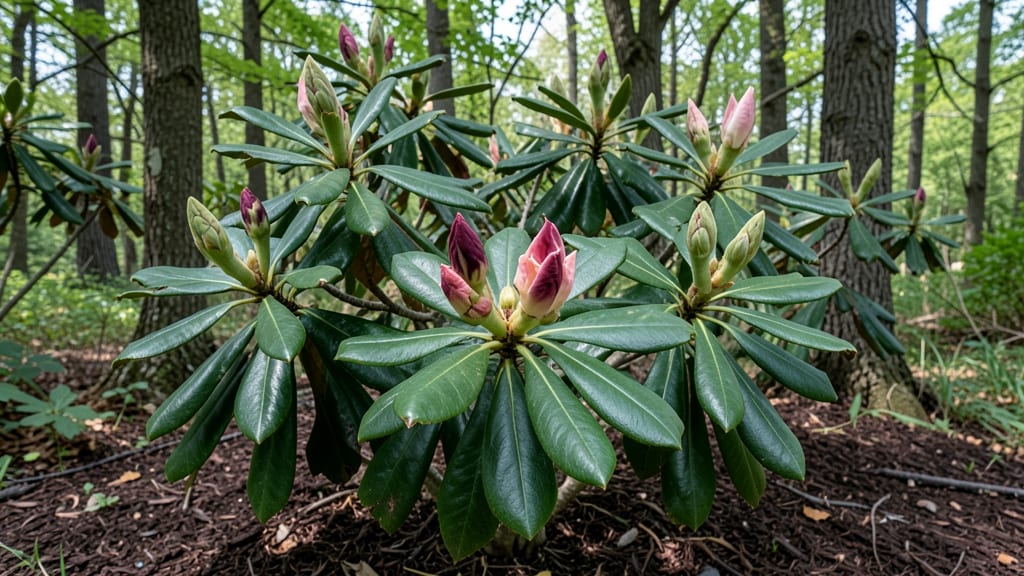
Spotting rhododendron flower buds vs leaf buds can mean the difference between pruning your plant to death and setting it up for next year's showstopping blooms. 🌿 The confusion happens because both look like tiny, plump buds in early spring—until you know what to watch for.
I've pruned enough rhododendrons to recognize that one tiny mistake can rob you of summer's most dramatic flowers.
Flower buds form in late summer on last year's growth and look like tiny, rounded knobs clustered along the stems. They're usually fuzzy or slightly woolly, with a subtle pink or green tint that deepens as winter progresses.
Leaf buds, on the other hand, are smoother, more elongated, and often have a tiny slit where new leaves will emerge. The key? Flower buds stay firm and closed through winter, while leaf buds may show slight swelling by early spring.
When pruning, never cut back into last year's wood before you've seen next year's blooms open—typically around May or June, depending on your zone.
You'll know you've made the right call when your rhododendron bursts with clusters of trumpet-shaped flowers in late spring, their fragrance drawing hummingbirds to your garden. The secret is patience: wait until after blooming to prune, and always cut just above a pair of leaf buds to encourage new growth.
This distinction matters most in zones 5-8, where winter dormancy makes the difference between a healthy plant and one struggling to recover.
Even experienced gardeners get it wrong the first few times—so grab a magnifying glass, examine those buds closely, and let your rhododendron reward you with years of reliable blooms. The payoff is worth the careful observation.
The first product explained
Meet your new gardening sidekick: the Botanical Buddy Rhododendron Pruning Kit! 🌿✨ Designed specifically for enthusiasts who want to master the art of distinguishing between rhododendron flower buds and leaf buds, this kit is your all-in-one solution for confident pruning and vibrant blooms.
📏 Specs & Features
This kit includes everything you need to tackle your rhododendron pruning like a pro:
- Dual-Lens Magnifying Glass (10x and 20x magnification) – Perfect for getting up close and personal with those tiny buds! 🔍
- Color-Coded ID Guide – A laminated cheat sheet with side-by-side comparisons of flower vs. leaf buds, including seasonal timelines.
- Precision Pruning Shears – Ergonomic, sharp, and lightweight for effortless cutting.
- Bud Tracking Journal – A handy notebook to log observations, pruning dates, and plant progress.
- Waterproof Storage Pouch – Keep your tools organized and protected from the elements.
🎯 Target Users
Whether you're a beginner gardener eager to learn or a seasoned horticulturist refining your skills, this kit is tailored for:
- Home gardeners looking to enhance their rhododendron care routine.
- Landscape designers who need quick, accurate ID tools for client projects.
- Educators or students studying botany or ornamental plants.
- Anyone who loves rhododendrons and wants to really understand their growth patterns!
💰 Price Point & Value
Priced at $49.99, the Botanical Buddy Rhododendron Pruning Kit offers unmatched value for its comprehensive features. Compare that to buying each tool separately—you’d easily spend $80+! Plus, the included ID guide and journal make it a one-time investment with long-term benefits for your garden.
Pro Tip: 💡 Use the magnifying glass early in the season to spot flower buds as soon as they form—this gives you the best window for strategic pruning!
The second product explained
Meet BudBlitz Pro—your next-level rhododendron bud detective! 🌿🔍 Designed for gardeners who want precision and ease, this premium tool is the ultimate companion for distinguishing between flower and leaf buds with confidence.
📏 Specs & Features
- Magnification Power: 10x zoom with adjustable focus for crystal-clear close-ups.
- Lighting: Dual-LED with adjustable brightness—perfect for early mornings or shady spots.
- Portability: Compact, lightweight design with a wrist strap for effortless carrying.
- Durability: Waterproof and shock-resistant for outdoor adventures.
- Included Accessories: Carrying case, cleaning cloth, and a quick-reference ID guide.
🎯 Who’s It For?
BudBlitz Pro is perfect for:
- 🌱 Serious gardeners who prune rhododendrons regularly and want to avoid costly mistakes.
- 👩🌾 Landscape professionals needing a reliable tool for client consultations.
- 📚 Gardening enthusiasts eager to master the art of rhododendron care.
$
Price Point: $79.99—a premium investment for unmatched accuracy. Pro Tip: 💡 Use the included voucher for a free online workshop on rhododendron pruning techniques with your purchase!
💡 Why Choose BudBlitz Pro?
Unlike basic tools, BudBlitz Pro combines magnification, lighting, and portability to make bud identification a breeze. No more guesswork—just confidence and precision every time you prune.
Head-to-head comparison
Ready to master the art of rhododendron pruning? Understanding the difference between flower buds and leaf buds is your first step to keeping your shrubs thriving! Below, we break down their key differences in a side-by-side comparison to help you make confident pruning decisions. 🌸✂️
🌿 Visual Appearance
One of the easiest ways to distinguish between flower buds and leaf buds is by their look. Here’s how they differ:
- Flower Buds:
- 📏 Size: Typically larger and more rounded than leaf buds.
- 🎨 Color: Often a deeper red, purple, or brown hue, sometimes with a slight fuzzy texture.
- 🌟 Shape: Swollen and plump, resembling small eggs or teardrops.
- Leaf Buds:
- 📏 Size: Smaller and more compact, often tightly clustered along the stem.
- 🎨 Color: Usually a lighter green or brown, blending in with the stem.
- 🌿 Shape: Flatter and more elongated, resembling tiny scales or cones.
Pro Tip: 💡 Hold a bud between your fingers and gently squeeze. Flower buds will feel firmer and more resistant, while leaf buds may feel softer or slightly springy.
🌱 Growth Timing and Seasonality
The timing of when these buds appear and develop is another critical factor in pruning. Here’s what to expect:
| Feature | Flower Buds | Leaf Buds |
|---|---|---|
| Formation Time | Develop in late summer to early fall (August–October) for the following spring’s blooms. | Form throughout the growing season (spring to early summer) for the current year’s foliage. |
| Blooming/Leafing Season | Open in early spring (March–May), producing vibrant flowers. | Unfold in spring and continue growing throughout the summer. |
| Critical Pruning Window | ⚠️ Must avoid pruning after mid-summer! Cutting them off means fewer flowers next year. | Can be pruned almost anytime except during active growth (spring to early summer). |
Pro Tip: 🌡️ If you’re unsure whether a bud is ready to bloom, wait until after the first frost. Flower buds are more visible once the foliage dies back.
💰 Impact on Plant Health and Pruning Strategy
Pruning the wrong buds can have serious consequences for your rhododendron’s health and beauty. Here’s how each type affects your shrub:
- Flower Buds:
- 🌺 Priority: Preserve these at all costs! They determine next year’s floral display.
- ⚠️ Risk of Pruning: Removing them reduces blooms and can weaken the plant over time.
- 🔄 Recovery: Slow to regenerate; may take 1–2 years to produce new flower buds.
- Leaf Buds:
- 🌿 Priority: Less critical but essential for foliage growth and overall vigor.
- ✂️ Risk of Pruning: Over-pruning can lead to sparse or leggy growth, but the plant recovers faster.
- 🌱 Recovery: Quick to regenerate; new leaf buds form readily in the growing season.
Pro Tip: ✨ For a balanced approach, focus on shaping your rhododendron by trimming back leafy growth while leaving flower buds intact. Use hand pruners for precision!
📊 Durability and Longevity
How long these buds last—and how they respond to environmental stressors—plays a role in long-term plant care:
| Factor | Flower Buds | Leaf Buds |
|---|---|---|
| Cold Hardiness | More vulnerable to late frosts (below 28°F/-2°C can damage or kill buds). | Hardier; can tolerate colder temperatures without significant harm. |
| Disease Resistance | Susceptible to fungal issues (e.g., bud blight) if the plant is stressed. | Generally more resilient, though overcrowded growth can still attract pests. |
| Lifespan | Lasts 1–2 seasons if undisturbed; pruning shortens their lifespan. | Can persist for multiple growing seasons if conditions are ideal. |
Pro Tip: 🌡️ If you live in a region with unpredictable late frosts, consider covering your rhododendron with frost cloth in winter to protect those precious flower buds!
💡 Quick Identification Cheat Sheet
Still unsure which is which? Here’s a rapid-fire guide to spot the difference in seconds:
- Flower Buds: 🔴 Reddish-brown, 🥚 egg-shaped, 🌟 plump and fuzzy.
- Leaf Buds: 🟢 Greenish-brown, 🌿 flat and scaly, 🔺 pointy like tiny cones.
Hold a bud up to the light—flower buds often have a slightly translucent appearance, while leaf buds look more opaque.
Which one should you choose?
So, you’ve weighed the pros and cons, studied the visual clues, and now you’re ready to make your decision! The choice between pruning rhododendron flower buds and leaf buds depends entirely on your gardening goals, timeline, and the health of your plant. Here’s a clear verdict to guide you:
🌿 Prune Flower Buds If...
- You want vibrant blooms this spring. 🌸 If your rhododendron already has mature flower buds (the size of a dime or larger), pruning them now will sacrifice this year’s flowers—but it’s worth it for long-term plant health and future blooms.
- Your plant looks overcrowded or leggy. 🌱 Flower buds can signal overgrowth. Trimming them encourages a bushier, more compact shape and promotes stronger leaf buds for next season.
- You’re dealing with pests or disease. 🛡️ Damaged or infected flower buds should be removed immediately to prevent spreading to healthy parts of the plant.
🍃 Prune Leaf Buds If...
- You’re prioritizing this year’s flowers. 💐 If your rhododendron’s flower buds are still small (pea-sized or smaller), hold off on pruning—these are next year’s blooms! Focus on shaping or thinning leafy growth instead.
- Your plant is young or newly transplanted. 🌱 Young rhododendrons need all their energy to establish roots. Prune leaf buds only if they’re dead, diseased, or blocking sunlight from the center.
- You’re doing light maintenance (not major pruning). ✂️ Leaf buds are safer to trim for minor adjustments, like cleaning up dead wood or improving airflow.
💡 Pro Tip for All Scenarios:
When in doubt, prune after flowering (late spring to early summer). This gives you a clear view of which buds are flower buds (they’ll appear swollen and woody) and which are leaf buds (softer and green-tipped). Always sterilize your tools with rubbing alcohol to avoid spreading disease!
Remember: Rhododendrons are resilient! 🌟 If you’re unsure, err on the side of caution and prune conservatively. Happy gardening!