
Pests and Diseases
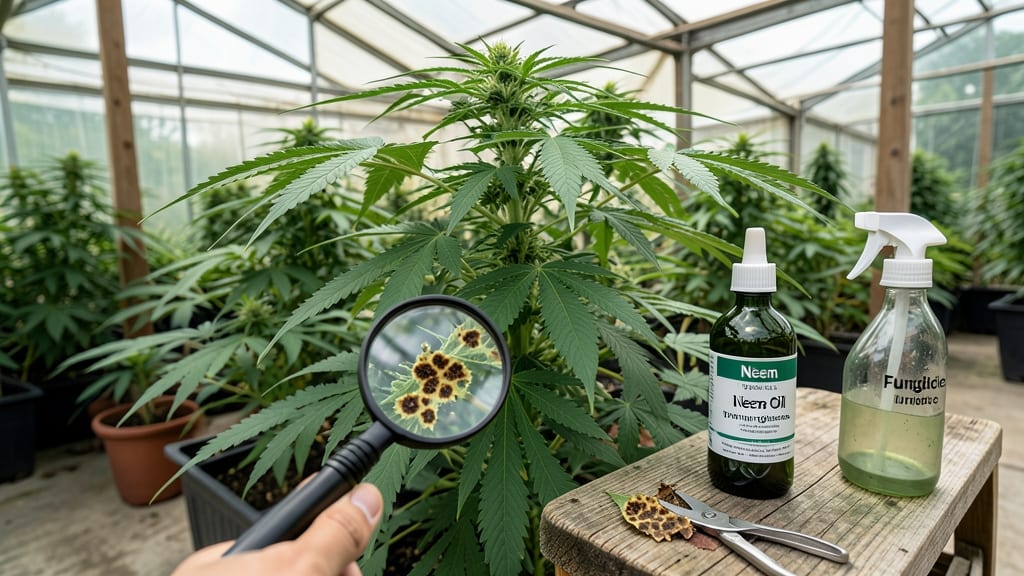
When those dark, bullseye-like spots appear on your cannabis leaves, septoria leaf spot is already winning the battle. 🌿 I’ve seen it turn a thriving plant into a defoliated mess within weeks if you don’t act fast—this guide stops it before it spreads to your whole crop.
The fungus thrives in warm, wet conditions, sneaking in through wounds or old leaves. You’ll spot the classic concentric rings first on lower foliage, then watch as yellow halos spread like ink in water.
The good news? Catching it early means you can save your plants with simple, targeted treatments—no harsh chemicals required.
Within 7–10 days of consistent spot-treating (neem oil, copper spray, or baking soda mix), you’ll see new growth pushing out clean and strong. The key is acting before the spots merge into a blanket of decay—your harvest depends on it.
Even better, these organic fixes prevent future outbreaks by boosting airflow and drying leaves faster. No more losing plants to a fungus that could’ve been stopped with a spray bottle and a little vigilance.
Root Causes Behind Fungal Spots
When those telltale brown or gray spots with dark borders start appearing on your cannabis leaves, Septoria leaf spot is likely the culprit. But why does this stubborn fungal infection take hold in the first place? Let’s break down the key factors that create the perfect storm for its spread.
The fungus Septoria tritici (the pathogen behind leaf spots) thrives in damp, stagnant conditions. When your cannabis plants sit in soggy soil for too long—whether from overwatering, compacted soil, or poor drainage—you’re essentially rolling out the welcome mat for spores.
- Why it happens: Excess moisture weakens plant tissue, making leaves more susceptible to infection. The fungus enters through stomata (tiny pores) or wounds, especially in humid environments.
- Actionable fix: Use well-draining soil mixes (like 60% peat/40% perlite) and ensure pots have drainage holes. Space out waterings to let the top 1–2 inches of soil dry between sessions.
Cannabis loves humidity—but too much of it (above 60–70%) without proper airflow creates a fungal paradise. Septoria spores float in moist air and latch onto leaves, especially the lower, older ones.
- Why it happens: Stagnant air traps spores near the plant, while high humidity slows evaporation, keeping leaves damp longer. Greenhouses, tents, and dense grows are hotspots.
- Actionable fix: Aim for 40–60% humidity during veg/flower. Use oscillating fans to improve airflow (even gentle movement helps). Dehumidifiers or exhaust fans can make a huge difference.
A plant under stress—whether from over-fertilizing, nutrient deficiencies, or environmental shocks—produces weaker cell walls. Septoria exploits these vulnerabilities like a thief in the night.
- Why it happens: Excess salts (from fertilizers) or deficiencies (like nitrogen or potassium) damage leaf tissue. Wounded or yellowing leaves become prime infection sites.
- Actionable fix: Flush soil with pH-balanced water (5.5–6.5) if you suspect burn. Use a balanced NPK fertilizer (e.g., 3-1-2 ratio) and avoid "feeding" stressed plants. Pro tip: 💡 Test soil moisture before fertilizing—dry soil = safe to feed.
Even a single infected leaf can spread Septoria across your entire grow if you’re not careful. Pruners, scissors, and watering cans become silent carriers of spores.
- Why it happens: Spores cling to tools and transfer to healthy plants during trimming or maintenance. Shared spaces (like grow tents) accelerate spread.
- Actionable fix: Sterilize tools with 70% isopropyl alcohol between uses. Remove infected leaves immediately and dispose of them in sealed bags (not compost). Quarantine new plants for 2 weeks.
Understanding these triggers is half the battle. The other half? Catching it early and acting fast. But first—let’s talk about how to spot the signs before it’s too late.
How to Treat and Prevent Fungal Spots
Fungal infections like septoria leaf spot can turn your cannabis crop into a battleground, but the good news? You can fight back with targeted strategies. Below, we break down how to treat existing spots and prevent future outbreaks—so your plants stay lush, healthy, and ready for harvest.
Before diving into treatments, stop the spread by acting fast:
- Remove severely infected leaves (especially those with dark, necrotic centers) and dispose of them in sealed bags (not compost).
- Isolate affected plants in a separate grow space or quarantine area to prevent spores from jumping to healthy foliage.
- Clean tools (pruners, gloves) with 70% isopropyl alcohol or a 10% bleach solution between uses.
✨ Pro Tip: If possible, sterilize the grow area with a hydrogen peroxide spray (3%) or copper-based fungicide to kill lingering spores.
Once you’ve contained the issue, treat the plants with organic or chemical fungicides depending on your preference:
🌿 Organic Solutions (Safe for Most Grows)
| Treatment | How to Use | Frequency |
|---|---|---|
| Neem Oil + Baking Soda | Mix 1 tsp neem oil + 1 tsp baking soda + 1 tsp dish soap per liter of water. Spray evenly on leaves (avoid buds). | Every 5–7 days until symptoms fade. |
| Copper Fungicide | Follow label instructions (typically 1–2 tbsp per gallon of water). Spray at dawn or dusk for best absorption. | Every 7–10 days for 3–4 weeks. |
| Potassium Bicarbonate | Dissolve 1 tbsp in 1 gallon of water + a drop of soap. Spray undersides of leaves (where spores hide). | Weekly until recovery. |
| Hydrogen Peroxide (3%) | Mix 1 tbsp per quart of water. Spray directly on spots (avoid over-saturation). | Every 3–4 days for 2 weeks. |
💊 Chemical Solutions (For Severe Cases)
If organic methods fail, synthetic fungicides can provide faster results:
- Chlorothalonil (e.g., Daconil) – Apply every 7–14 days (follow label rates).
- Propiconazole (e.g., Banner Maxx) – Use for resistant strains (apply at first sign).
- Myclobutanil (e.g., Immunox) – Effective against multiple fungal diseases.
⚠️ Warning: Always rotate fungicides to prevent resistance, and avoid spraying during flowering (chemicals can linger in buds).
A strong plant fights infections better. Strengthen your cannabis with:
- Silica Sprays (e.g., Aquasil) – Hardens cell walls to resist fungal entry.
- Seaweed Extract (Kelp) – Rich in immuno-boosting minerals like potassium and magnesium.
- Compost Tea – Introduces beneficial microbes that outcompete pathogens.
💡 Pro Tip: Reduce stress—overwatering, nutrient burns, or extreme temps weaken plants. Prune for airflow (thin dense foliage) to dry leaves faster.
Fungal spores love humidity and stagnant air. Fix these common triggers:
- Reduce humidity to 40–60% (use a dehumidifier or increase airflow with fans).
- Space plants properly (overcrowding = trapped moisture).
- Water in the morning (leaves dry faster, reducing spores).
- Avoid overhead watering (use drip irrigation or soaker hoses instead).
✨ Prevention Hack: UV-C light (254nm) can sterilize the grow space—run it for 10–15 mins daily if possible.
Once your plants recover, keep them protected with these ongoing habits:
- Rotate crops – Don’t grow cannabis in the same spot yearly (soil-borne spores build up).
- Solarize soil (if growing outdoors) – Cover soil with clear plastic for 4–6 weeks to kill fungi.
- Use resistant strains – Some cannabis varieties (e.g., Durban Poison, Northern Lights) are less prone to septoria.
- Monitor leaves weekly – Catch spots early before they spread.
Final Thought: Septoria leaf spot is manageable—but the key is speed and consistency. Start with isolation and organic sprays, then strengthen plant defenses to keep your grow fungus-free for the long haul. 🚀
Frequently asked questions
What do septoria leaf spots look like on cannabis plants?
Start with small, dark brown or gray spots (about 1/8-inch wide) that develop concentric rings resembling bullseyes. These spots often have yellow halos around them, and the centers may turn white or gray as the fungus progresses. Check lower leaves first—they’re most vulnerable.
Can my cannabis plants recover from septoria leaf spot?
Yes, if caught early! With prompt treatment (neem oil, copper spray, or baking soda mix), new growth will emerge clean within 7–10 days. Remove infected leaves immediately and maintain airflow to prevent further spread. Severe cases may require stronger fungicides, but recovery is possible with consistent care.
Will septoria leaf spot affect my cannabis buds?
Directly? Rarely—but indirectly, yes. The fungus weakens the plant, reducing yields and potency. If spots appear on fan leaves near buds, remove them immediately to prevent spores from contaminating your harvest. Always avoid spraying fungicides on buds during flowering.
How can I prevent septoria leaf spot in my grow?
Focus on airflow and dryness: Use oscillating fans, space plants properly, and water in the morning. Keep humidity between 40–60%, sterilize tools with 70% isopropyl alcohol, and rotate crops annually. Prune for better airflow and avoid overhead watering to keep leaves dry.
Are there cannabis strains less prone to septoria leaf spot?
Some varieties show natural resistance, like Durban Poison or Northern Lights. While no strain is immune, these tend to handle humidity better. For extra protection, grow in well-ventilated spaces and use silica sprays to strengthen cell walls.