
Vegetables
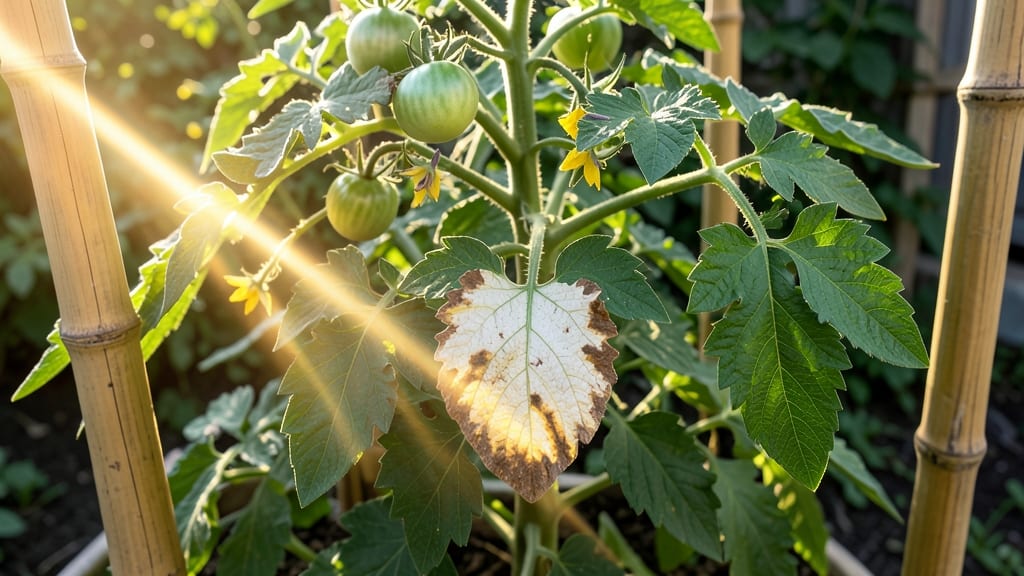
When your tomato leaves develop crispy white patches overnight, you're dealing with tomato leaf sunscald—a fast-acting but fixable problem. 🌿 I've seen this happen after moving plants too quickly from shade to full sun, or when a heatwave hits without warning.
The good news? You can often reverse the damage and prevent future scorch with simple adjustments.
The damage occurs when leaves suddenly receive too much direct sunlight after being shaded, causing cells to burst like overinflated balloons. You'll spot it as pale, papery patches or crispy edges that feel dry to the touch.
The key to fixing it starts with immediate shade relief—move plants to partial sun or use shade cloth until they recover.
Within a week of proper care, you'll see new growth pushing out from the base, and the remaining leaves will toughen up. Keep soil consistently moist (not soggy) and avoid fertilizing until the plant shows fresh green growth.
The right tomato varieties—like heat-tolerant 'Solar Fire' or 'Heatmaster'—can also help prevent future issues.
For long-term prevention, harden off seedlings gradually over 7-10 days before transplanting, and monitor weather forecasts to protect plants during sudden heat spikes. With these steps, your tomatoes will bounce back stronger than ever—and you'll spot scorch before it becomes a problem.
The Hidden Triggers Behind Leaf Damage
When your tomato plants start showing signs of crispy, white, or brown patches on their leaves—especially on the upper or exposed sides—it’s often a cry for help from the plant itself.
Understanding the root causes of leaf scorch (or what we commonly call "sunscald") is the first step to saving your harvest. Let’s break down the science behind why this happens and what’s really stressing your tomatoes.
Tomatoes are sun-loving plants, but too much of a good thing can be disastrous. When leaves receive intense, unfiltered sunlight—especially during hot afternoons—their cuticle (a waxy protective layer) can’t dissipate heat fast enough. This causes:
- Cell membrane damage: Excess heat disrupts the lipid bilayer in leaf cells, leading to oxidative stress and cell death.
- Water loss acceleration: High temperatures increase transpiration rates, drying out leaf tissue faster than roots can replenish moisture.
- Photosynthesis shutdown: Chlorophyll degrades under extreme heat, turning leaves white or necrotic (dead tissue).
Actionable clue: Look for scorch on upper leaves or those facing south (in the Northern Hemisphere) or north (Southern Hemisphere). If your plants are suddenly in a hotter microclimate (like after pruning nearby shade trees), this is your answer.
Water isn’t just about keeping soil moist—it’s about thermal regulation. When tomato plants are underwatered or experience irregular watering (e.g., deep soaks followed by drought), their leaves become vulnerable to scalding. Here’s why:
- Reduced turgor pressure: Low water content makes leaves flaccid and less able to reflect sunlight, absorbing more heat.
- Nutrient transport breakdown: Water stress disrupts the xylem (the plant’s "straws" for water/nutrients), starving leaves of critical minerals like magnesium (essential for chlorophyll).
- Soil heat reflection: Dry soil absorbs and re-radiates heat back to the plant, effectively "baking" the roots and leaves.
Pro tip: Check soil moisture 1–2 inches deep—if it’s dry, your plants are at risk. Drip irrigation or mulching (with straw or grass clippings) can stabilize soil temperature and moisture.
You might think humidity helps plants, but when it’s high (above 70%) and temperatures soar above 90°F (32°C), it creates a double-edged sword:
- Stomatal closure: Humidity tricks leaves into thinking they’re already hydrated, so they partially close stomata (pores) to reduce water loss. This traps heat inside leaf tissues.
- Fungal mimicry: The stress from heat + humidity weakens leaves, making them more susceptible to secondary infections (like early blight), which can mimic scald symptoms.
- Poor gas exchange: High humidity reduces transpiration cooling, so leaves can’t regulate their temperature efficiently.
Watch for: Scorch on lower leaves (unlike sunlight damage) or leaves with sticky residue (a sign of fungal stress). Improve airflow with pruning or spacers between plants.
A tomato plant’s ability to handle heat is directly tied to its nutritional status. Deficiencies in key minerals make leaves more permeable to heat damage. The top culprits:
| Nutrient | Role in Heat Resistance | Deficiency Signs |
|---|---|---|
| Magnesium (Mg) | Stabilizes chlorophyll and helps regulate stomata. | Yellowing between leaf veins (interveinal chlorosis), crispy edges. |
| Potassium (K) | Manages water balance and cell membrane integrity. | Brown, dead spots on leaf margins (often confused for scald). |
| Calcium (Ca) | Strengthens cell walls to prevent heat-induced collapse. | Blossom-end rot in fruits and distorted new leaves. |
Quick fix: Apply a balanced fertilizer (like 10-10-10) or Epsom salt (for magnesium) during watering. Preventative tip: Soil tests can reveal hidden deficiencies before scald strikes.
Tomatoes are adaptable, but they can’t handle rapid temperature swings. If your plants were thriving in 75°F (24°C) weather and suddenly hit 100°F (38°C) overnight, their leaves may:
- Lose protective pigments: Heat shocks can degrade anthocyanins (antioxidants that protect leaves), leaving them vulnerable.
- Experience hydraulic failure: Roots struggle to pull water fast enough, causing xylem cavitation (air bubbles blocking water transport).
- Develop sunken patches: Cells collapse from heat stress, creating necrotic lesions that look like scald.
Solution: Use shade cloth (30–50%) during peak heat or move containers to partial shade temporarily. Mulch also insulates roots from temperature extremes.
Fixing Scorched Tomato Leaves Fast
Now that you know the causes behind tomato leaf sunscald, let’s tackle the fixes—before it spreads or worsens. These solutions are designed to be quick, practical, and effective, whether you’re dealing with mild discoloration or full-blown leaf burn.
Here’s how to reverse the damage and prevent future scorch in your tomato plants.
If your plants are sitting in soggy soil, excess moisture blocks oxygen from roots, weakening them and making leaves more vulnerable to sunscald. Fix it fast:
- 🍳 Step 1: Let the Soil Dry Out Stop watering immediately and allow the top 2–3 inches of soil to dry completely. Use a moisture meter or stick your finger in—if it’s damp past 1 inch, wait longer.
- 👨🍳 Step 2: Improve Drainage Amend heavy or compacted soil with perlite, coarse sand, or compost (50/50 mix) to help water drain faster. For container-grown tomatoes, ensure pots have drainage holes and elevate them slightly.
- ⏰ Step 3: Water Deeply but Less Often Water only when the top inch is dry, and do it early in the day (before 10 AM) to reduce evaporation. Use drip irrigation or soaker hoses to deliver water directly to roots, avoiding leaf wetting.
- 💡 Pro Tip: Mulch with straw or wood chips to retain moisture without suffocating roots. Keep mulch 2–3 inches away from the stem to prevent rot.
If your tomatoes are suddenly exposed to harsh afternoon sun (or moved from shade to full sun), their leaves can’t adjust fast enough. Fix it with gradual shade:
- 🔪 Step 1: Provide Temporary Shade Use lightweight shade cloth (30–50%) or a breathable fabric to filter direct sun during peak hours (11 AM–3 PM). Secure it 3–4 feet above plants to avoid trapping heat.
- 🌡️ Step 2: Acclimate Plants Slowly If you’re hardening off seedlings or moving potted tomatoes outside, introduce sun gradually. Start with 2–3 hours of morning sun, then increase by 1 hour daily over 7–10 days.
- 🎯 Step 3: Prune for Better Airflow Trim lower leaves (especially those touching wet soil) to improve airflow and reduce humidity around the plant. This also helps prevent fungal issues that worsen sunscald symptoms.
Tomatoes hate sudden heat spikes (above 90°F/32°C) or cold nights. If your leaves are curling or bleaching from temperature stress, act now:
- ✨ Step 1: Use Row Covers or Cloches For garden tomatoes, drape floating row covers (made of breathable fabric) over plants during heatwaves. For potted tomatoes, move them to a shadier spot (like under a patio or tree canopy).
- 💡 Step 2: Mulch Thickly to Regulate Soil Temp Apply a 3–4 inch layer of straw or grass clippings around the base (keep it away from the stem). This keeps roots cooler and soil moisture stable.
- 🌿 Step 3: Provide Evening Watering Water deeply in the late afternoon (4–6 PM) to cool the plant and soil before nightfall. Avoid overhead sprinkling, which can increase leaf burn in hot conditions.
If sunscald appears alongside yellowing leaves, stunted growth, or leaf drop, your tomatoes might be nutrient-stressed. Fix it with a gentle reset:
- 🍅 Step 1: Test Your Soil Use a DIY soil test kit (or send a sample to a local extension office) to check pH and nutrient levels. Tomatoes thrive in pH 6.0–6.8.
- 🔄 Step 2: Flush the Soil If you’ve over-fertilized, leach excess salts by watering deeply for 10–15 minutes until water runs freely from the drainage holes.
- 💪 Step 3: Feed with the Right Nutrients Use a balanced, organic fertilizer (like 5-5-5 or compost tea) every 2–3 weeks. For scorched leaves, potassium-rich amendments (banana peel tea or wood ash) help strengthen cell walls.
Once your tomatoes recover, lock in their resilience with these long-term fixes:
- ✅ Water consistently—stick to a schedule (e.g., every 2–3 days in summer).
- ✅ Avoid wetting leaves—water at the base of the plant.
- ✅ Choose heat-tolerant varieties like ‘Solar Fire’ or ‘Heatmaster’ for hot climates.
- ✅ Prune regularly to improve airflow and reduce humidity.
- ✅ Use reflective mulch (like white plastic or aluminum foil) to bounce back some sunlight and cool roots.
Remember: Sunscald is reversible if caught early! With these fixes, your tomato plants should bounce back in 1–2 weeks, and your future harvests will stay lush, green, and scorch-free. 🍅✨
Frequently asked questions about tomato leaf sunscald
How can I tell if my tomato leaves have sunscald vs. another problem?
Look for crispy white or brown patches that feel dry to the touch, often on upper leaves facing direct sun. Unlike fungal issues, sunscald doesn't spread with dark spots or powdery residue. The edges may curl upward like burnt paper, and it typically appears suddenly after hot days or moving plants too quickly.
Will my tomato plant recover from sunscald?
Yes! With proper care, plants often bounce back in 1-2 weeks. Remove severely damaged leaves to redirect energy to healthy growth. Provide afternoon shade, water deeply at the base (not leaves), and avoid fertilizing until new green leaves appear. Heat-tolerant varieties like 'Solar Fire' recover faster than delicate types.
Can I use shade cloth permanently to prevent sunscald?
No—permanent shade cloth (especially dense types) can actually harm your plants by blocking too much light for photosynthesis. Use 30-50% shade cloth only during peak sun hours (11 AM-3 PM) during heatwaves, then remove it. For long-term protection, choose heat-resistant varieties and focus on proper watering and mulching instead.
Why does sunscald happen more in containers than in garden beds?
Container-grown tomatoes heat up faster because pots absorb and radiate more heat, and their roots have less soil mass to regulate temperature. The soil dries out quicker too, making leaves more vulnerable. Use light-colored pots, elevate containers off hot surfaces, and water more frequently than garden plants to prevent this.
Will pruning help prevent future sunscald?
Prune to improve airflow around leaves and remove crowded growth that traps heat. Focus on trimming lower leaves (they touch wet soil) and any leaves shading the main stem. Just avoid over-pruning—leave enough foliage to provide shade for developing fruits. Prune in morning hours to let wounds dry out.