
Leaf Blower
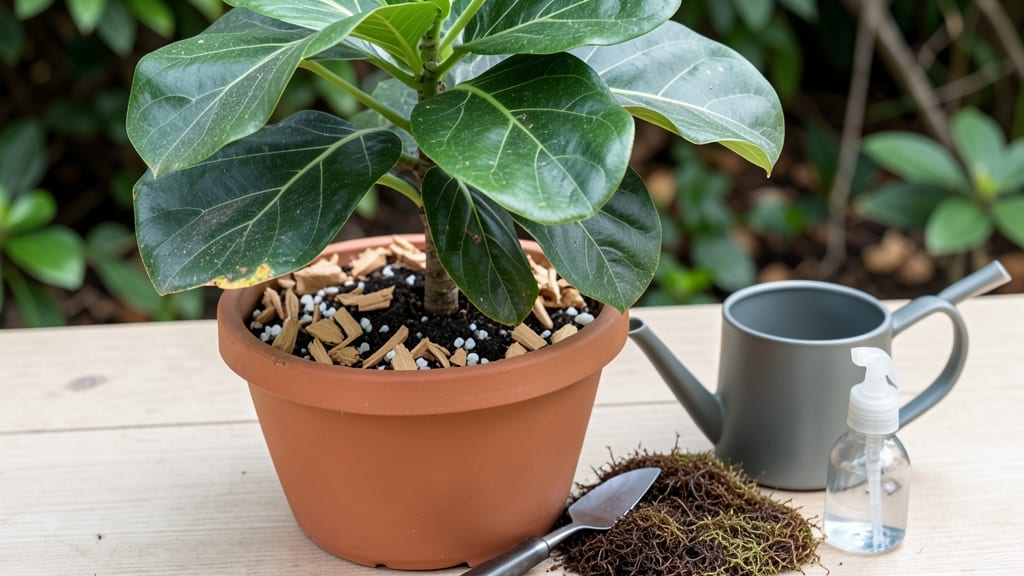
Repotting a fiddle leaf fig at the right time keeps it thriving, and the best window is spring or early summer when roots are most resilient 🌿.
Your fiddle leaf fig might be telling you it’s time for a new home—but how do you know when repotting is necessary? Ignoring signs like roots circling the pot or water draining too fast can stunt growth or even stress the plant, while moving it too soon causes unnecessary shock.
Fiddle leaf figs are sensitive to root disturbance, so timing matters more than you might think. Repotting in late winter or early spring aligns with their natural growth cycle, giving them months to recover before summer heat arrives.
Below, I’ll walk you through the 5 key signs your plant needs repotting, the seasonal timing that works best, and a step-by-step process to ensure a smooth transition without dropping a single leaf.
5 Clear signs your fiddle leaf fig needs repotting (root-bound checklist)
Your fiddle leaf fig (Ficus lyrata) thrives when its roots have room to grow, but ignoring repotting signals can lead to stunted growth or even root rot. The key is spotting root-bound symptoms early—before they become irreversible.
Unlike many plants, fiddle leaf figs hate being disturbed during repotting, so timing and technique matter just as much as recognizing the signs.
I’ve repotted dozens of fiddle leaf figs, and the most common mistake I see is waiting until the plant is already stressed. By then, the roots may be circling the pot or the soil is so depleted that recovery takes months.
Let’s break down the 5 unmistakable signs your fiddle leaf fig is begging for a new home—and how to act before it’s too late.
🌿
- 1 Roots circling the pot: Gently remove your plant from its container. If you see roots growing in a tight spiral around the soil or poking out of drainage holes, it’s time to upgrade. These root-bound roots strangle themselves, cutting off oxygen and nutrients.
- 2 Water runs straight through: If you water your plant and see water draining within minutes without absorbing into the soil, your roots have filled the pot’s space. This means no room for moisture retention, leading to dry soil and stressed roots.
- 3 Soil dries out too quickly: If you’re watering every 3-4 days but the top inch of soil is bone-dry by day 2, your roots are overcrowded. Compacted soil in a small pot holds less moisture, forcing you to water more frequently than your fiddle leaf fig prefers.
- 4 Stunted growth or yellowing leaves: Despite ideal light and water, if your fiddle leaf fig’s leaves are smaller than usual or turning yellow at the edges, it’s likely root-bound. The plant can’t absorb enough nutrients or water from the depleted soil.
- 5 Pot feels light when lifted: A root-bound fiddle leaf fig in a full pot should feel heavy due to dense roots. If it feels unusually light when lifted, the roots have filled the pot’s volume, leaving little soil to support the plant.
Pro tip: If you’re unsure whether your fiddle leaf fig needs repotting, perform the finger test. Stick your finger about 2 inches into the soil. If you hit roots within the top layer or feel resistance, it’s a clear sign to repot.
Fiddle leaf figs are sensitive, so act before you see these signs—prevention is easier than recovery.
Once you’ve confirmed your plant needs repotting, the next step is choosing the right pot size and soil mix. A pot that’s only 1-2 inches larger in diameter than the current one is ideal—any bigger, and the soil stays too wet, risking root rot.
Use a well-draining mix with perlite or orchid bark to mimic their natural habitat.
🪴
Remember, fiddle leaf figs are delicate during repotting. The shock of moving can cause leaf drop, but with the right timing (spring or early summer) and care, your plant will bounce back stronger than ever.
Keep an eye out for these signs, and you’ll avoid the heartbreak of a struggling fiddle leaf fig.
Best time of year to repot fiddle leaf figs (seasonal guide)
Timing your fiddle leaf fig’s repotting is critical for its health. These tropical plants thrive during their active growth phase, which aligns with spring and early summer. Repotting during dormancy or extreme temperatures can shock the plant and stunt growth, so understanding seasonal cues is key to success.
Fiddle leaf figs enter dormancy in fall and winter, slowing growth and reducing their ability to recover from stress. Repotting during this time forces the plant to divert energy away from natural rest, making it vulnerable to root rot or leaf drop.
Instead, wait until late winter or early spring when new growth signals the plant’s readiness.
| Season | Ideal Repotting Time | Plant Condition | Recovery Time |
|---|---|---|---|
| Spring (March-May) | ✅ Best time | Active growth, new leaves | 2-4 weeks |
| Early Summer (June-July) | ✅ Good time | Peak growth, vibrant leaves | 3-5 weeks |
| Fall (September-November) | ⚠️ Risky time | Slow growth, dormancy | 6+ weeks (slow recovery) |
| Winter (December-February) | ❌ Avoid | Dormant, minimal growth | Weak recovery, high stress |
Climate plays a huge role in recovery time after repotting. In warmer zones (USDA 9-11), fiddle leaf figs may stay active year-round, making early spring or late summer ideal windows. However, in cooler climates (USDA 6-8), aim for March or April to align with natural growth cycles.
If you miss the ideal window, don’t panic! A root-bound fiddle leaf fig can handle repotting in late summer, but choose a cooler day (60-75°F) to reduce stress. Avoid repotting during heatwaves or cold snaps, as extreme temperatures slow recovery and increase the risk of transplant shock.
Pro tip: If you repot in fall or winter, supplement with a grow light to mimic natural conditions and encourage faster recovery. Pair this with lukewarm water and humidity trays to create an optimal environment for root establishment.
Remember, your fiddle leaf fig’s growth patterns are your best guide. If you see new leaves emerging in late winter, it’s a clear signal that spring repotting is the perfect time to give your plant the fresh start it deserves. 🌱