
Planting
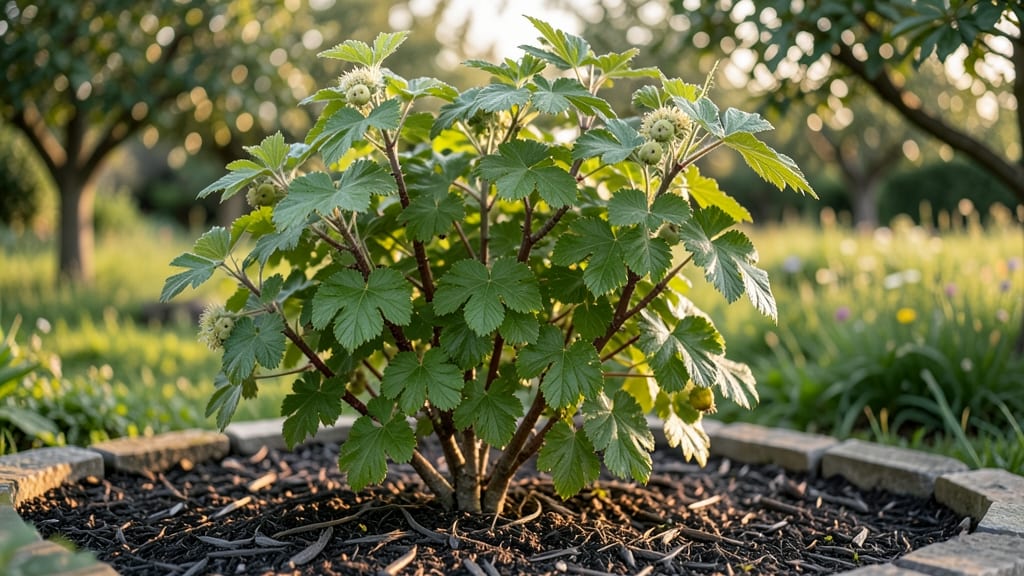
That five-leaf jagged-edge plant you’re eyeing might be the Virginia creeper—a shade-loving climber with striking foliage that turns brilliant red in fall. 🌿 I’ve grown it for years, and it’s one of the easiest plants to transform a shady corner into a lush, seasonal showstopper.
Virginia creeper thrives in partial to full shade, tolerates poor soil, and spreads quickly—just give it a sturdy trellis or let it climb a fence. Water it regularly the first year to establish roots, then let the soil dry slightly between waterings.
The key is patience; those deep green leaves with jagged edges will reward you with vibrant fall color and minimal fuss. You’ll love how it softens brick walls or covers unsightly structures while attracting birds and butterflies. Just avoid planting it near walkways—its tendrils can be persistent!
For propagation, take 4-6 inch cuttings in early summer and root them in moist soil. If you’re unsure whether it’s Virginia creeper or something else, check for five leaflets per leaf and red berries in fall—those are dead giveaways.
Always wear gloves when handling, as some similar plants (like poison ivy) can cause reactions. Let’s get growing!
Why it happens
If your five-leafed plant with striking foliage is developing jagged edges instead of smooth, lush leaves, don’t panic—this is often a sign of stress, not death. Understanding the root causes helps you take corrective action before the issue worsens.
Below, we break down the most common reasons why jagged edges appear, complete with scientific explanations and actionable fixes.
🌡️ Temperature Fluctuations & Cold Stress
Plants like five-leafed foliage varieties (such as Heuchera or Alocasia) are sensitive to sudden temperature drops or frost exposure. When nighttime temperatures dip below their ideal range—typically 40–50°F (4–10°C)—the plant’s cellular structure weakens.
This triggers a defense mechanism where the edges harden and develop jagged, crispy margins as a way to conserve moisture and energy.
- Signs: Brown or blackened jagged edges, often paired with wilting.
- Why it happens: Cold stress disrupts osmotic regulation in leaf cells, causing plasmolysis (cell membrane shrinkage).
- Fix:
- Move the plant to a protected microclimate (e.g., near a south-facing wall or under a patio cover).
- Use frost cloth in fall/winter if temperatures drop below 35°F (2°C).
- Avoid placing it in drafty areas or near AC vents.
💧 Overwatering or Poor Drainage
While underwatering can cause crispy edges, overwatering is a sneaky culprit behind jagged, uneven leaf margins. Excess moisture leads to root rot, which prevents the plant from absorbing nutrients and water efficiently. As a result, the edges become necrotic (dead tissue) due to oxygen deprivation in the roots.
| Symptom | Cause | Solution |
|---|---|---|
| Yellowing between veins with jagged brown edges | Waterlogged soil + Pythium or Phytophthora fungal attack | Repot in well-draining mix (add perlite or orchid bark). Let soil dry 1–2 inches deep before watering. |
| Mushy stems + slow growth | Compacted or clay-heavy soil | Amend soil with compost and sand (50/50 ratio). Elevate pots to improve drainage. |
Pro Tip: 💡 Stick your finger 2 inches into the soil—if it’s damp, wait. If it’s bone-dry, water deeply but avoid soggy soil.
☀️ Sunburn or Light Stress
Even shade-loving plants can develop jagged edges if exposed to intense, direct sunlight (especially after being acclimated to low light). UV radiation damages the cuticle (the plant’s protective waxy layer), leading to photoxidative stress. The edges dry out faster than the center, creating a scorched appearance.
- Signs: White or yellowish jagged patches on exposed leaf edges, often on one side of the plant.
- Why it happens: Chlorophyll breaks down under excess light, while the cuticle loses moisture through transpiration.
- Fix:
- Gradually acclimate the plant to brighter light over 2–3 weeks.
- Use sheer curtains or lattice screens to diffuse harsh afternoon sun.
- Rotate the pot quarter-turn weekly to ensure even growth.
🌿 Nutrient Deficiencies or Imbalances
Jagged edges can also signal a mineral deficiency, particularly calcium, magnesium, or boron. These nutrients are critical for cell wall integrity—without them, new growth develops weak, irregular margins.
- Calcium Deficiency (Blossom End Rot-Like Symptoms):
- Symptoms: Jagged, leathery edges on newer leaves.
- Fix: Apply calcium nitrate (1 tsp/gallon of water) or eggshell tea (crushed shells steeped in water).
- Magnesium Deficiency (Interveinal Chlorosis):
- Symptoms: Jagged edges paired with yellowing between veins.
- Fix: Use Epsom salt (1 tbsp/gallon) every 4–6 weeks.
- Boron Deficiency (Stunted Growth):
- Symptoms: Brittle, cracked edges on young leaves.
- Fix: Apply borax (1/4 tsp/gallon) once annually.
Pro Tip: 🌡️ Test your soil’s pH—most five-leafed plants thrive in 6.0–7.0. Adjust with lime (to raise) or sulfur (to lower) if needed.
🐛 Pest Damage or Pathogens
While less common, chewing insects (like slugs, snails, or spider mites) can gnaw at leaf edges, creating jagged, irregular patterns. Fungal diseases such as leaf spot can also cause edges to crinkle and darken as the pathogen invades.
| Pest/Disease | Damage Pattern | Solution | ||||||||||||
|---|---|---|---|---|---|---|---|---|---|---|---|---|---|---|
| Slugs/Snails | Large, irregular jagged holes; often at night. | Set up beer traps or use copper tape around pots. | ||||||||||||
| Spider Mites | Tiny stippled jagged edges; webbing on undersides. | Spray with neem oil or water blast (miters hate humidity). | ||||||||||||
| Leaf Spot Fungus | Dark, water-soaked jagged spots with yellow halos. | Remove infected leaves; apply copper fungicide
Reviving Your Jagged-Leaf PlantGot a five-leaf plant with jagged edges that’s not looking its best? Don’t worry—most issues can be fixed with simple adjustments. Below, we’ll tackle the most common problems and show you how to bring back that lush, vibrant foliage. Whether it’s pests, lighting, or watering, we’ve got practical solutions to get your plant thriving again. If your plant’s edges look brown, crispy, or mushy, watering is likely the culprit. 🔥 Signs & Solutions
Pro Tip: 💡 If the soil feels soggy, hold off on watering—root rot can set in quickly! Shade-loving plants like the five-leaf jagged-edge variety can suffer if they get too much direct sun or not enough light. 🍳 How to Fix Lighting Problems
Pro Tip: 🌡️ If leaves look pale or stretched, it’s time to adjust the lighting. Pests like spider mites, aphids, or mealybugs can cause jagged edges and discoloration. 👨🍳 Step-by-Step Pest Control
Prevention Tip: ✨ Regularly dust leaves and avoid overcrowding plants to deter pests. If your plant’s roots are crowded or compacted, it may struggle to absorb nutrients. ⏰ When & How to Repot
Pro Tip: 🎯 After repotting, water lightly and keep in indirect light for a week to reduce stress. By addressing these common issues, your five-leaf jagged-edge plant should bounce back with healthier, smoother foliage in no time! 🌿✨ Frequently asked questions
1
Is a five-leaf jagged-edge plant always Virginia creeper?Not necessarily! While Virginia creeper is a common match with its five leaflets and serrated edges, similar plants like poison ivy or Virginia creeper look-alikes can have the same leaf structure. The key difference? Virginia creeper has red berries in fall and isn’t toxic, while poison ivy produces white berries and causes skin reactions. Always wear gloves when handling unfamiliar plants.
2
Can I grow a five-leaf jagged-edge plant in containers?Many varieties, like Virginia creeper, thrive in containers as long as you provide a 15-20 gallon pot with drainage holes. Use well-draining soil mixed with compost, and water when the top 2 inches feel dry. Prune regularly to control growth—these plants can get quite vigorous! Just be prepared for seasonal color changes if you’re growing it for fall foliage.
3
Why are my five-leaf plant’s edges turning brown and jagged?This usually signals underwatering, low humidity, or sunburn. Check the soil moisture first—if it’s dry, water deeply. If the plant is in bright light, move it to partial shade to prevent leaf scorch. For indoor plants, try placing a pebble tray with water nearby to boost humidity. Brown edges on new growth often mean a nutrient deficiency (try Epsom salt for magnesium).
4
How do I propagate a five-leaf jagged-edge plant?For most varieties, take 4-6 inch cuttings in early summer when new growth is firm but flexible. Dip the cut end in rooting hormone (optional) and plant in moist perlite or sand. Keep the soil consistently damp and place in bright, indirect light. Roots typically form in 4-6 weeks. For woody plants like Virginia creeper, semi-hardwood cuttings work best in late summer.
5
Are there non-invasive alternatives to Virginia creeper?Yes! If you love the look but want to avoid aggressive spread, consider Boston ivy (with its palmate leaves) or Clematis varieties that have similar foliage textures. For ground cover, Liriope or Carex grasses offer jagged-edged foliage without the climbing habit. Always check your local invasive plant database before planting to ensure your choice won’t spread uncontrollably. |