
Flowers
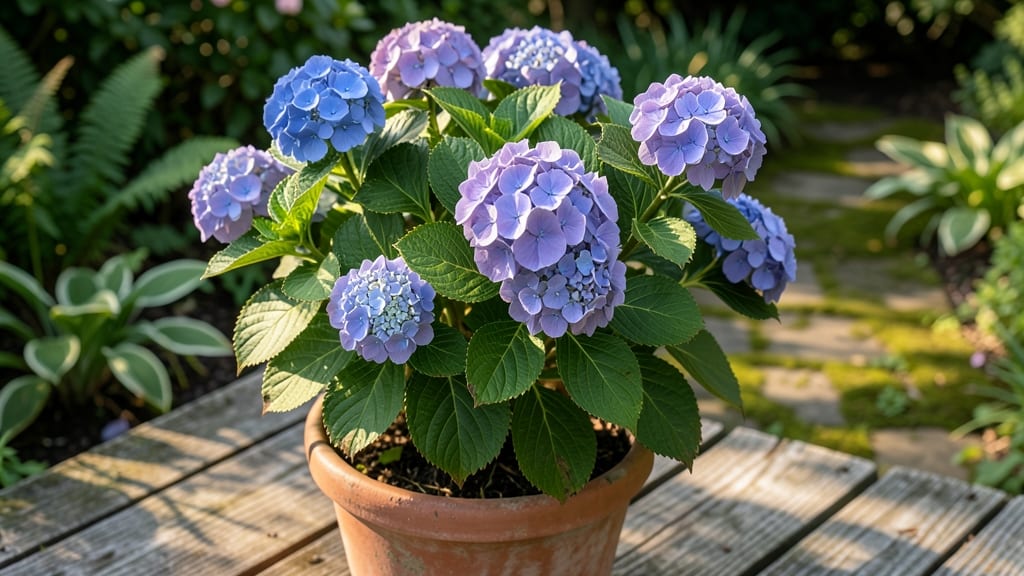
The bigleaf hydrangea flower delivers shockingly lush purple blooms that turn any shady corner into a showstopper. 🌿 I've grown them for years, and the secret to those vibrant clusters isn't just shade tolerance—it's mastering the soil pH, watering rhythm, and pruning timing that most gardeners get wrong. These plants thrive where sun-loving flowers fail, but they demand consistent moisture and well-draining soil rich in organic matter. The color magic happens when you adjust pH: acidic soil (5.5 or lower) produces blue blooms, while alkaline (7.0+) turns them pink. My plants always bloom bigger when I add a handful of lime or sulfur at planting time. By late summer, you'll be snipping stems for bouquets that last weeks in a vase. The foliage stays deep green all season, and with proper winter care, these hydrangeas return year after year with even more dramatic blooms. Perfect for woodland gardens, foundation plantings, or containers on shaded patios. Here's how to keep yours thriving through every season!
📚 In This Guide
- What you need
- Instructions
- Tips and common mistakes
- Wrapping up and next steps
What you need
- ● Bigleaf hydrangea plant: Choose a healthy nursery-grown specimen (bare-root or potted) with at least 3-5 mature buds.
- ● Well-draining soil: Mix 1 part garden soil with 1 part compost or peat moss and 1 part perlite/sand (for aeration).
- ● Organic mulch: 2-3 inches of shredded bark, wood chips, or pine straw to retain moisture and regulate soil temp.
- ● Slow-release fertilizer: A balanced 10-10-10 or acid-loving plant formula (e.g., 16-4-8) to encourage vibrant blooms.
- ● Watering can or hose with a gentle spray nozzle: Hydrangeas love consistent moisture—aim for 1-1.5 inches per week.
- ● Garden trowel or spade: For planting and soil amendments.
- ● Pruning shears: Sterilized shears for shaping and deadheading (choose bypass pruners for clean cuts).
- ● Garden gloves: Protect your hands from thorns and rough soil.
- ○ pH testing kit (optional but helpful): Bigleaf hydrangeas thrive in acidic soil (pH 5.2–6.0)—adjust with sulfur or aluminum sulfate if needed.
- ○ Stakes or support (optional): For taller varieties (e.g., ‘Nikko Blue’) to prevent flopping in wind.
- ● Sunlight: Partial to full shade (3–6 hours of dappled light daily). Avoid harsh afternoon sun.
- ● Space: Plant 3–5 feet apart (depending on variety) for airflow and growth.
- ● Water source: Ensure easy access to water, especially during establishment (first year).
How to grow bigleaf hydrangeas with stunning purple blooms
Here's the straightforward approach I use to grow hydrangeas that burst with deep purple color every season.
🪴 Step 1: Choose the Perfect Planting Spot
Bigleaf hydrangeas thrive in partial shade—think morning sun with afternoon shade or dappled light under trees. I always plant mine where they get 3-6 hours of sunlight daily, protected from harsh afternoon rays that can scorch leaves. The key is moist, well-draining soil—they hate soggy roots but need consistent moisture to produce those vibrant blooms.
Dig a hole twice as wide as the root ball but only as deep as the container it came in. This prevents burying the stem too deep, which can cause rot. Loosen the edges of the root ball gently before placing it in the hole—this encourages roots to spread outward instead of circling.
💧 Step 2: Amend Soil and Plant for Optimal Growth
Mix 3 inches of organic compost into the bottom of the planting hole—this gives roots a nutrient boost right where they need it most. Bigleaf hydrangeas love slightly acidic soil (pH 5.5-6.2) for those deep purple blooms. If your soil is neutral or alkaline, add 1 cup of peat moss to the hole to lower the pH slightly.
Backfill the hole with native soil, pressing gently to remove air pockets. Water deeply right after planting to settle the soil and eliminate gaps. You'll know it's right when the soil surface looks slightly damp but not muddy. Mulch with 2-3 inches of shredded bark around the base, keeping it 6 inches away from the stem to prevent rot.
☀️ Step 3: Water and Fertilize for Vibrant Blooms
Water 1-2 times per week during the first growing season, aiming for 1-1.5 inches of water weekly. Let the top 2 inches of soil dry out between waterings—hydrangeas hate drought but won't tolerate waterlogged roots. In containers, water every 2-3 days in hot weather, checking that the soil feels moist but not soggy.
Feed with a balanced, slow-release fertilizer (10-10-10) in early spring, then switch to an acid-loving plant fertilizer in late spring to encourage blooming. I avoid high-nitrogen fertilizers—they produce lots of leaves but fewer flowers. Watch for new growth in spring—that's your signal to start regular feeding.
✂️ Step 4: Prune for Health and More Flowers
Prune hydrangeas right after flowering (late summer to early fall) to shape the plant and encourage next year's blooms. Remove dead or crossing branches first—these compete for nutrients and block airflow. Cut back last year's flower stems by half their length to promote bushier growth and more blooms.
Never prune in late winter or early spring—you'll cut off the current year's flower buds. If you see overly leggy growth, trim back the longest stems by 1/3 to balance the plant. Hydrangeas are forgiving, but never remove more than 1/3 of the plant at once—this stresses them unnecessarily.
🌿 Step 5: Overwinter for Next Year's Blooms
Mulch heavily with 4-6 inches of straw or leaves in late fall to protect roots from freezing temperatures. Bigleaf hydrangeas are hardy in USDA zones 5-9, but young plants benefit from extra insulation. Remove old flower heads in late winter (around February) before new growth starts—this prevents disease and makes the plant look tidy.
Watch for new buds forming in early spring—these are your promise of next year's blooms. If you notice yellowing leaves, it's often a sign of overwatering or poor drainage. Adjust your watering schedule and ensure the soil drains well. With proper care, your hydrangea will reward you with bold purple blooms year after year.
Tips & tricks for perfect bigleaf hydrangea care
Here's what nobody tells you about keeping your bigleaf hydrangeas thriving—and why the details matter more than you think.
Lighting Strategy: That 3-6 hours of sunlight is non-negotiable for purple blooms. If your yard only gets morning sun, position the plant where it catches those first rays—afternoon shade is crucial to prevent leaf scorch. I've seen hydrangeas in full sun turn green instead of purple because they're stressed. Trust me, the shade makes all the difference for that rich color.
Soil Science: The pH 5.5-6.2 range isn't just a suggestion—it's what unlocks those deep purple blooms. Test your soil first! If it's neutral or alkaline, don't just add peat moss—mix in 1 cup of sulfur too (it takes 2-3 months to work). I learned this the hard way after years of green flowers—once I adjusted the pH, the color transformed completely.
Watering Wisdom: Those 1-1.5 inches of water weekly are essential, but timing matters just as much. Water in the morning so leaves dry quickly—this prevents fungal diseases that love damp foliage. I use a rain gauge to track exactly how much water my plants get, especially during dry spells. Overwatering is just as bad as underwatering for these plants.
Pruning Precision: When you cut back last year's stems by half in Step 4, make clean cuts at a 45-degree angle just above a leaf node. This encourages stronger new growth. I always prune with sharp bypass pruners—dull tools crush stems, which invites disease. And never prune in winter—you'll remove next year's flower buds before they even form.
Pro Tips for Bigleaf Hydrangea Flower
- Here's what nobody tells you about keeping your bigleaf hydrangeas thriving—and why the details matter more than you ...
- Lighting Strategy: That 3-6 hours of sunlight is non-negotiable for purple blooms. If your yard only gets morning sun...
- Soil Science: The pH 5.5-6.2 range isn't just a suggestion—it's what unlocks those deep purple blooms. Test your soil...
Frequently asked questions
Got questions about growing and caring for bigleaf hydrangeas? You’re not alone—these stunning plants are full of surprises! Here are answers to the most common queries to help you cultivate Hydrangea macrophylla like a pro.
How do I know if my bigleaf hydrangea is getting enough shade?
Bigleaf hydrangeas thrive in partial to full shade (4–6 hours of morning sun or dappled light). If leaves scorch or flowers fade, it’s too much sun. Conversely, deep shade may reduce blooms—aim for a balance. Pro tip: Watch for crispy leaf edges (sunburn) or sparse flowers (too little light).
When should I prune my bigleaf hydrangea for maximum blooms?
Prune right after flowering (late summer/early fall) to encourage next year’s blooms. Avoid cutting back in spring—old wood holds next year’s buds! For shaping, trim leggy stems in late winter before new growth starts. Never prune into bare wood—always leave 2–3 buds per stem.
Why are my bigleaf hydrangea leaves turning yellow?
Yellow leaves often signal overwatering (root rot) or nutrient deficiencies (like iron chlorosis). Check soil moisture—hydrangeas prefer consistently moist but well-draining soil. Amend clay soil with compost and consider a chelated iron supplement if yellowing is between veins. Pro tip: Mulch to retain moisture without soggy roots!
Can I change my bigleaf hydrangea’s flower color?
Yes! Flower color depends on soil pH:
- Blue/purple: Acidic soil (pH 5.5–6.0). Add sulfur or pine needles.
- Pink/red: Alkaline soil (pH 6.5–7.5). Use lime.
What’s the best alternative if my bigleaf hydrangea struggles in my climate?
If your zone is too hot/dry (e.g., Zone 8+), try:
- Oakleaf hydrangea (H. quercifolia): Heat-tolerant, stunning fall foliage.
- Panicle hydrangea (H. paniculata): Thrives in full sun, drought-resistant.
- Mountain hydrangea (H. serrata): Compact, shade-loving, and cold-hardy.
Wrapping up and next steps
Bigleaf hydrangeas bring vibrant, shade-loving beauty to gardens with their bold purple blooms and lush foliage—perfect for adding drama to shady spots! 🌿 Whether you’re a seasoned gardener or just starting, these plants are low-maintenance and rewarding once established.
With the right care, you’ll enjoy their stunning displays year after year.
Ready to transform your garden? Start by choosing the perfect location—shade, moisture, and well-draining soil are key. Then, grab your gloves and get planting! Your future purple paradise awaits. 🌸