
Watering
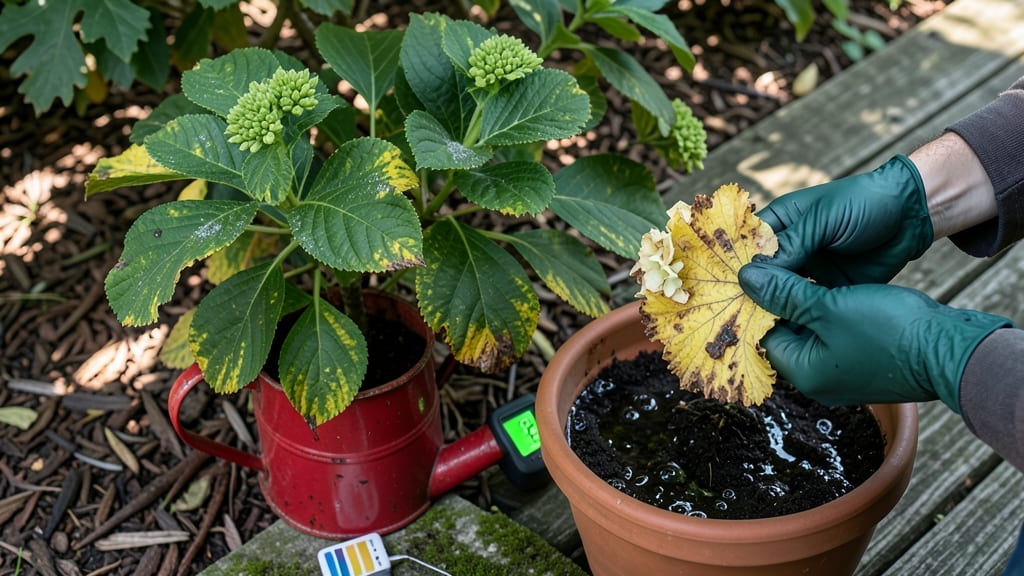
Your hydrangeas are showing the too much water pictures of hydrangea leaf problems—those sad, yellowing leaves aren’t just wilting, they’re screaming "I’m drowning!" 🌿 Overwatering turns lush blooms into a soggy mess, but the good news?
You can fix it in three simple steps that work every time. The key is spotting the signs early: soft, mushy stems, yellow leaves that stay yellow, and a plant that looks more sad than showy.
Most gardeners overdo it because hydrangeas love moisture—but they hate soggy roots. Too much water cuts off oxygen, inviting fungus and root rot. Check your soil: if it’s damp more than an inch down after watering, you’re overdoing it.
The fix starts with better drainage: amend heavy soil with compost or switch to a pot with drainage holes if your plant’s in one.
Once you’ve adjusted the soil, change your watering game. Hydrangeas need 1-1.5 inches of water per week, but they hate wet feet. Water deeply at the base, then let the top 2 inches dry out before watering again.
Mulch helps too—it keeps moisture even while preventing soggy roots. Within 2-3 weeks, you’ll see new green growth pushing out as the plant recovers.
Prevention is easier than cleanup: water in the morning so leaves dry quickly, and always check the soil before watering. If your hydrangea’s already struggling, trim back the worst-affected stems to redirect energy to healthy growth. Your blooms will thank you—vibrant, full, and happy—by next season.
Root Causes Of Overwatered Hydrangeas
When your hydrangea’s leaves start looking sad—yellowing, wilting, or developing unsightly brown edges—it’s often a cry for help from roots drowning in excess moisture. Understanding why this happens is the first step to reviving your plant. Let’s break down the science behind overwatering and how it sabotages your hydrangea’s health.
Hydrangeas thrive in well-draining soil, but when waterlogged, their roots suffocate. Here’s what’s really going on:
- Poor Aeration: Soil is full of tiny air pockets that roots need to breathe. When saturated, these pockets fill with water, displacing oxygen. Roots can’t respire (breathe) properly, leading to anaerobic conditions—a toxic environment for plant cells.
- Root Rot Trigger: Without oxygen, beneficial microbes that protect roots die off, while harmful fungi (like Phytophthora) multiply. These pathogens attack root tissues, causing root rot, which blocks nutrient and water uptake.
- Symptoms to Watch For:
- Leaves turn yellow or brown (chlorosis) from nutrient starvation.
- Wilting despite wet soil (roots can’t absorb water efficiently).
- Mushy, black, or foul-smelling roots when checked.
Actionable Fix: Amend soil with perlite, sand, or compost to improve drainage. Test soil moisture by sticking your finger 2 inches deep—if it’s damp, wait before watering again.
Even if your hydrangea has rich soil, too much water flushes out essential nutrients, leaving leaves malnourished. Here’s the breakdown:
| Nutrient | Role in Hydrangeas | What Happens When Washed Out? |
|---|---|---|
| Nitrogen (N) | Boosts leafy green growth | Yellowing leaves (especially older ones) due to chlorosis |
| Potassium (K) | Regulates water balance and disease resistance | Brown leaf edges ("scorch") and weak stems |
| Phosphorus (P) | Supports root and flower development | Stunted growth and poor blooms |
| Micronutrients (Iron, Magnesium, etc.) | Critical for chlorophyll production | Yellow veins or interveinal yellowing (like iron deficiency) |
Actionable Fix: Use a balanced fertilizer (10-10-10 or 20-20-20) in early spring and after blooming. For quick relief, apply Epsom salt (magnesium sulfate) or chelated iron if leaves show deficiency signs.
Not all soils are created equal—and some are downright hostile to hydrangeas. Here’s how compacted or clay-heavy soil turns your garden into a swamp:
- Clay Soil: Holds water like a sponge, preventing it from draining away. Even after rain, it stays soggy, trapping roots in a waterlogged prison.
- Organic Matter Deficit: Soil without enough compost or peat moss compacts over time, reducing porosity. Water pools instead of percolating.
- Symptoms:
- Leaves curl or develop crispy edges from salt buildup (as water evaporates, minerals concentrate).
- Slow growth or no new leaves despite regular watering.
Actionable Fix:
- ✅ Test your soil (pH and texture). Aim for acidic (5.2–6.0) and loamy (equal parts sand, silt, clay).
- ✅ Add organic matter: Mix in 3–4 inches of compost or pine bark fines into the top 12 inches of soil.
- ✅ Raise beds if clay soil is unavoidable—plant hydrangeas in mounds or containers with drainage holes.
Pro Tip: 💡 Mulch wisely! Use wood chips or pine straw (2–3 inches thick) to retain moisture without suffocating roots. Avoid piling mulch against the stem—keep it 3 inches away to prevent rot.
How to Fix Overwatered Hydrangeas
Overwatering can turn your lush hydrangeas into a sad, soggy mess—but don’t worry! With a few simple steps, you can nurse them back to health and keep their leaves vibrant. Below, we’ll match common overwatering symptoms to practical fixes, plus prevention tips to avoid future drama.
If your hydrangea leaves are turning yellow or dropping off, root rot is likely the culprit. Here’s how to diagnose and fix it:
🔥 Step 1: Stop Watering Immediately
- Pause all watering for at least 3–5 days to let the soil dry out.
- If the ground is muddy or smells foul, roots are drowning—act fast!
🍳 Step 2: Improve Soil Drainage
Overwatering thrives in compacted or heavy clay soil. Fix it with:
- Aerate the soil by gently loosening the top 6 inches with a fork or trowel.
- Add organic matter: Mix in compost, perlite, or coarse sand (1 part to 3 parts soil) to boost drainage.
- Raise the plant (if in a pot) by placing it on gravel or a cache pot to prevent water pooling.
👨🍳 Step 3: Trim Damaged Roots & Leaves
- Snip yellow/brown leaves with clean pruners to redirect energy to healthy growth.
- Inspect roots: If they’re black, mushy, or smell rotten, trim them with sterilized shears.
- Repot if needed: If roots are severely rotted, move the plant to fresh, well-draining soil in a pot with drainage holes.
⏰ Step 4: Adjust Your Watering Routine
Hydrangeas hate soggy feet! Water only when:
- The top 1–2 inches of soil are dry (stick your finger in to test).
- Water deeply but infrequently—aim for 1–1.5 inches per week (less in rain).
- Water at the base, not overhead, to prevent fungal issues.
If leaves are brown and crispy (not just yellow), it could mean root stress from poor drainage + too much water. Try this:
🌡️ Fix: Boost Airflow & Hydration Balance
- Move the plant to a spot with morning sun + afternoon shade (hydrangeas hate scorching).
- Mulch properly: Use 2–3 inches of organic mulch (like bark or straw) to retain moisture without suffocating roots.
- Fertilize lightly: Overwatered plants need balanced nutrients.
Use a slow-release, acid-loving fertilizer (like 10-10-10) once in spring.
- 🎯 Choose the right pot: If container-grown, ensure pots have drainage holes—no exceptions!
- ✨ Monitor soil moisture: Use a moisture meter or the finger test to avoid guesswork.
- 🌧️ Adjust for weather: Water less in rain and more in heatwaves (but never let soil stay soggy).
- 🔥 Prune wisely: Trim dead leaves after the plant recovers to avoid stressing it further.
Pro Tip: 💡 If your hydrangea is in the ground, consider a soil test—alkaline soil can worsen overwatering effects by locking out nutrients. Adjust with sulfur or peat moss if needed.
With these fixes, your hydrangeas should bounce back in 2–4 weeks—just give them time and consistent care. And remember: When in doubt, let the soil dry out! 🌱
Frequently asked questions about overwatered hydrangeas
How can I tell if my hydrangea is getting too much water?
Look for yellowing leaves that stay yellow (not just wilting), mushy stems at the base, or leaves that drop off easily. If the soil smells foul or feels soggy more than 1-2 inches deep, your plant is drowning. Check roots—healthy ones are firm and white, while rotten ones are black and mushy.
Can I save a hydrangea with root rot from overwatering?
Yes! First, stop watering immediately and let the soil dry completely. Trim away black, mushy roots and repot in fresh, well-draining soil with perlite or sand. Use a fungicide treatment if needed, and water only when the top 2 inches of soil are dry. Recovery takes 2-4 weeks with proper care.
Why are my hydrangea leaves turning brown and crispy?
This often signals root stress from poor drainage + too much water. Brown, crispy edges (not just yellow) mean nutrient burn or salt buildup from evaporated water. Flush the soil with water to remove excess salts, then adjust to water deeply but infrequently (1-1.5 inches per week). Move to morning sun + afternoon shade if currently in hot, direct sunlight.
What's the best way to test if my hydrangea needs water?
Use the finger test: Stick your finger 1-2 inches deep into the soil. If it feels damp, wait another day. For containers, lift the pot—if it feels light, water is needed. In clay soil, test deeper (3 inches50% dry, not bone-dry.
Should I fertilize my hydrangea after fixing overwatering?
Wait until new growth appears (2-3 weeks) before fertilizing. Use a balanced, acid-loving fertilizer (10-10-10) in early spring or after blooming. Overwatered plants need nutrients, but avoid high-nitrogen fertilizers—they can worsen root stress. For quick relief, try Epsom salt (magnesium sulfate) if leaves show yellowing between veins.