
Diseases
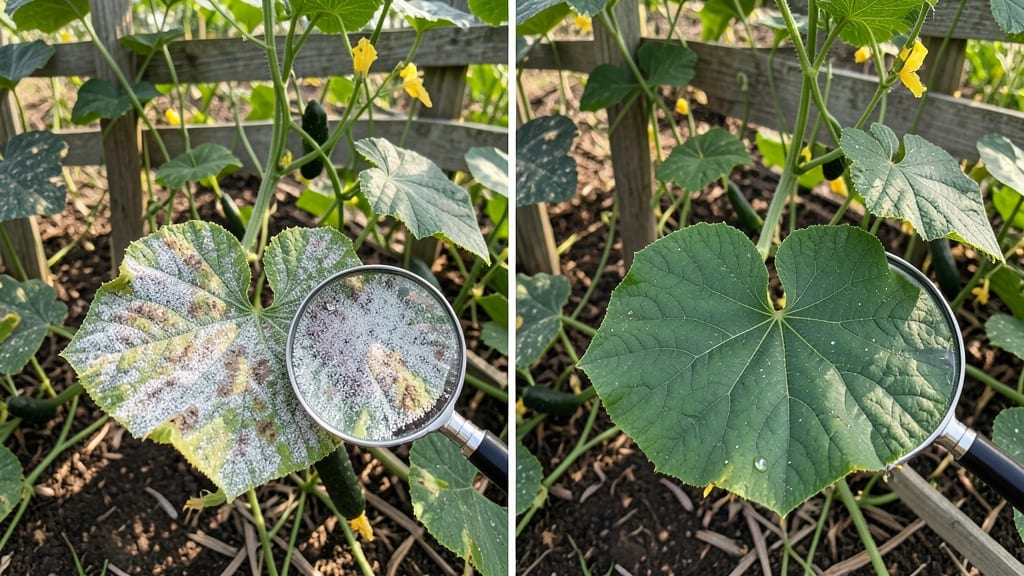
Cucumber plant leaf diseases can turn your thriving vines into sad, yellowing shadows in days. 🌱 I’ve seen powdery mildew blanket leaves white overnight and downy mildew turn them to mush—both can cripple your harvest if you don’t act fast.
The good news? Most are preventable with simple adjustments, and once you spot the signs, you can save your plants.
Powdery mildew looks like dusting flour, while downy mildew leaves greasy yellow spots that spread fast. Bacterial leaf spot shows up as tiny water-soaked holes that grow into larger, brown patches.
The key to stopping them? Airflow—crowded plants invite trouble, and wet leaves at night create the perfect breeding ground. Prune regularly and space vines properly to cut off their spread.
Once you see symptoms, act fast: spray with a baking soda mix (1 tbsp per gallon of water) for mildew, or copper fungicide for bacterial spot. Remove infected leaves immediately to stop the cycle.
With quick action, your plants can bounce back—just don’t let the disease take hold for more than a week.
Prevention is the real game-changer: rotate crops yearly, avoid overhead watering, and choose disease-resistant varieties like ‘Straight Eight’ or ‘Marketmore.’ Healthy soil and balanced fertilizer also keep plants strong enough to fight off invaders. Your next harvest could be the best yet—if you catch these diseases early.
Underlying Triggers of Leaf Issues
Cucumber plant leaf diseases rarely strike out of thin air—most are the result of a perfect storm of environmental, biological, or cultural factors. Understanding why these problems occur is the first step to prevention and treatment.
Below, we break down the core causes, from microbial invaders to gardening oversights, with science-backed explanations.
Fungal pathogens like Pseudomonas syringae (bacterial leaf spot) and Cercospora (target spot) thrive in high humidity (above 75%) and prolonged leaf wetness. Here’s why:
- Spore Germination: Fungal spores need moisture to activate. When leaves stay damp for more than 6–12 hours, spores germinate and infect plant tissues.
- Reduced Airflow: Dense foliage or crowded plants trap humidity, creating ideal conditions for downy mildew (Pseudoperonospora cubensis).
- Water Splashing: Overhead irrigation or rain can spread pathogens from soil to leaves, accelerating infection.
Actionable Fix:
- Space plants 12–18 inches apart for airflow.
- Water at soil level (drip irrigation or soaker hoses) in the early morning to allow leaves to dry by night.
- Use row covers to shield plants from rain if humidity is chronic.
Weakened plants are prime targets for diseases. Soil issues like compacted roots, low organic matter, or nutrient deficiencies stress cucumbers, making them vulnerable to infections. Key culprits:
- Nitrogen Deficiency: Yellowing leaves (chlorosis) signal weak defense mechanisms, inviting powdery mildew (Sphaerotheca fuliginea).
- Phosphorus or Potassium Shortages: These nutrients strengthen cell walls—without them, pathogens penetrate easier.
- Soilborne Pathogens: Fungi like Fusarium or Phytophthora lurk in poor-draining soil, causing root rot that spreads to leaves.
Actionable Fix:
- Test soil pH (ideal: 6.0–6.8) and amend with compost or aged manure.
- Apply a balanced fertilizer (e.g., 10-10-10) at planting and side-dress with potassium mid-season.
- Improve drainage with sand or perlite if soil is clay-heavy.
Diseases don’t originate in your garden—they’re often brought in or spread unintentionally. Common vectors:
| Source | How It Happens | Example Disease |
|---|---|---|
| Contaminated Seeds/Transplants | Seeds or seedlings carry viruses (e.g., Cucumber mosaic virus) or fungal spores internally. | Mosaic virus, Powdery mildew |
| Tools and Hands | Pruners, gloves, or fingers transfer pathogens between plants (e.g., bacterial leaf spot). | Bacterial spot, Anthracnose |
| Wild Reservoirs | Weeds or nearby infected crops (e.g., melons) host downy mildew spores that blow into your patch. | Downy mildew, Alternaria leaf spot |
| Wind and Water | Spores hitch rides on rain splash or wind currents, landing on healthy leaves. | Target spot, Early blight |
Actionable Fix:
- Buy certified disease-free seeds or test seedlings for pathogens before planting.
- Sanitize tools with 70% isopropyl alcohol or a 10% bleach solution between uses.
- Remove infected plant debris immediately and rotate crops annually to break pathogen cycles.
Extreme or fluctuating temperatures weaken cucumber plants, making them susceptible to diseases. Key triggers:
- Cold Stress: Temperatures below 50°F (10°C) slow plant metabolism, reducing resistance to bacterial cold rot or powdery mildew.
- Heat Shock: Sudden heat waves (>90°F/32°C) cause sunscald on leaves, creating entry points for Alternaria fungi.
- Day-Night Swings: Large temperature fluctuations stress plants, weakening cell walls and inviting infections.
Actionable Fix:
- Use shade cloth (30–50%) during peak summer heat.
- Mulch with straw or black plastic to stabilize soil temperature.
- Avoid planting until soil is consistently above 60°F (15°C).
Even the hardiest cucumbers succumb when basic garden hygiene is neglected. Common oversights:
- Overcrowding: Plants competing for air and light develop thin, weak leaves that can’t fend off downy mildew.
- Lack of Pruning: Dead or yellow leaves harbor spores and block airflow, accelerating powdery mildew.
- Reusing Contaminated Soil: Planting in the same spot year after year exhausts soil and leaves Fusarium or Verticillium pathogens behind.
Actionable Fix:
- Prune yellow or diseased leaves immediately with sterilized shears.
- Follow a 3-year crop rotation to disrupt soilborne diseases.
- Practice cleanup in fall: Remove all plant debris and till soil to expose pathogens to sunlight (solarization).
Quick Fixes for Healthy Cucumber Leaves
Reviving your cucumber plant’s lush green leaves starts with targeted action. Below are practical, step-by-step solutions for the most common fungal and viral threats, plus prevention tips to keep your plants thriving.
Whether you’re dealing with powdery mildew, downy mildew, or bacterial spots, these fixes will help you restore your plants’ vigor—without breaking the bank or your back.
Cause: White, powdery fungal growth (often from poor air circulation or humidity). Fix: 🔥 Remove Infected Leaves – Snip off heavily affected leaves with clean scissors and dispose of them in the trash (not compost). This stops the fungus from spreading. 🍳 Homemade Spray Solution – Mix 1 tbsp baking soda + 1 tsp dish soap + 1 gallon water. Spray both sides of leaves in the early morning (avoid direct sunlight to prevent leaf burn). 👨🍳 Boost Airflow – Prune overcrowded vines and space plants 12–18 inches apart. Use a small fan on low setting near plants for 30 mins/day to reduce humidity. 🥘 Prevent Recurrence – Apply neem oil spray (2 tsp neem oil + 1 tsp mild soap per quart of water) weekly as a preventative.
💡 Pro Tip: Copper fungicide (like Bonide Copper Fungicide) is a non-toxic, long-term fix—spray every 7–10 days until symptoms disappear.
Cause: Yellowing upper leaves with fuzzy gray mold on undersides (spreads rapidly in wet conditions). Fix: ⏰ Act Immediately – Downy mildew spreads within 48 hours. Remove all infected leaves and sterilize pruners with rubbing alcohol. 🔪 Fungicide Treatment – Use copper-based or sulfur fungicides (follow label instructions). Avoid chemical sprays if harvesting soon—opt for baking soda spray (same as above) for edible plants. 🌧️ Improve Drainage – Ensure pots have drainage holes and water at soil level (not overhead). Morning watering lets leaves dry before nighttime humidity sets in. 🎯 Rotate Crops – If downy mildew persists, avoid planting cucumbers in the same spot for 2–3 years—this fungus overwinters in soil.
💡 Pro Tip: Silica-rich compost (like rice hulls) can strengthen plant cell walls, making them more resistant to fungal attacks.
Cause: Dark, water-soaked spots with yellow halos (spread by splashing water or contaminated tools). Fix: 🧼 Sterilize Everything – Wash hands, pruners, and tools with 70% isopropyl alcohol before and after use. Never reuse contaminated water—dispose of it far from the garden. 🚿 Hydrogen Peroxide Spray – Mix 1 tbsp 3% hydrogen peroxide + 1 quart water. Spray infected leaves (avoid flowers/fruit). Repeat every 5–7 days. 🏡 Isolate the Plant – Move affected plants at least 10 feet away from healthy ones to prevent spread. Burn or trash severely infected plants. 🌿 Prevent Future Outbreaks – Water in the morning (not at night) and avoid overhead irrigation. Use drip irrigation instead.
💡 Pro Tip: Bacillus subtilis (Serenade ASO) is a beneficial bacteria that outcompetes harmful pathogens—apply as a preventative spray.
Cause: Yellow-green mosaic patterns (no cure—remove infected plants immediately). Fix: 🚨 Destroy Infected Plants – Do not compost—bag and trash them to prevent aphids (main spreaders) from feeding. 🐜 Control Aphids – Spray with soapy water (1 tsp mild soap + 1 quart water) or introduce ladybugs (natural predators). 🌱 Prevent Spread –
- Rotate crops (don’t plant cucumbers, squash, or melons in the same spot for 3 years).
- Use reflective mulch (aluminum foil or silver plastic) to deter aphids.
- Plant virus-resistant varieties like ‘Straight Eight’ or ‘Tyria’.
💡 Pro Tip: Sticky traps (yellow cards) near plants can catch aphids early before they transmit viruses.
No matter the issue, these habits keep cucumbers healthy year-round:
- Space plants properly (12–24 inches apart for vining types).
- Water at the base (never wet leaves).
- Harvest frequently (overripe fruit stresses plants).
- Rotate crops (prevents soil-borne pathogens).
- Use mulch (straw or grass clippings) to reduce splashing water.
Final Thought: 🌱 Early action is key—the sooner you treat leaf diseases, the better your cucumbers’ chances of bouncing back. Stay vigilant, keep your garden clean, and your plants will reward you with bountiful harvests!
Frequently asked questions
Why do my cucumber leaves develop white powdery spots even after I water them properly?
That’s likely powdery mildew, which thrives when humidity lingers on leaves—even with proper watering. The issue often stems from poor airflow or crowded plants. Prune nearby foliage to improve circulation and apply a baking soda spray (1 tbsp baking soda + 1 tsp soap per gallon of water) every 7 days until symptoms fade.
Can I still harvest cucumbers if the leaves have bacterial spots?
Yes, but focus on harvesting fruit from healthy vines first. Bacterial leaf spot rarely affects fruit quality, but remove all infected leaves immediately to stop the spread. If spots appear on fruit, wash thoroughly before eating. Avoid harvesting from heavily infected plants to prevent cross-contamination.
How do I tell if my cucumber plant has a fungal disease vs. a nutrient deficiency?
Check the leaf pattern: fungal diseases like downy mildew cause yellowing with fuzzy gray mold on undersides, while powdery mildew leaves white dust. Nutrient deficiencies show as uniform yellowing (chlorosis)—often starting on older leaves for nitrogen or younger leaves for magnesium. Test your soil pH (6.0–6.8) and amend with compost if needed.
Will neem oil work for treating cucumber leaf diseases, or is it just for pests?
Neem oil is effective for preventing fungal diseases like powdery mildew, but it’s not a cure for active infections. Mix 2 tsp neem oil with 1 tsp mild soap per quart of water and spray both leaf sides weekly. For existing diseases, combine neem oil with copper fungicide for better results. Always apply in the evening to avoid leaf burn.
How long does it take to see improvement after treating leaf diseases?
With immediate action, you may see new growth appearing in 5–7 days. However, existing infected leaves won’t recover—remove them completely. For severe cases like downy mildew, expect 2–3 weeks of consistent treatment before full recovery. Monitor humidity levels and airflow daily to prevent recurrence.