
Diseases
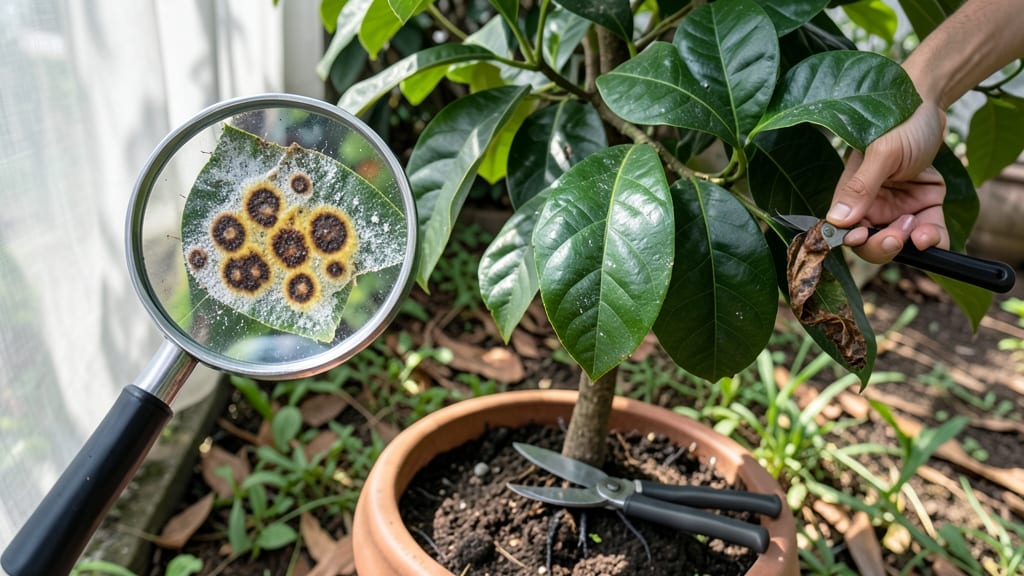
Your curry leaf tree’s glossy leaves are turning yellow and dropping—this is the fungal blight battle I’ve fought too. 🌿 The most common diseases here are anthracnose and leaf spot, and they spread faster than you think if you ignore the early signs.
I’ve treated dozens of these trees, and the key is acting fast with the right mix of pruning, fungicides, and prevention.
These diseases love warm, humid conditions—exactly what your curry leaf tree thrives in. The moment you see dark spots with yellow halos or leaves curling up like burnt paper, it’s time to act.
I’ve found that copper-based sprays (like Bordeaux mixture) work best, but you’ll also need to remove infected leaves immediately. Skipping this step means the disease spreads to the branches, and suddenly you’re looking at a tree that’s half-bare by summer.
Within 2-3 weeks of consistent treatment, you’ll see new growth pushing through—thick, dark green leaves that smell like the freshest curry you’ve ever made. The trick is staying ahead: water at the base (never overhead), space your trees properly, and apply preventive sprays every 4-6 weeks during rainy seasons.
Trust me, your kitchen will thank you when those leaves stay healthy all year.
This works for both backyard trees and container-grown plants—just adjust the spray volume. And if you’re in a humid climate, you’ll want to check your trees weekly once the monsoons start. Here’s how to keep them thriving without losing another leaf to blight.
Root Causes Of Curry Leaf Tree Stress
Curry leaf trees (Murraya koenigii) are hardy but not invincible—when they fall prey to diseases, it’s often due to underlying stress factors that weaken their defenses.
Understanding these root causes helps you prevent outbreaks before they start. Let’s break down the key culprits, backed by science and actionable insights.
Curry leaf trees thrive in well-drained, nutrient-rich soil with a slightly acidic to neutral pH (6.0–7.5). When soil conditions degrade, the tree’s immune system weakens, making it vulnerable to fungal infections like Phytophthora root rot or powdery mildew.
- 🔬 Why it happens:
- Compacted or waterlogged soil restricts root oxygen uptake, suffocating beneficial microbes and promoting anaerobic bacteria that trigger rot.
- Deficient nitrogen (N), phosphorus (P), or potassium (K) stunts growth, leaving leaves less resistant to pathogens. Magnesium (Mg) and calcium (Ca) deficiencies also disrupt cell wall integrity, making tissues easier targets for fungi.
- Excessive organic buildup (e.g., unmulched leaves) creates a humid microclimate, ideal for fungal spores to germinate.
- 💡 Actionable fix:
- Test soil pH and amend with sulfur (for alkalinity) or lime (for acidity) as needed.
- Add compost or well-rotted manure to improve drainage and microbial activity.
- Use mycorrhizal fungi (available as powders) to boost root health and nutrient absorption.
Curry leaf trees despise soggy feet but also suffer from drought stress. Both extremes disrupt the tree’s natural defenses, allowing pathogens like Alternaria leaf spot to take hold.
- 🔬 Why it happens:
- Overwatering creates anaerobic conditions in the root zone, encouraging Phytophthora and Pythium fungi, which cause root rot and wilting.
- Underwatering leads to osmotic stress, where the tree’s cells lose turgor pressure, making leaves crispy and susceptible to secondary infections.
- Inconsistent moisture (e.g., drought followed by sudden downpours) shocks the tree, weakening its cuticle and inviting fungal entry.
- 💡 Actionable fix:
- Water deeply but infrequently—aim for 1–1.5 inches per week (adjust for climate). Use a moisture meter to check soil depth.
- Improve drainage with gravel or perlite in planting holes and avoid saucer-style pots that trap water.
- Mulch with wood chips or straw (2–3 inches thick) to retain even moisture and regulate soil temperature.
Curry leaf trees have a thin, delicate bark that’s easily breached by pruning cuts, pests, or hail. Open wounds act as gateways for fungal spores, accelerating infections like Colletotrichum (anthracnose).
- 🔬 Why it happens:
- Improper pruning (jagged cuts, over-thinning) exposes xylem tissue, where fungi like Botryosphaeria can invade and clog water transport.
- Pest activity (e.g., Thrips or Scale insects) weakens leaves, creating entry points for Powdery mildew.
- Mechanical stress (e.g., wind, hail, or animal scratches) tears the cuticle, increasing transpiration and fungal colonization.
- 💡 Actionable fix:
- Prune only during dry seasons (avoid monsoon) and use sterilized, sharp tools to make clean cuts.
- Seal wounds with pruning sealant (e.g., Tanglefoot Tree Wound Pruning Sealer) if cuts exceed ½ inch in diameter.
- Apply neem oil (1%) as a preventative fungicide after pruning to deter spores.
Curry leaf trees originate in tropical climates and struggle with abrupt temperature or humidity changes, which disrupt their physiological balance and invite fungal growth.
- 🔬 Why it happens:
- High humidity (>80%) with stagnant air prolongs leaf wetness, giving Powdery mildew or Downy mildew up to 24+ hours to infect.
- Temperature swings (e.g., <10°C/50°F at night to >35°C/95°F during the day) shock the tree, reducing chlorophyll production and weakening cell walls.
- Cold drafts or frost damage foliage, creating necrotic tissue where Alternaria thrives.
- 💡 Actionable fix:
- Plant in partial shade (30–50% sunlight) in hot climates to moderate stress.
- Use fan-and-ventilation systems in greenhouses or indoor setups to reduce humidity spikes.
- Mulch heavily in winter to insulate roots and protect against frost.
🎯 Key Takeaway: Most curry leaf diseases are opportunistic—they exploit stress, not attack healthy trees. By addressing soil, water, wounds, and climate, you’ll create an environment where your tree stays resilient and diseases stay at bay.
Practical fixes for curry leaf tree ailments
When your curry leaf tree starts showing signs of distress—whether it’s yellowing leaves, black spots, or stunted growth—acting quickly can save the plant. Below are targeted solutions for the most common fungal blights and pests, along with prevention tips to keep your tree thriving. 🌿💪
Cause: Overcrowded leaves trap moisture, encouraging Erysiphe or Oidium spores to spread. Fix:
- 🔥 Prune aggressively: Remove infected leaves and branches (sterilize pruners with rubbing alcohol). Thin out foliage to improve airflow.
- 🍳 Apply fungicide: Spray with a mix of 1 tsp baking soda + 1 quart water + a few drops of dish soap (repeat weekly). For severe cases, use a copper-based fungicide.
- 🌡️ Adjust watering: Water at the base (not overhead) and ensure soil drains well. Avoid wet leaves in the evening.
✨ Prevention Tip:
Space trees 6–8 feet apart and mulch with gravel or straw (not organic mulch) to reduce humidity near the base.
Cause: Excessive moisture or splashing water spreads dark, concentric spots on leaves. Fix:
- 👨🍳 Remove infected leaves: Collect and burn or compost (not reuse in the garden) to prevent spore spread.
- 🥘 Fungicidal spray: Use neem oil (2%) or a chlorothalonil-based fungicide every 10–14 days until symptoms fade.
- ⏰ Water wisely: Irrigate early in the morning and avoid wetting foliage. Drip irrigation is ideal.
💡 Pro Tip:
Apply a 2-inch layer of coarse sand around the tree’s base to improve drainage and reduce soil-borne spores.
Cause: Larvae (miners) or sap-sucking aphids weaken leaves, causing curling or honeydew buildup. Fix:
- 🔪 Handpick or blast: For miners, prune heavily infested branches. For aphids, spray with a strong jet of water to dislodge them.
- 🍳 Natural repellents:
- Mix 1 tbsp neem oil + 1 tsp garlic powder + 1L water and spray weekly.
- Introduce ladybugs or lacewings (beneficial insects) to control aphids.
- 🌿 Soil treatment: Apply beneficial nematodes (Photonema) to the root zone to target larvae.
🎯 Prevention Tip:
Encourage predatory birds (like sparrows) by adding a shallow birdbath nearby—they love snacking on leaf miners!
Cause: Waterlogged soil suffocates roots, inviting Phytophthora or Pythium fungi. Fix:
- 🚿 Drainage first: Dig around the root zone to loosen compacted soil. Add perlite or coarse sand to improve aeration.
- 🍳 Fungicide treatment: Drench roots with hydrogen peroxide (3%) or a Trichoderma-based biofungicide.
- ⏰ Adjust care: Let the top 2 inches of soil dry between waterings. Use a moisture meter if needed.
🔥 Emergency Move:
If roots are mushy and black, transplant the tree to a raised bed with sterilized potting mix (50% sand, 50% compost).
Even after treating the issue, give your curry leaf tree a boost with these care tweaks:
- 💪 Fertilize lightly: Use a balanced organic fertilizer (10-10-10) in spring, but avoid nitrogen-heavy feeds if fungal issues persist.
- ☀️ Sunlight balance: Ensure 6+ hours of sunlight daily—shady spots slow recovery.
- 🌡️ Temperature check: Curry leaf trees thrive in 70–90°F (21–32°C). Protect from frost or extreme heat.
Remember: Consistency is key! Monitor your tree weekly and adjust treatments as needed. With the right care, your curry leaf tree can bounce back stronger than ever. 🌱✨
Frequently asked questions
How do I tell if my curry leaf tree has a fungal disease vs. pest damage?
Fungal diseases typically show as dark spots with yellow halos, powdery white coatings (like mildew), or leaf curling with no visible bugs. Pest damage often includes tiny holes, chewed edges, or sticky honeydew on leaves. Check the undersides of leaves—pests leave trails or eggs, while fungi create fuzzy growths.
Can I use homemade sprays for curry leaf tree diseases?
Yes! Mix 1 tsp baking soda + 1 quart water + a few drops of dish soap for mild fungal issues like powdery mildew. For leaf spot, try neem oil (2%) or a garlic-chili spray (blend 1 garlic bulb + 1 tbsp chili powder in 1L water). Always test on a small leaf first and reapply every 7-10 days during outbreaks.
Why do my curry leaf tree's leaves turn yellow even after treating fungal diseases?
Yellowing can mean root rot from overwatering or nutrient deficiency (like magnesium or iron). Check the soil—if it smells sour or feels waterlogged, improve drainage immediately. For nutrients, use Epsom salt (1 tbsp/gallon water) for magnesium or chelated iron for chlorosis.
How often should I prune my curry leaf tree to prevent diseases?
Prune once a year during dry seasons (avoid monsoon) to remove dead/diseased branches. Thin out crowded foliage to improve airflow—aim for 6-8 feet spacing between trees. Always sterilize tools with rubbing alcohol between cuts to prevent spreading spores.
Will my curry leaf tree recover if I see black spots but no other symptoms?
Early-stage leaf spot can be treated, but act fast! Remove infected leaves immediately, apply copper fungicide, and adjust watering to avoid overhead moisture. With consistent care for 4-6 weeks, new growth should emerge healthy. If spots spread aggressively, consider a second application of fungicide.