
Diseases
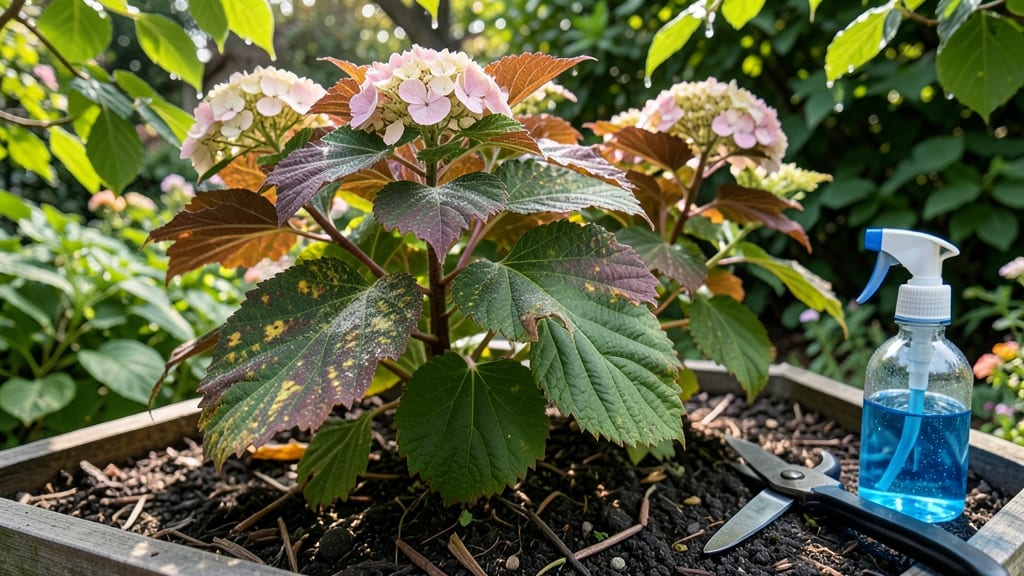
Oakleaf hydrangeas develop diseases that turn their stunning foliage into a sad, spotted mess—but catching these early saves your plant. 🌿 I’ve seen powdery mildew turn those gorgeous leaves white and leaf spot create unsightly brown patches, but with the right moves, you can stop them before they spread.
The key? Spotting symptoms fast and acting before the fungus or bacteria take over.
Most issues start with too much moisture—whether from overhead watering, poor airflow, or soggy soil. Powdery mildew loves humid conditions, while leaf spot thrives when leaves stay wet too long. Even bacterial leaf scorch can creep in if your plant is stressed.
The good news? Prevention is simple: water at the base, space plants properly, and avoid wetting foliage. If you already see problems, don’t panic—organic sprays like neem oil or baking soda mixtures can turn things around.
You’ll know you’ve won when those leaves go from sad and splotchy to vibrant green again. Prune infected branches immediately, apply fungicide (organic or chemical) as directed, and keep an eye out for repeat offenders.
A healthy oakleaf hydrangea should bounce back stronger than ever—just give it the care it needs to fight back.
This works for any oakleaf hydrangea, whether it’s in full sun or partial shade. The secret? Staying one step ahead of the fungus. Let’s get those plants looking lush again!
Root Causes of Oakleaf Hydrangea Struggles
Oakleaf hydrangeas (Hydrangea quercifolia) are prized for their stunning fall foliage and lush blooms, but they’re not immune to disease. Understanding why these issues arise is the first step to prevention and treatment.
Below, we break down the key factors that create the perfect storm for fungal and bacterial infections in your hydrangeas.
Oakleaf hydrangeas thrive in shade to partial sun, but their broad leaves and dense foliage can trap moisture—especially in tight planting spaces or crowded gardens. When air doesn’t circulate, humidity spikes, creating a damp, warm environment that fungi love.
Pathogens like Botrytis (gray mold) and Phytophthora (root rot) flourish in these conditions.
Why it happens:
- Dense planting: Hydrangeas planted too close together block airflow, leaving lower leaves perpetually wet.
- Overhead watering: Sprinklers or rain can soak foliage, prolonging moisture retention on leaves.
- Poor drainage: Compacted or clay-heavy soil holds excess water, keeping roots soggy and inviting root diseases.
Actionable fix: Space plants 3–5 feet apart, prune to improve airflow, and water at the base (not overhead). Mulch with wood chips (not plastic) to balance moisture while allowing evaporation.
Many hydrangea diseases—like powdery mildew or leaf spot—are caused by fungal spores that lurk in the soil, waiting for the right conditions to activate. These spores can survive for years, especially in organic matter or old plant debris.
If your hydrangea was previously infected, the spores may still be present, ready to reinfect new growth.
Why it happens:
- Infested soil: Spores from previous infections (even from other plants) can hitch a ride in compost or topsoil.
- Improper cleanup: Leaving fallen leaves, spent blooms, or diseased stems in the garden provides a breeding ground.
- Stress from poor soil health: Nutrient-deficient or overly acidic soil weakens the plant’s defenses, making it easier for fungi to take hold.
Actionable fix:
- Remove all plant debris in fall (don’t compost diseased material—trash it!).
- Test your soil pH (oakleaf hydrangeas prefer 5.0–6.0). Amend with sulfur (to lower pH) or lime (to raise it) if needed.
- Apply a fungicide preventative (like neem oil or copper fungicide) in early spring before spores become active.
Bacterial diseases, such as bacterial leaf spot or wilt, often spread through contaminated tools, splashing water, or even insects. Unlike fungi, bacteria multiply rapidly in warm, wet conditions and can enter the plant through wounds (like pruning cuts or insect bites).
If your hydrangea shows water-soaked spots, oozing lesions, or sudden wilting, bacteria may be the culprit.
Why it happens:
- Dirty pruners: Pruning with unsterilized tools can transfer bacteria from infected plants to healthy ones.
- Splashing water: Overhead irrigation or heavy rain can fling bacteria from the soil onto leaves.
- Insect activity: Sap-sucking pests (like aphids or scale) create entry points for bacterial infections.
Actionable fix:
- Sterilize tools with rubbing alcohol or a 10% bleach solution between cuts.
- Avoid overhead watering—use drip irrigation or soaker hoses.
- Apply copper-based bactericides (like Copper Soap) as a preventive spray in spring.
A hydrangea under stress is like an open invitation for diseases. Environmental stressors (like extreme heat, drought, or sudden temperature swings) weaken the plant’s natural defenses, making it easier for pathogens to invade. Even nutrient deficiencies (like lack of nitrogen or potassium) can stunt growth, leaving it vulnerable.
Why it happens:
- Improper watering: Too little (drought stress) or too much (root suffocation) throws the plant off balance.
- Nutrient imbalances: Over- or under-fertilizing disrupts the plant’s ability to fight off infections.
- Transplant shock: Newly planted hydrangeas take time to establish roots—stress from poor acclimation can lower resistance.
Actionable fix:
- Water deeply 1–2 times per week (adjust for rain). Use a moisture meter to check soil levels.
- Fertilize in early spring with a balanced, slow-release fertilizer (10-10-10 or 20-20-20). Avoid high-nitrogen fertilizers in fall.
- Mulch with 3–4 inches of organic mulch (like pine straw) to regulate soil temperature and retain moisture.
💡 Pro Tip: The best defense is proactive care**—healthy hydrangeas are far less likely to fall prey to diseases. Monitor your plants regularly, and act at the first sign of stress or infection!
Quick Fixes for Oakleaf Hydrangea Ailments
When your oakleaf hydrangea shows signs of distress, acting fast can mean the difference between a full recovery and losing the plant. Below are practical, step-by-step solutions tailored to the most common diseases, along with prevention tips to keep your hydrangea thriving.
Let’s get your plant back to its vibrant best!
Fungal infections like powdery mildew (white, powdery patches) and leaf spot (brown or black spots with yellow halos) thrive in humid, poorly ventilated conditions. Here’s how to tackle them:
🔥 Remove Infected Foliage
- Step 1: Snip off all affected leaves using sterilized pruners (wipe with rubbing alcohol between cuts).
- Step 2: Dispose of the clippings in the trash (not compost)—fungi can survive in soil.
- Pro Tip: 💡 Work during dry, sunny weather to reduce spores spreading.
🍳 Apply Fungicide
- Step 1: Choose a copper-based fungicide (like copper soap) or a neem oil solution (1 tbsp neem oil + 1 quart water + a drop of dish soap).
- Step 2: Spray both sides of leaves and the stems thoroughly.
Reapply every 7–10 days until new growth appears. - Pro Tip: 🌡️ For severe cases, add a baking soda spray (1 tsp baking soda + 1 quart water + a few drops of soap) as a natural fungicide.
👨🍳 Improve Airflow & Light
- Step 1: Prune nearby plants to increase airflow around the hydrangea.
- Step 2: Ensure it gets at least 4–6 hours of sunlight daily (fungi love shade and dampness).
- Prevention Tip: ✨ Space hydrangeas 3–4 feet apart and avoid overhead watering.
Bacterial infections like leaf scorch (brown, crispy edges) or crown gall (swollen, tumor-like growths at the base) are trickier but not hopeless.
🔪 Prune & Sterilize Aggressively
- Step 1: Cut off all infected leaves and stems below the damage (bacteria spread through sap).
- Step 2: Dip pruners in bleach (1 part bleach to 10 parts water) between cuts.
- Pro Tip: ⏰ Do this early in the morning when bacteria are least active.
🥘 Use Copper or Antibacterial Sprays
- Step 1: Spray with a copper fungicide (effective against some bacteria) or a hydrogen peroxide solution (1 tbsp 3% peroxide per quart of water).
- Step 2: For crown gall, apply copper hydroxide directly to the infected base.
- Prevention Tip: 🎯 Avoid wounding the plant—use clean, sharp tools when pruning.
🌱 Boost Plant Health
- Step 1: Water at the base (not overhead) to keep leaves dry.
- Step 2: Fertilize lightly with a balanced, low-nitrogen fertilizer (too much nitrogen weakens defenses).
- Pro Tip: 💪 Add compost or mulch around the base to improve soil health and reduce stress.
While not diseases, pests like spider mites (tiny webs, yellowing leaves) and scale (sticky residue, white bumps) weaken hydrangeas, making them susceptible to infections.
🕷️ Blast Off Pests with Soap Spray
- Step 1: Mix 1 tbsp mild liquid soap + 1 quart water in a spray bottle.
- Step 2: Spray directly on pests (especially undersides of leaves) every 3–5 days until gone.
- Pro Tip: 🌿 For stubborn infestations, use neem oil (follow label instructions).
🌡️ Introduce Beneficial Insects
- Step 1: Release ladybugs or lacewings (natural predators of mites and scale).
- Step 2: Keep the area damp but not soggy—mites thrive in dry conditions.
- Prevention Tip: 🎯 Inspect new plants before bringing them home—quarantine for 2 weeks if possible.
No matter the issue, these universal fixes help hydrangeas bounce back:
| Problem | Solution | Prevention |
|---|---|---|
| Wilting or Yellowing | Check soil moisture, prune dead growth | Mulch to retain moisture |
| Slow Growth | Fertilize with iron or magnesium | Test soil pH (ideal: 5.5–6.2) |
| Stunted Blooms | Trim back 1/3 of old wood in late winter | Feed in early spring with bloom booster |
Final Pro Tip: 🌟 After treatment, monitor weekly for recurrence. Healthy hydrangeas are resilient—give them the right care, and they’ll reward you with stunning foliage year after year!
Frequently asked questions
What are the most common signs of fungal infections in oakleaf hydrangeas?
Look for white powdery patches (powdery mildew) or brown/black spots with yellow halos (leaf spot). These appear on leaves first, especially on the undersides. If you see these, act fast—fungi spread quickly in humid conditions.
Can I still save my hydrangea if the disease has spread to the stems?
Yes, but you’ll need to prune aggressively. Cut off infected stems below the damage using sterilized tools, then apply a copper-based fungicide. For severe cases, consider removing the entire plant to prevent soil contamination.
How often should I apply fungicide to prevent diseases?
Apply a preventive fungicide (like neem oil or copper soap) every 2-4 weeks during growing season, especially after rain. For high-risk areas, spray monthly. Always follow label instructions for best results.
Will pruning help prevent future diseases in my oakleaf hydrangea?
Prune to improve airflow by removing crowded branches and dead growth. Thin out dense foliage to let sunlight penetrate. This reduces humidity around leaves, making it harder for fungi to thrive.
Are there any natural remedies for bacterial infections?
Yes! Try a hydrogen peroxide solution (1 tbsp 3% peroxide per quart of water) or copper-based sprays. For mild cases, these can help. For severe bacterial infections like crown gall, you may need to remove the affected plant.