
Pests
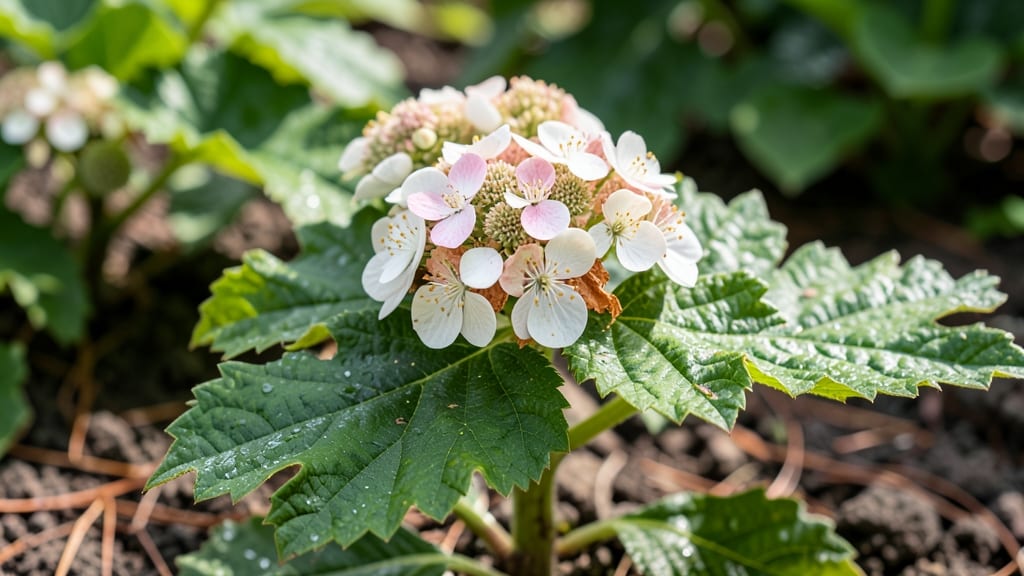
Deer eat oak leaf hydrangeas, often targeting their tender new growth and leaves, especially during late winter and spring when food is scarce. These plants are considered moderately palatable to deer but can be protected with deterrents and barriers.
Oak leaf hydrangeas become a deer buffet when other food sources dwindle, particularly in late winter and early spring when fresh vegetation is limited. 🌿 The plant's broad leaves and tender shoots offer a quick energy boost, making them an easy target.
Unlike some hydrangea varieties that deer avoid, oak leaf types lack strong natural deterrents, so they require extra protection during high-risk seasons.
To keep deer away, I recommend combining physical barriers like fencing with natural repellents such as garlic-based sprays or deer-resistant companion plants like boxwoods. Even a few strategic plantings around your hydrangeas can create a buffer zone that deer prefer to avoid.
The key is consistency—deer learn patterns, so rotating repellent methods works best.
💡 In This Article
- Why Deer Are Drawn to Oak Leaf Hydrangeas
- Effective Deer Repellents for Oak Leaf Hydrangeas
Why deer are drawn to oak leaf hydrangeas
Oak leaf hydrangeas (Hydrangea quercifolia) contain moderate levels of nitrogen and carbohydrates that deer find appealing, especially when other food sources are scarce.
These plants typically have a protein content of around 10-15% in their leaves, which is comparable to other garden favorites like roses (12%) but less than clover (25%).
The broad, leathery leaves also provide a satisfying texture for deer to browse, unlike spiky or fibrous plants they instinctively avoid.
The real appeal happens in late winter and early spring when deer face nutritional stress after winter. New growth emerges with higher water content and softer texture, making it easier to digest.
Studies show deer prefer plants with 40-60% moisture content—oak leaf hydrangeas fit this profile perfectly during their growth phase. 🌱 Compare this to evergreens like boxwoods, which have only 30-40% moisture and tougher leaves, making them less attractive.
Seasonal availability plays a critical role too. Oak leaf hydrangeas bloom in summer but maintain foliage year-round, providing a consistent food source when other plants have died back. Deer have excellent memory and learn which plants offer reliable nutrition.
Once they discover your hydrangeas, they'll return repeatedly unless deterred. The plant's lack of strong chemical defenses (like thorns or bitter compounds) makes it an easy target.
Another factor is scent. While not as fragrant as some flowers, oak leaf hydrangeas emit subtle volatile organic compounds that deer can detect from 30-50 feet away.
These compounds signal fresh growth, triggering browsing behavior. Unlike strongly aromatic plants (such as lavender), hydrangeas don't repel deer through scent alone—making them particularly vulnerable during high-traffic seasons.
To understand the risk, consider this: deer consume about 3-4% of their body weight daily. A 150-pound deer needs roughly 4.5-6 pounds of vegetation daily.
Oak leaf hydrangeas provide an easy, nutrient-dense option that fits this requirement perfectly during lean months. 🦌 This explains why even well-established plants can be completely defoliated in a single night.