
Pests and Diseases
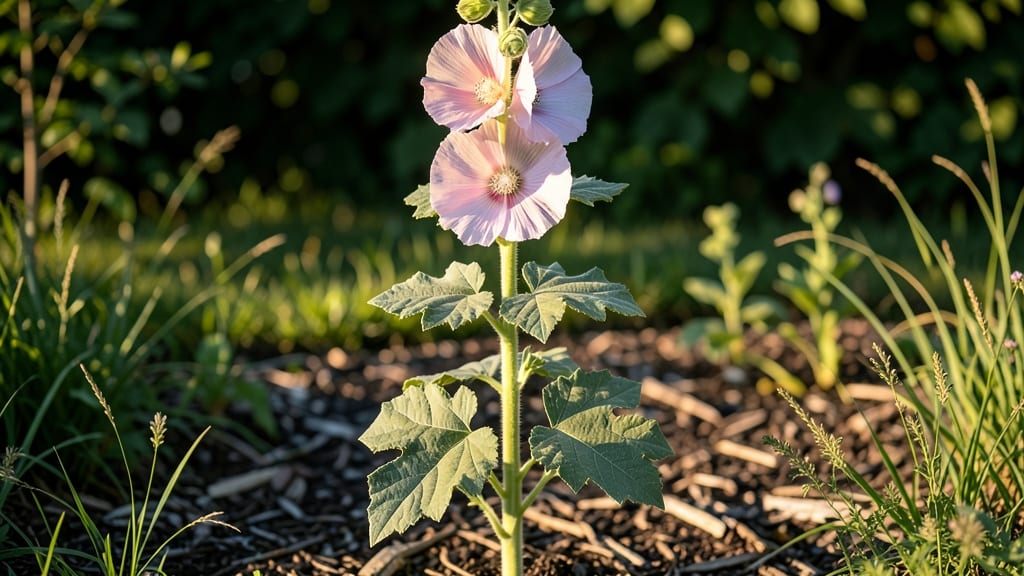
Mastering hollyhock leaf identification saves your plants from hidden pests and diseases before they take over. 🌿 The deep green, palmate leaves with 3-7 lobes are your baseline—anything splotchy, powdery, or curled means trouble. I’ve seen rust-colored spots on mine that looked like harmless freckles until the leaves crumbled.
Hollyhock rust, powdery mildew, and aphids all leave distinct marks: rust shows as orange pustules, mildew as white dust, and aphids as sticky residue. The key is catching these early—when you spot just one suspicious leaf, isolate the plant and check the undersides.
That’s where pests love to hide. Once you recognize the patterns, treatment becomes straightforward: prune infected leaves, apply neem oil, or adjust watering to prevent mildew. My plants bounce back faster now that I know what to watch for. The goal is keeping those towering blooms healthy all season.
This works for both garden hollyhocks and the smaller varieties. Keep your eye out for these signs, and your plants will thank you with vibrant blooms all summer long.
Understanding Hollyhock Leaf Issues
Hollyhock leaves can develop unexpected changes, from discoloration to holes or spots, often leaving gardeners puzzled. But why do these problems occur? The answer lies in a mix of environmental stressors, biological threats, and even cultural gardening practices.
Let’s break down the key culprits behind hollyhock leaf identification challenges, so you can spot them early and take action.
Hollyhocks are hardy but not invincible—extreme conditions can trigger leaf distress. Here’s how environmental factors play a role:
- Heat Stress & Drought Hollyhocks thrive in moderate climates, but prolonged heatwaves (above 90°F/32°C) or poor soil moisture cause leaves to wilt, yellow, or develop crispy edges.
Cells lose turgor pressure, leading to scorched or bleached patches. - Actionable fix: Mulch heavily to retain moisture, water deeply in the morning, and provide afternoon shade during heatwaves.
- Cold Damage & Frost While hollyhocks tolerate cold, sudden freezes (below 20°F/-7°C) can cause blackened or mushy leaves due to ice crystal formation in plant tissues.
Young shoots are especially vulnerable. - Actionable fix: Plant in sheltered spots, use frost cloths, or choose cold-hardy varieties like Alcea rosea ‘Nigra’.
- Overwatering & Poor Drainage Hollyhocks hate soggy roots. Waterlogged soil restricts oxygen, leading to yellowing leaves (chlorosis) and mushy stems from fungal infections like Phytophthora.
- Actionable fix: Amend soil with compost, ensure raised beds or containers have drainage holes, and avoid watering at night.
Insects and mites often go unnoticed until leaves show holes, chew marks, or webbing. Here’s how they strike:
- Japanese Beetles & Leaf Beetles These metallic-green pests skeletonize leaves by feeding on soft tissue between veins. Frass (chewed leaf debris) is a dead giveaway.
- Actionable fix: Handpick beetles early in the morning, use neem oil sprays, or deploy floating row covers before they emerge.
- Aphids & Spider Mites Aphids cluster on undersides, excreting sticky honeydew that attracts sooty mold. Spider mites cause stippling (tiny white/yellow dots) and fine webbing on leaf undersides.
- Actionable fix: Blast off aphids with a strong water spray, introduce ladybugs, or apply insecticidal soap for mites.
- Caterpillars (Cutworms, Loopers) Cutworms sever stems at the base, while loopers leave irregular holes and silver streaks (their droppings). Look for frass trails or chewed notches.
- Actionable fix: Set up collars around stems (for cutworms) or use Bt (Bacillus thuringiensis) spray for loopers.
Hollyhocks are prone to foliar diseases that thrive in humid conditions. Here’s how to ID them:
- Powdery Mildew A white, powdery coating on leaves is Erysiphe cichoracearum, a fungus that blocks sunlight and weakens plants.
It spreads in shady, humid conditions. - Actionable fix: Space plants for airflow, remove infected leaves, and spray with baking soda mix (1 tsp baking soda + 1 quart water + a drop of soap).
- Rust Fungus Orange pustules on leaf undersides (caused by Puccinia spp.) eventually turn black. Severe cases cause premature leaf drop.
- Actionable fix: Destroy infected debris, avoid overhead watering, and apply copper fungicide at first signs.
- Bacterial Leaf Spot Water-soaked, brown spots with yellow halos (from Pseudomonas bacteria) enlarge and merge. Slime may ooze in wet weather.
- Actionable fix: Sterilize pruners with rubbing alcohol, remove diseased leaves, and water at soil level to keep foliage dry.
Hollyhocks don’t need rich soil—too much nitrogen leads to lush, weak growth prone to pests/diseases, while deficiencies cause yellowing between veins (iron/chlorosis) or purple stems (phosphorus lack).
- Over-Fertilizing Excess nitrogen = soft, sappy leaves that attract aphids and mildew. Hollyhocks prefer moderate, well-draining soil.
- Actionable fix: Use a balanced 5-10-10 fertilizer sparingly (once in early spring) or compost tea for organic nutrients.
- Compacted or Alkaline Soil Hollyhocks struggle in high-pH soil (above 7.0), leading to iron/chlorosis (yellow leaves with green veins). Compacted soil restricts root growth, causing stunted plants.
- Actionable fix: Test soil pH (aim for 6.0–7.0), amend with sulfur or peat moss, and aerate compacted beds.
| Symptom | Likely Cause | Quick Fix |
|---|---|---|
| Yellow leaves (edges) | Overwatering/Drought | Check soil moisture, adjust watering |
| White powdery coating | Powdery Mildew | Baking soda spray + airflow |
| Holes + frass | Japanese Beetles | Neem oil or handpick |
| Stippling + webbing | Spider Mites | Insecticidal soap |
| Blackened, mushy leaves | Frost or Bacterial Rot | Remove debris, improve drainage |
| Purple stems | Phosphorus Deficiency | Bone meal or compost |
Quick Fixes for Hollyhock Leaf Issues
Identifying hollyhock leaf problems early is half the battle—now it’s time to take action! Below are practical, step-by-step solutions tailored to common causes, from pests to fungal infections. Each fix includes prevention tips to keep your hollyhocks thriving long-term.
🔥 Cause: Spider mites, aphids, or hollyhock borers chewing leaves or stems. 🍳 Solution:
- Handpick or spray off pests – Use a strong stream of water to dislodge aphids or mites from leaves. Repeat every 2–3 days for severe infestations.
- Apply insecticidal soap – Mix 1–2 tablespoons of mild dish soap (like Castile) with 1 quart of water. Spray directly on pests (avoid hot days to prevent leaf burn).
- Introduce beneficial insects – Ladybugs and lacewings devour aphids naturally. Release them in the evening for best results.
- Neem oil treatment – Mix 1 teaspoon of neem oil with 1 quart of water + a drop of soap. Spray undersides of leaves where pests hide. Reapply weekly.
💡 Prevention Tips:
- Prune regularly to improve airflow and reduce hiding spots for pests.
- Mulch with diatomaceous earth (food-grade) around the base to deter crawling insects.
- Plant companion flowers like marigolds or nasturtiums to repel pests naturally.
🌡️ Cause: Rust, powdery mildew, or leaf spot from excess moisture or poor circulation. 👨🍳 Solution:
- Remove infected leaves immediately – Snip off yellowed or spotted leaves with clean pruners and dispose of them in the trash (not compost).
- Improve airflow – Thin out overcrowded plants and space them 18–24 inches apart.
- Apply fungicide – Use a copper-based fungicide (like Bordeaux mixture) or baking soda spray (1 tbsp baking soda + 1 quart water + 1 tsp soap). Spray every 7–10 days until symptoms disappear.
- Adjust watering habits – Water at the base in the morning to keep leaves dry. Avoid overhead sprinklers.
✨ Prevention Tips:
- Space plants properly to reduce humidity buildup.
- Water early in the day so foliage dries quickly.
- Avoid wetting leaves when watering—use drip irrigation if possible.
📊 Cause: Yellowing leaves (chlorosis) from iron or magnesium deficiency, often in alkaline soils. 🥗 Solution:
- Test your soil – Use a home soil test kit to confirm deficiencies. Hollyhocks prefer pH 6.0–7.5.
- Amend the soil –
- For iron deficiency: Sprinkle chelated iron granules around the base and water deeply.
- For magnesium deficiency: Apply Epsom salt (1 tbsp per gallon of water) every 4 weeks.
- Use organic matter – Mix compost or well-rotted manure into the top 6 inches of soil to improve nutrient availability.
- Mulch with compost – A 2-inch layer of compost retains moisture and slowly releases nutrients.
🎯 Prevention Tips:
- Fertilize lightly in early spring with a balanced 10-10-10 fertilizer.
- Avoid over-fertilizing—hollyhocks are low-maintenance and can suffer from excess salts.
- Rotate crops if growing hollyhocks annually to prevent soil depletion.
With these targeted fixes, your hollyhocks should bounce back in no time! 🌿 Early action is key—don’t wait until the damage spreads. For stubborn issues, repeat treatments every 7–10 days until you see improvement.
Frequently asked questions
How do I tell healthy hollyhock leaves from diseased ones?
Healthy hollyhock leaves are deep green, palmate-shaped (3-7 lobes), and free of spots or powder. Look for smooth edges and no discoloration. Diseased leaves show rust-colored pustules (rust fungus), white powder (mildew), or blackened patches (bacterial rot). Always check undersides where pests hide.
What do hollyhock leaf spots look like, and how do I treat them?
Leaf spots appear as brown or black marks with yellow halos (bacterial spot) or water-soaked patches (fungal). Remove infected leaves immediately, sterilize pruners with rubbing alcohol, and water at the base (not overhead). For prevention, space plants for airflow and apply copper fungicide every 10 days.
Why are my hollyhock leaves turning yellow?
Yellowing leaves usually mean overwatering, nutrient deficiency, or drainage issues. Check soil moisture—hollyhocks prefer moderate water. For yellowing between veins, test soil pH (aim for 6.0–7.0) and amend with chelated iron or Epsom salt if deficient. Avoid soggy roots by improving drainage.
Can I use neem oil on hollyhocks for pests?
Yes! Neem oil is safe for hollyhocks and effective against aphids, spider mites, and beetles. Mix 1 tsp neem oil + 1 quart water + 1 drop soap and spray undersides of leaves where pests hide. Apply in the evening to avoid leaf burn, and reapply every 7–10 days until pests disappear.
Are hollyhock leaves edible, or should I remove them?
Hollyhock leaves are not edible—they contain mild toxins and can cause stomach upset. Focus on removing diseased or pest-infested leaves to protect the plant. Prune regularly to improve airflow and reduce hiding spots for pests. Healthy leaves should stay intact for vibrant blooms.