
Size
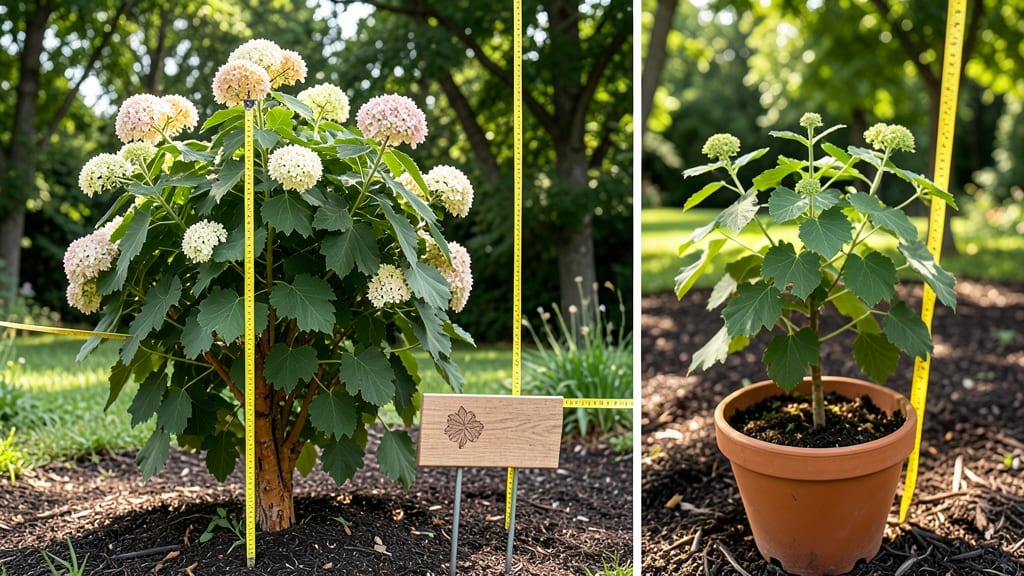
Oakleaf hydrangeas grow to a mature size of 6 to 8 feet tall and 5 to 6 feet wide, making them a stunning focal point—but their exact dimensions depend on the variety and growing conditions.
If you're dreaming of a stunning, low-maintenance shrub with vibrant fall foliage and long-lasting blooms, oakleaf hydrangeas could be your perfect match—but first, you need to know their mature size to plan your garden layout wisely.
Some varieties, like 'Snow Queen,' stay compact at 3 to 5 feet, while others, such as 'Pineapple Clearpetal,' can reach 8 feet or taller in ideal conditions.
This means they work beautifully in both small gardens and large landscapes, as long as you choose the right type for your space.
Below, I’ll break down the size expectations for popular varieties, how to space them properly, and tips for pruning to keep them at your desired height—so you can enjoy their showy blooms without overcrowding your yard.
Oakleaf hydrangea mature size chart: varieties and growth expectations
When planning your garden, knowing the mature size of oakleaf hydrangeas is essential for creating a balanced and visually stunning landscape. These shrubs are prized for their vibrant foliage and long-lasting blooms, but their growth habits vary significantly between varieties.
Some stay compact enough for small gardens, while others reach towering heights perfect for large landscapes.
Understanding these differences helps you choose the right variety for your space and ensures you provide proper spacing and pruning to keep them healthy. Whether you're working with a cozy backyard or a sprawling estate, selecting the right size oakleaf hydrangea will make all the difference in your garden's design.
Below is a detailed mature size chart for popular oakleaf hydrangea varieties, including their height, spread, and growth habits. This will help you visualize how each variety will fit into your garden layout.
As you can see, varieties like 'Little Sweetheart' and 'Dwarf Oakleaf' are perfect for small gardens or containers, while 'Snow Queen' and 'Pineapple Clearpetal' thrive in larger landscapes.
The spread of these shrubs is just as important as their height, especially if you're planting them near pathways or other garden features.
For example, the 'Alice' variety can reach up to 8 feet tall and wide, making it a stunning focal point in a backyard. On the other hand, 'Pee Wee' stays compact, ideal for garden borders or as a low hedge.
Always consider the mature size when planting to avoid overcrowding and ensure your garden maintains its intended design.
Another key factor to consider is the growth rate. Some varieties, like 'Little Sweetheart', grow slowly, while others, like 'Snowflake', reach their mature size more quickly. This can influence how soon you’ll see your garden take shape and how often you’ll need to prune for maintenance.
How to choose the right oakleaf hydrangea for your space
Oakleaf hydrangeas are versatile shrubs that thrive in various garden settings, but their mature size and growth habits can vary dramatically between varieties. If your space is limited, you’ll want a compact variety like 'Pineapple Clearpetal,' while larger landscapes can accommodate the towering 'Snow Queen.'
Understanding these differences ensures your hydrangea won’t outgrow its welcome or struggle for space.
Start by measuring your garden’s available area. For small yards or containers, prioritize dwarf varieties that stay under 4 feet tall. In contrast, large landscapes or privacy screens can handle the 6-8 foot giants like 'Amethyst.'
Sunlight needs also play a role—some varieties tolerate full sun better than others, which impacts their vigor and size over time.
Oakleaf Hydrangea Size Guide
Best for small yards/containers
Versatile for most gardens
Ideal for privacy screens
Spread: 3-4 ft
Example: 'Pineapple Clearpetal'
Pros: Perfect for patios, containers
Cons: Limited fall foliage impact
Spread: 4-6 ft
Example: 'Snow Queen'
Pros: Balanced size, great for borders
Cons: Needs occasional pruning
Spread: 5-7 ft
Example: 'Amethyst'
Pros: Dramatic fall color, privacy
Cons: Overwhelms small spaces
For small spaces or containers, opt for varieties like 'Pineapple Clearpetal' or 'Little Sweetheart,' which max out at 4 feet tall and 3 feet wide. These are perfect for patio gardens or window boxes where space is at a premium.
Just ensure your container has drainage holes and is at least 18 inches wide to accommodate their root system.
If you’re designing a large landscape or privacy screen, larger varieties like 'Amethyst' or 'Snow Queen' will deliver bold impact. These can reach 8 feet tall and 7 feet wide, making them ideal for backyard borders or foundation plantings.
Just plan for 6-8 feet of clearance behind and around them to avoid overcrowding nearby plants.
Sunlight requirements also influence size. Most oakleaf hydrangeas prefer partial shade (4-6 hours of sun daily), but varieties like 'Amethyst' can handle full sun in cooler climates.
Too much direct sun can stress the plant, leading to stunted growth or leaf scorch. Always check your variety’s sunlight needs before planting.
Finally, consider pruning requirements. Compact varieties need minimal pruning, while larger ones may require annual shaping to control their spread. Prune in late winter or early spring before new growth begins to avoid cutting off next year’s blooms.