
Plants
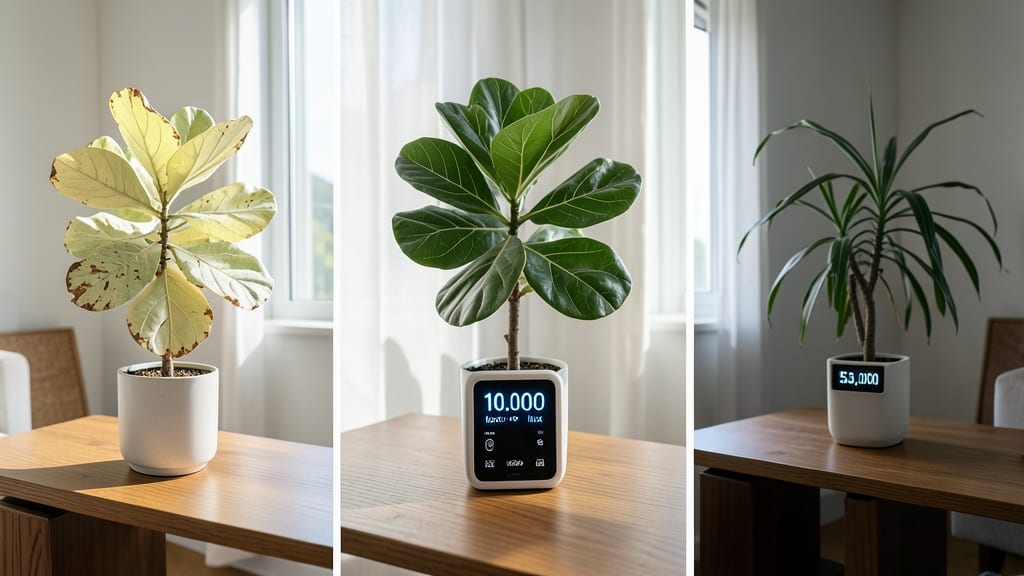
A fiddle leaf plant needs bright, indirect light for 6+ hours a day—the kind that mimics its native forest floor but keeps those dramatic leaves thriving.
Your fiddle leaf fig’s dramatic leaves aren’t just for show—they’re a direct response to its lighting conditions. Get this wrong, and you’ll end up with crispy edges or sad, sparse foliage instead of that coveted lush growth.
Most homes struggle to provide enough natural light, especially in north-facing rooms or deeper spaces. That’s why understanding what "bright indirect" really means—like placing your plant 2-3 feet from an east or west window—is the key to avoiding common mistakes.
Below, I’ll walk you through how to spot light-related problems (yellowing leaves, slow growth) and the simple fixes that make all the difference—whether you’re adjusting window placement or supplementing with grow lights.

Ideal light requirements for fiddle leaf plants: bright indirect sunlight explained
Your fiddle leaf fig thrives on bright indirect sunlight, which means it needs plenty of light but without harsh direct rays. The perfect spot mimics its natural habitat under dappled forest light.
Without this balance, you’ll see leaf scorch or slow growth—neither of which you want for your stunning Ficus lyrata.
Think of 4000-6000 lux as your target range—this is the light intensity that keeps leaves vibrant and encourages new growth. Too little light, and your plant becomes leggy and sparse. Too much direct sun, and you’ll get brown crispy patches that ruin the aesthetic.
Most homeowners struggle to identify bright indirect light because windows vary in intensity. A south-facing window can be too harsh, while a north-facing window may not provide enough light. The key is finding that sweet spot where light filters through sheer curtains or a light-colored blind.
East and west windows are your best bets for fiddle leaf figs. Morning light from an east-facing window is gentle, while afternoon light from the west is bright but not scorching. Place your plant 2-3 feet away from the window to diffuse the light naturally.
| Light Requirement | Specification | Best Window Placement |
|---|---|---|
| Bright Indirect Light | 4000-6000 lux | East or West-facing |
| Direct Sun Exposure | Avoid (causes scorch) | South-facing (with sheer curtain) |
| Low Light Tolerance | <3000 lux (slow growth) | North-facing or deep indoors |
| Ideal Daily Light | 6+ hours | Rotate plant weekly for even growth |
| Distance from Window | 2-3 feet | Adjust based on leaf color |
If you’re placing your fiddle leaf fig near a south-facing window, use a sheer curtain or a light-colored blind to diffuse the light. I’ve seen many gardeners make the mistake of placing their plant too close to the window, leading to sunburnt leaves.
A simple trick is to hold your hand near the plant—if you feel warmth, it’s too close.
Seasonal changes also affect light exposure. In summer months, when sunlight is more intense, your plant may need to be moved further back from the window.
Conversely, in winter, when days are shorter, you might need to supplement with a grow light for 12-14 hours a day to maintain growth.
Watch for leaf color changes as your plant’s way of communicating its light needs. Dark green leaves with visible veins mean it’s happy. Pale or yellowing leaves indicate too little light, while brown or crispy edges signal too much direct sun.
Adjust placement based on these visual cues to keep your fiddle leaf fig thriving.
For those with limited natural light, grow lights can be a game-changer. A full-spectrum LED grow light placed 12-18 inches above the plant for 12-14 hours daily mimics natural light perfectly.
I’ve used these successfully in my own home office to keep my fiddle leaf fig lush even in a low-light corner.
Remember, consistency is key. Fiddle leaf figs dislike sudden changes in light exposure, so avoid moving them around frequently. If you notice dropping leaves after a move, it’s likely a stress response to light shock. Give it time to adjust, and keep an eye on its recovery.
Signs your fiddle leaf plant has too much or too little light (and how to fix it)
Your fiddle leaf fig communicates its lighting needs through its leaves—those stunning fiddle-shaped foliage are actually a mood ring for light conditions. If the leaves start showing yellow patches or brown crispy edges, it’s time to investigate your plant’s light situation.
These visual cues often mean your plant is either basking in too much direct sun or struggling in dim corners.
One of the most common mistakes is assuming all sunlight is good sunlight. While your fiddle leaf fig loves light, it’s direct sun exposure that causes leaf scorch and bleaching. Even a few hours of harsh afternoon sun can turn those beautiful leaves into sad, crispy remnants.
On the flip side, if your plant is growing slowly with small, sparse leaves, it’s likely begging for more light.
⚠️ WARNING: Fiddle Leaf Fig Light Requirements ⚠️
⚠️ Too Little Light: Yellowing leaves, slow growth, and long, leggy stems mean your plant is light-deprived. Rotate it quarter-turns weekly for even exposure or supplement with a grow light.
⚠️ Ideal Light: Place your fiddle leaf fig within 2-3 feet of an east or west window for bright indirect light. Aim for 6-8 hours of filtered sunlight daily—think dappled shade under a tree.
If your plant is showing signs of light stress, the first step is to assess its current location. South-facing windows are often too intense, while north-facing windows may not provide enough light.
A quick fix is to move your plant to a spot where it receives morning sun but is shielded from the hot afternoon rays. Sheer curtains or a light-colored blind can help diffuse the light without completely blocking it.
For plants in low-light conditions, consider supplementing with a grow light. LED grow lights are energy-efficient and can provide the bright indirect light your fiddle leaf fig craves. Place the light 12-18 inches above the plant and keep it on for 12-14 hours daily.
Rotate the plant weekly to ensure even growth and prevent it from leaning toward the light source.
Seasonal changes also affect your fiddle leaf fig’s light needs. During winter, when natural light is scarce, you may need to move your plant closer to a window or extend its light exposure with a grow light.
Conversely, in summer, watch for signs of heat stress and adjust by moving the plant further from the window or providing afternoon shade.
Regularly inspect your plant’s leaves for early signs of light issues. Catching problems early—like yellowing leaves or brown spots—gives you time to adjust before the damage becomes irreversible.
With the right balance of bright indirect light, your fiddle leaf fig will reward you with vibrant, healthy growth and those coveted fiddle-shaped leaves. 🌿