
Pests and Diseases
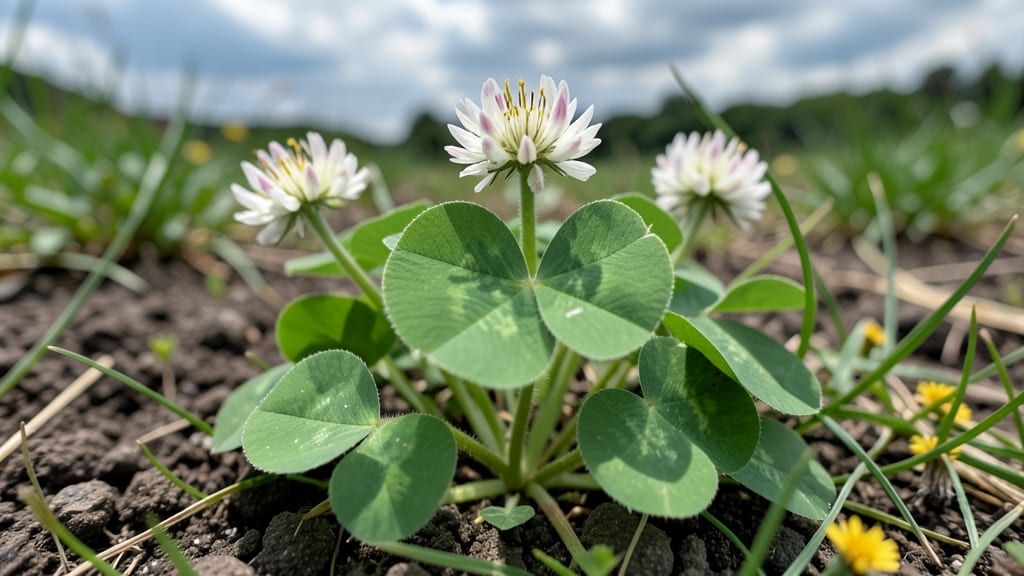
Yes, there is such a thing as a four-leaf clover, existing as a natural mutation of the common three-leaf shamrock, though they’re rare—occurring in only about 1 in 10,000 plants. Their extra leaf symbolizes luck, but their genetic variation is random, not controlled by gardening methods.
Is there such a thing as a four-leaf clover? It’s not just folklore—it's a real botanical rarity caused by a spontaneous genetic mutation in the plant's DNA. 🌿 Unlike the standard three-leaf shamrock, this fourth leaf appears due to a chromosomal variation that disrupts cell division during growth.
The odds are slim because this mutation requires precise conditions, like balanced sunlight and nutrient-rich soil, to manifest properly. What makes them special isn't just their appearance but their deep cultural significance across many traditions as symbols of good fortune.
Interestingly, the fourth leaf can appear in different positions—sometimes opposite the stem or clustered with the others—making each clover unique. While you can't "grow" them intentionally, certain gardening practices like maintaining healthy soil and providing partial shade might create slightly better conditions for these lucky mutations to occur naturally.
💡 In This Article
- How Four-Leaf Clover Mutations Happen
- Gardening Tips to Find More Four-Leaf Clovers
How four-leaf clover mutations happen
The fourth leaf in a four-leaf clover emerges from a rare genetic mutation called chromosomal variation, specifically a phenomenon called polyploidy. Most plants, including the common three-leaf shamrock (Trifolium repens), have two sets of chromosomes (diploid).
However, during cell division, errors can occur where an extra set of chromosomes is copied, creating a tetraploid cell with four sets. This additional genetic material disrupts the plant's development, often resulting in an extra leaf—though sometimes producing malformed or non-viable plants.
The mutation rate for four-leaf clovers is staggeringly low—about 1 in 10,000 plants—because it requires precise conditions during cell division. Environmental factors like temperature fluctuations, nutrient availability, and light exposure can influence whether the mutation survives.
For example, clovers grown in partial shade (receiving about 40-60% sunlight) tend to have slower growth, which may allow mutations to manifest more visibly. The fourth leaf often appears as a smaller, less developed leaflet, sometimes clustered near the stem or opposite the main trifoliate structure.
What’s fascinating is that the fourth leaf isn’t always identical in shape or size. Some four-leaf clovers feature a fourth leaf that’s rounder or heart-shaped, while others have it positioned asymmetrically. This variation occurs because the mutation affects the plant’s meristem (growth cells) differently each time.
Scientists studying plant genetics have found that these mutations are random and irreversible, meaning you can’t selectively breed four-leaf clovers—they only appear spontaneously in nature.
Another key factor is the plant’s DNA repair mechanisms. Most chromosomal errors are corrected by the plant’s natural processes, but if the repair fails, the mutation persists. This is why four-leaf clovers are so rare—they’re essentially a "glitch" in the plant’s genetic code that somehow survives and thrives.
Interestingly, some studies suggest that clovers growing in moist, well-drained soil with moderate organic matter (like compost) may have slightly higher mutation rates due to improved cellular stability during growth.
While the mutation itself is random, certain growing conditions can indirectly support healthier clover plants overall. For instance, clovers thrive in USDA Hardiness Zones 3-9, where temperatures range from -40°F to 70°F.
In these zones, the combination of cool nights and warm days can create optimal conditions for cellular activity—though this doesn’t guarantee a four-leaf clover, it may increase the chances of mutations appearing in a larger population of plants.
One lesser-known detail is that four-leaf clovers can also have five or more leaves, though these are even rarer. These "hyper-mutated" clovers result from additional chromosomal errors during development.
For example, a five-leaf clover might have the standard three leaves plus two extra leaflets, each varying in size and shape. The extra leaves often appear smaller and less defined, as the plant’s resources are stretched thin trying to support the abnormal growth pattern.