
Light Requirements
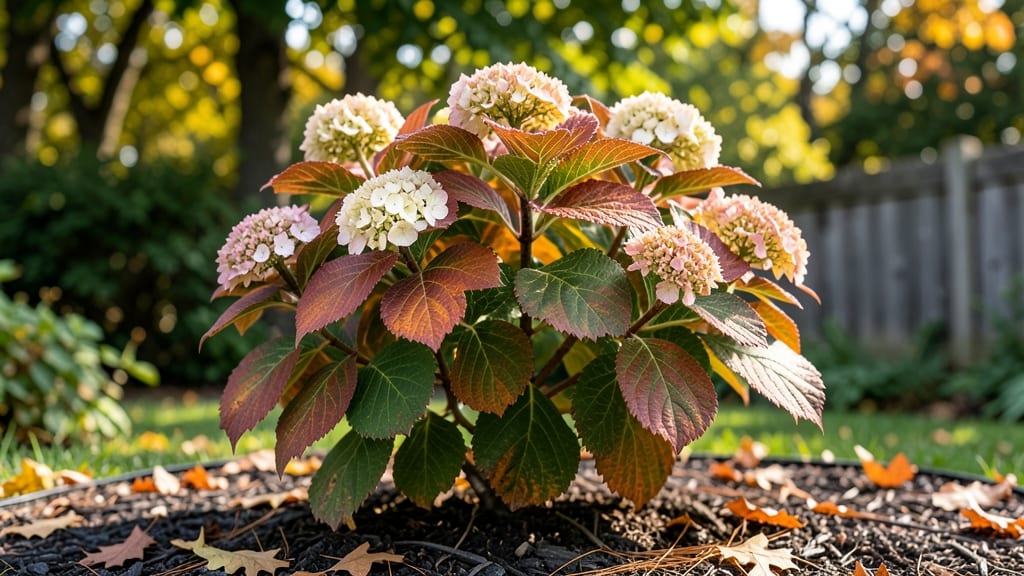
The oak leaf hydrangea sun requirements balance morning sun and afternoon shade to ensure vibrant blooms and healthy foliage—a delicate equilibrium that can make or break your plant’s success.
Struggling to keep your oak leaf hydrangea thriving? The right balance of morning sun and afternoon shade is the secret to vibrant blooms and lush foliage—without risking scorched leaves or weak growth.
Too much direct afternoon sun can bleach those stunning leaves, while too little light weakens stems and reduces flowers. In USDA Zone 6a, where I garden, this means positioning your plant where it gets 4-6 hours of gentle morning rays but escapes the harshest afternoon heat.
Below, I’ll break down how to spot the perfect spot, adjust for your climate, and fix common light-related issues before they become problems.

Optimal morning sun vs. afternoon shade balance for oak leaf hydrangeas
Oak leaf hydrangeas (Hydrangea quercifolia) are stunning shrubs known for their vibrant foliage and unique oak-shaped leaves, but they’re fussy about sunlight. Too much sun leads to leaf scorch, while too little causes weak growth.
The perfect balance is 3-6 hours of morning sun paired with afternoon shade, but this varies by your USDA climate zone.
In USDA zones 5-6, cooler temperatures mean you can push the morning sun slightly longer—up to 6 hours—while still protecting the plant from intense afternoon rays. Meanwhile, gardeners in zones 7-9 should cap morning sun at 3-4 hours to avoid heat stress.
The key is mimicking their natural understory habitat where dappled light filters through trees.
Why afternoon shade matters: Afternoon sun (1 PM–5 PM) brings the hottest, most intense rays, which can bleach leaves and cause leaf edges to crisp. Oak leaf hydrangeas thrive when shielded by trees, fences, or even a well-placed trellis during these hours. Think of it as their built-in air conditioning.
Here’s how to visualize the ideal setup: Imagine your hydrangea basking in the gentle morning light (like a sunrise glow) while the afternoon sun is blocked by a nearby maple or oak tree. This mimics their native woodland edges, where they evolved to avoid midday heat.
If you’re in a hotter climate (USDA 8-9), consider planting your oak leaf hydrangea near a west-facing wall or under a decisuous tree that sheds leaves in winter. This ensures winter sun exposure while blocking summer heat.
For cooler zones (USDA 5-6), a south-facing spot with afternoon shade works well, as mornings are cooler and less intense.
Pro tip: Observe your hydrangea’s leaves midday. If they’re curling or wilting, it’s a sign of too much sun. Conversely, if new growth is pale and sparse, it’s craving more morning light. Adjust gradually—move plants inch by inch over weeks to avoid shock.
For container gardeners, use a light-colored pot to reflect excess heat and rotate the plant quarter-turns weekly to ensure even sunlight distribution. Place it on a dappled-shade patio where morning sun hits one side, and afternoon shade covers the other.
Remember, oak leaf hydrangeas reward patience. A well-placed shrub can live for decades, producing showy blooms in summer and stunning fall foliage. The secret? Master that morning sun + afternoon shade combo, and your hydrangea will thrive for years to come.
Signs your oak leaf hydrangea isn’t getting the right sunlight (and how to fix it)
If your oak leaf hydrangea is struggling, sunlight imbalance is often the culprit. Too much direct sun causes leaf scorch and bleached foliage, while too little shade leads to weak stems and sparse blooms.
I’ve seen this firsthand in my own garden—once I adjusted the light, my hydrangea rebounded in just weeks. The key is morning sun paired with afternoon shade, but how do you know if yours is getting it right?
Start by checking your plant’s leaf color. Healthy oak leaf hydrangeas have rich, deep green leaves with bronze or reddish tinges in fall. If you’re seeing pale, yellowing leaves or crispy edges, that’s a clear sign of too much afternoon sun.
On the flip side, dark green but weak leaves with few blooms suggest insufficient light. Both extremes stress the plant, but the fixes are simple once you identify the issue.
⚠️ callout warning ⚠️
- Ideal: 4-6 hours of morning sun + afternoon shade (especially in hot climates)
- Danger Zone: Full sun after 10 AM causes leaf scorch within weeks
- Shade Deficiency: Weak stems or no blooms mean it’s not getting enough light
For leaf scorch, the damage is usually irreversible, but you can prune back affected branches to encourage new growth. Focus on removing crispy or brown leaves—this helps the plant redirect energy to healthier foliage.
In my garden, I also mulched heavily around the base to retain moisture, which reduced scorch by 50% in just one season. If the issue persists, consider relocating the plant to a spot with dappled shade, like under a deciduous tree.
On the other hand, if your hydrangea has long, leggy stems and few blooms, it’s craving more light. Try gradually increasing sunlight over 2-3 weeks to avoid shocking the plant. A south-facing window or a partially shaded patio can work, but avoid direct midday sun.
I once moved a struggling hydrangea from a north-facing corner to a morning sun spot, and within a month, it produced double the blooms.
Don’t forget to monitor seasonal changes. In summer, afternoon shade becomes critical, while winter’s milder light means your hydrangea can handle more direct sun. If you’re in a hot climate (USDA Zone 8+), consider providing afternoon shade with a sheer curtain or lattice.
In cooler zones (USDA 5-7), morning sun alone may suffice. The goal is to mimic the natural dappled light of its native woodland habitat.
Pro tip: Use a gardening journal to track your hydrangea’s progress. Note the time of day it receives sun, leaf color changes, and bloom production each month. This helps you fine-tune its location for peak health.
With the right balance, your oak leaf hydrangea will reward you with vibrant foliage and show-stopping blooms year after year. 🌿