
Trees
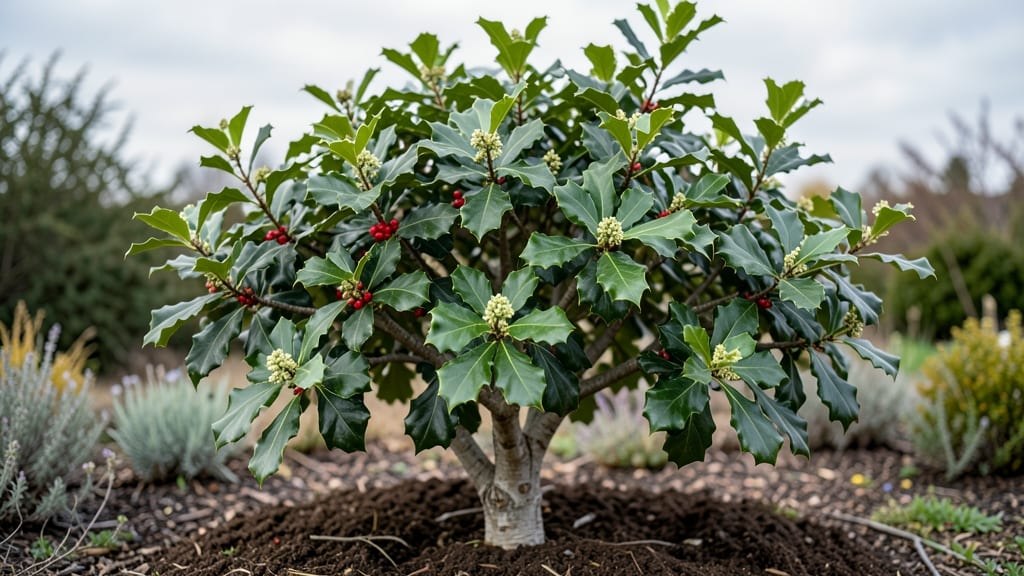
Oakleaf holly trees bring year-round drama to landscapes with their glossy, spiny foliage and vibrant red berries. 🌿 I planted mine last spring, and the way it stands out against bare winter branches—still lush and green—has made it the centerpiece of my yard.
Unlike other hollies, these trees handle heat and humidity beautifully, thriving in zones 6 through 9 without fuss. The secret to happy oakleaf hollies starts with the right spot: partial shade protects tender leaves from harsh afternoon sun, while well-draining soil prevents soggy roots.
Most gardeners overlook spacing—plant them 15 to 20 feet apart for mature size, or closer if you want a dense hedge. My first mistake? Crowding them too tight; now they’ve outgrown their neighbors and need pruning to shape up.
Once established, they’re nearly maintenance-free, but spring is the best time to prune—just after berries fade—to encourage fresh growth. The foliage stays vibrant all winter, and those bright red berries (if you have a female tree) attract birds while adding holiday cheer.
With proper care, your oakleaf holly will reward you for decades. Perfect for privacy screens, foundation plantings, or as a striking specimen tree. Here’s how to get yours growing strong from day one—no green thumb required!
📚 In This Guide
- What you need
- Instructions
- Tips and common mistakes
- Wrapping up and next steps
What you need
- ● Oakleaf holly trees – Choose Ilex opaca or Ilex × 'Nellie R. Stevens' (2–3 plants for balanced landscaping). Opt for 1–3 gallon containers for young trees or 15-gallon+ for mature specimens.
- ● High-quality planting soil – 5–10 bags (2–3 cubic feet each) of well-draining, acidic soil (pH 5.0–6.0). Mix with peat moss or compost (1 part peat to 2 parts soil) for ideal conditions.
- ● Organic mulch – 2–3 cubic feet of pine straw or shredded bark to retain moisture and suppress weeds.
- ● Slow-release fertilizer – 1–2 pounds of 10-10-10 or 8-3-9 (acid-loving plant formula) for initial planting.
- ● Shovel or spade – For digging holes (1.5x wider and as deep as the root ball).
- ● Garden trowel – For fine adjustments and loosening soil.
- ● Wheelbarrow or bucket – To mix soil amendments (1–2 gallons capacity).
- ● Pruning shears – Sharp, bypass-style shears for trimming dead branches or shaping.
- ● Watering can or hose with nozzle – For gentle, deep watering (1–2 gallons per tree initially).
- ● Gloves and knee pads – Because comfort (and clean hands!) matter. 😉
- ● Root stimulator – A powder or gel (e.g., Mycorrhizal fungi) to boost root growth.
- ● Tree stakes and ties – If planting in windy areas (2–3 stakes per tree).
- ● Soil pH test kit – To confirm acidity before planting (aim for 5.0–6.0).
- ● Decorative rocks or edging – For a polished look around the base.
How to plant and care for oakleaf holly trees
Here’s my go-to approach for growing these stunning evergreens—no fancy tools, just the right spot and a little patience.
🪴 Step 1: Pick the Perfect Planting Spot
Oakleaf hollies thrive in full sun to partial shade, but they’ll tolerate more shade than other hollies. I always look for a spot with at least 4-6 hours of sunlight daily—this ensures those glossy leaves stay vibrant year-round. The soil should drain well, but don’t stress if it’s not perfect; hollies are forgiving.
Check the site’s moisture level before planting. If the ground stays soggy for days after rain, amend with compost or sand to improve drainage. I dig a hole twice as wide as the root ball but only as deep—burying too deep suffocates the roots. Loosen the sides of the hole with a shovel so roots can spread easily.
☀️ Step 2: Plant at the Right Time and Depth
Fall or early spring are the best times to plant—cooler temps mean less stress on the tree. Handle the root ball gently; if it’s wrapped in burlap, remove it but keep the roots moist. Place the tree in the hole so the top of the root ball sits 1-2 inches above ground level. This prevents water from pooling around the trunk.
Backfill with native soil, tamping lightly as you go to remove air pockets. Water deeply right after planting to settle the soil and eliminate gaps. You’ll see the ground sink slightly—this is normal. Mulch around the base with 2-3 inches of organic mulch, keeping it 6 inches away from the trunk to prevent rot.
💧 Step 3: Water Consistently for the First Year
Newly planted hollies need 1-2 inches of water weekly, especially during dry spells. I water deeply but infrequently—soaking the root zone until water runs out the bottom of the hole. Let the top inch of soil dry between waterings; soggy soil chokes roots, while bone-dry soil stresses the tree.
Watch for wilting leaves in summer heat—that’s your cue to water. Mature hollies are drought-tolerant, but young trees need steady moisture to establish. Avoid overhead watering; it spreads disease. Instead, use a soaker hose or water at the base.
✂️ Step 4: Prune for Shape and Health
Prune in late winter or early spring before new growth starts. Remove dead or crossing branches first—these compete for energy and look messy. I use clean, sharp pruners to make cuts just outside the branch collar (the swollen area where the branch meets the trunk).
Shape the tree lightly, focusing on an open center to allow sunlight to reach the interior. Never remove more than 25% of the foliage at once—hollies respond poorly to heavy pruning. If you’re growing for berries, leave some female flowers; they’ll develop into bright red fruit in fall if you have male trees nearby.
🌿 Step 5: Feed and Protect for Long-Term Growth
Feed young hollies with a balanced fertilizer (10-10-10) in early spring, following label rates. Mature trees rarely need fertilizer unless growth slows. I skip fertilizing in fall—new growth then won’t harden off before winter.
Watch for pests like spider mites or scale, which love stressed hollies. Spray with horticultural oil in early summer if you spot webbing or sticky residue on leaves. Deer and rabbits may nibble young trees, so protect them with a wire cage until established.
Tips & tricks for perfect oakleaf holly trees
Between us, these evergreens are the unsung heroes of landscaping—easygoing yet stunning. Here’s how to give them the best start and keep them thriving for decades.
Sunlight Strategy: Oakleaf hollies handle more shade than most hollies, but those 4-6 hours of sunlight daily are non-negotiable for vibrant foliage. I’ve seen them struggle in deep shade—leaves lose their glossy sheen and grow sparse. If your yard has dappled light, that’s perfect. For full shade spots, consider a more shade-tolerant variety.
Root Ball Revelation: The most common mistake? Burying too deep. That 1-2 inch above ground level rule isn’t just arbitrary—it prevents water from pooling around the trunk, which causes rot. After planting, gently press the soil and check: if it’s sinking, add more. And if you’re planting in clay soil, mix in some compost or sand to improve drainage before backfilling.
Watering Wisdom: Those 1-2 inches of water weekly should soak the root zone completely. I use a rain gauge to track rainfall—if we’ve had 1.5 inches, I skip watering. For container-grown hollies, check soil moisture by sticking your finger 2 inches deep. If it’s dry, water until it runs out the drainage holes. Overwatering is the #1 killer of young hollies.
Pruning Precision: When shaping your holly, focus on creating an open center—this lets sunlight reach all the leaves, preventing that "holly bush" look. And never cut more than 25% of the foliage at once. I’ve seen people hack back half the plant, and it takes years for hollies to recover. For berry production, leave some female flowers—you’ll need male trees nearby for pollination, but that’s a story for another time.
Pro Tips for Oakleaf Holly Trees
- Between us, these evergreens are the unsung heroes of landscaping—easygoing yet stunning.
- Sunlight Strategy: Oakleaf hollies handle more shade than most hollies, but those 4-6 hours of sunlight daily are non-negotiable for vibrant foliage.
- Root Ball Revelation: The most common mistake?
Frequently asked questions
Got questions about oakleaf holly trees? You’re not alone—these stunning evergreens spark curiosity! Here are answers to the most common queries to help you care for your oakleaf holly with confidence.
How fast do oakleaf holly trees grow?
Oakleaf hollies grow at a moderate pace, typically adding 12–24 inches per year under ideal conditions. Their slow-to-moderate growth makes them perfect for long-term landscaping projects. Patience pays off with their lush, glossy foliage and striking red berries!
Are oakleaf hollies cold-hardy? What zones do they thrive in?
Yes! Oakleaf hollies are highly cold-tolerant and thrive in USDA Hardiness Zones 7–10. In colder climates (Zone 6), young trees may need winter protection like burlap wraps or mulch. Their evergreen leaves hold up beautifully even in chilly winters.
Do oakleaf hollies need pruning? How often?
Pruning is optional but helps shape your tree and encourage bushier growth. Light pruning in late winter or early spring (before new growth) is ideal. Remove dead or crossing branches, and avoid heavy pruning—oakleaf hollies respond best to minimal trimming for a natural look.
Will oakleaf hollies attract birds and wildlife?
Their bright red berries are a magnet for birds like mockingbirds, cardinals, and robins—especially in winter when food is scarce. The berries also add a festive touch to your yard. Just note: Birds may peck at the fruit, but the tree’s resilience keeps it thriving.
Can I grow an oakleaf holly in a container? Are there dwarf varieties?
Yes! Dwarf varieties like ‘Daniel’s Dwarf’ or ‘Stokes Dwarf’ (3–5 ft tall) are perfect for containers. Use a large pot with drainage and well-draining soil. Keep it in partial shade and water regularly. Container-grown hollies add holiday charm to patios or balconies!
Why are the leaves turning yellow or brown on my oakleaf holly?
Yellowing or browning leaves often signal overwatering, underwatering, or fungal issues like leaf spot. Check soil moisture (it should be evenly damp but not soggy) and improve airflow around the tree. Fungal problems? Prune affected branches and apply fungicide if needed.
Wrapping up and next steps
Oakleaf holly trees bring timeless beauty and low-maintenance charm to any landscape, offering lush, glossy foliage and elegant berries that brighten winter scenes. Whether you’re drawn to their dramatic year-round appeal or their adaptability to various climates, these trees are a fantastic choice for homeowners and gardeners alike.
Ready to elevate your outdoor space? Start by selecting the perfect variety for your region, then plant with care—your future will be a stunning, evergreen masterpiece!