
Watering
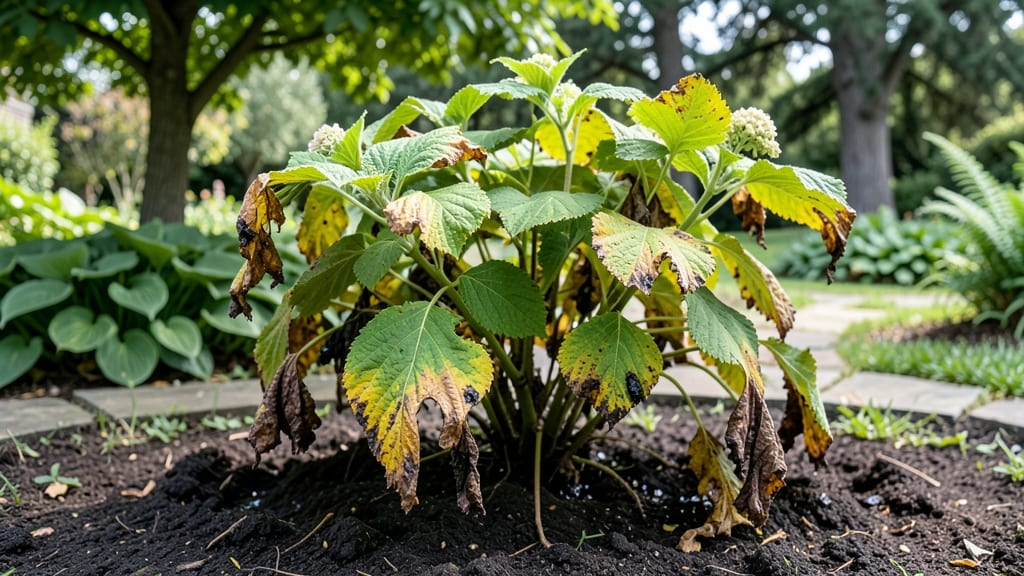
Your hydrangea’s sad, drooping leaves aren’t just wilting—they’re screaming for help after being overwatered too much water, and these pictures of hydrangea leaf problems tell the story. 🌿 I’ve seen this exact scene play out in backyard gardens and containers alike, where yellowing, curling, and brown patches turn vibrant blooms into a soggy mess.
The good news? This isn’t a death sentence, just a watering lesson your plants are begging you to learn.
Overwatering strangles hydrangeas by suffocating roots in soggy soil, inviting fungal infections like powdery mildew or root rot. Those yellow leaves? That’s the plant’s SOS for air—roots need oxygen, not a swamp. Browning edges? Salt buildup from overwatered tap water.
And curling? A desperate attempt to reduce water loss. The fix starts with your finger: stick it in the soil before watering. If it’s damp past 2 inches, wait.
Drainage is your new best friend—amend heavy soil with perlite or compost, and elevate containers with feet. For fungal issues, snip affected leaves and spray with neem oil (it’s like plant medicine).
Within weeks, you’ll see fresh green growth pushing through, and those blooms will return bigger and bolder than ever. Trust me, your hydrangeas will thank you.
Prevention is easier than cleanup: water deeply but infrequently, mulch to regulate moisture, and choose well-draining spots. My hydrangeas now thrive with just 1 inch of water per week—rain or hose—and they’ve never looked healthier.
The key is patience; let the soil dry between waterings, and you’ll break the overwatering cycle for good.
Root Causes of Overwatered Hydrangeas
When your hydrangeas start showing signs of distress—like yellowing leaves, curling edges, or brown, mushy growth—the culprit is often too much water. But why does this happen?
Overwatering isn’t just about giving your plants a little extra drink; it’s a complex issue tied to soil health, root function, and even the environment. Let’s break down the real reasons behind those sad, soggy leaves.
Hydrangeas thrive in well-draining soil, but if your garden bed or pot lacks proper drainage, water pools around the roots instead of moving through the soil. Without escape routes, roots suffocate, cutting off oxygen and triggering:
- Root rot 🍄: Fungal infections like Phytophthora or Pythium feast on waterlogged roots, turning them black, slimy, and unable to absorb nutrients.
- Nutrient starvation 🚫: Roots can’t access phosphorus, potassium, or nitrogen when drowned, leading to chlorosis (yellowing leaves).
- Toxic buildup 💀: Excess water leaches nutrients but also traps harmful salts and chemicals, burning roots over time.
Actionable fix: Test your soil’s drainage by digging a 6-inch hole, filling it with water, and timing how long it takes to drain. If it’s slower than 4 hours, amend with perlite, sand, or organic matter like compost.
Even with good drainage, watering on a rigid schedule (e.g., every morning without checking soil moisture) can drown hydrangeas. These plants are not desert cacti—they prefer consistent moisture but hate soggy conditions. Common mistakes include:
- Ignoring weather 🌦️: Heavy rain + your watering routine = double the stress. Hydrangeas in pots dry out faster than in-ground plants, but both can suffer if you don’t adjust.
- Light, frequent watering 💦: Shallow watering encourages roots to stay near the surface, where they’re more prone to rot. Deep watering (1–2 inches per week) trains roots to grow downward for stability.
- Using the wrong tools 🔧: Sprinklers or hose streams can create waterlogged spots, while drip irrigation or soaker hoses deliver water directly to the root zone without oversaturating.
Pro tip: Stick your finger 2 inches into the soil before watering. If it’s damp, wait. If it’s bone-dry, hydrate deeply. Hydrangeas in pots may need daily checks in summer heat!
Heavy, clay-based soils or compacted garden beds act like a water trap, preventing excess moisture from evaporating or draining. Signs your soil is the problem:
- Puddles linger 💦 after rain or watering.
- Leaves yellow even when watered “correctly” (roots can’t breathe).
- Soil feels hard when dry and sticky when wet (classic clay texture).
Science behind it: Clay particles bind tightly, reducing aeration (air pockets in soil). Without oxygen, roots asphyxiate, leading to:
- Slow nutrient uptake → stunted growth or leaf drop.
- Increased susceptibility to root diseases (e.g., Armillaria root rot).
Fix it: Mix in 2–3 inches of organic compost or gypsum (for clay) to improve structure. For pots, use a 50/50 mix of potting soil and perlite.
Hydrangeas are sensitive to temperature extremes, and humidity plays a hidden role in overwatering. Here’s how:
- Cold soil 🥶: In chilly weather, roots slow down, reducing their ability to absorb water. If you water on schedule, excess moisture lingers, promoting rot.
- High humidity 🌬️: Damp air + wet soil = a fungal paradise. Pathogens like Botrytis thrive, causing brown, mushy leaves even if roots aren’t visibly rotted.
- Heat stress 🔥: In summer, hydrangeas transpire (sweat) more. If you don’t adjust watering, the soil stays soggy while leaves wilt from osmotic shock (too much water dilutes root cells).
Adjustments:
- Water early in the morning to reduce evaporation loss.
- Use mulch (2–3 inches of wood chips) to regulate soil temperature.
- In humid climates, space plants for airflow and avoid overhead watering.
Revive Your Hydrangeas Now
If your hydrangeas are showing signs of overwatering—yellowing leaves, curling edges, or brown, mushy spots—don’t panic! With the right steps, you can nurse them back to health and prevent future waterlogging. Here’s how to diagnose the issue and fix it, cause by cause, with practical solutions and prevention tips.
Yellowing leaves are often the first sign of overwatering, as excess moisture cuts off oxygen to the roots. Here’s how to correct it:
🔥 Step 1: Stop Watering Immediately
Let the soil dry out completely before watering again. Stick your finger 1–2 inches into the soil—if it’s damp, wait another day. Hydrangeas prefer consistently moist but well-draining soil, not soggy conditions.
🍳 Step 2: Improve Drainage
If your hydrangea is in a container, check for drainage holes. If none exist, repot it into a container with holes or add a layer of gravel or perlite at the bottom to promote airflow. For in-ground plants, consider amending the soil with compost or sand to loosen compacted areas.
👨🍳 Step 3: Trim Damaged Foliage
Use clean, sharp pruning shears to remove yellow or brown leaves. This helps the plant focus energy on new, healthy growth. Avoid cutting into green stems—only prune dead or dying foliage.
🌡️ Pro Tip: Test Your Soil
If yellowing persists, your soil may be too dense or lacking nutrients. Conduct a simple soil test (available at garden centers) to check pH and nutrient levels. Hydrangeas thrive in acidic to neutral soil (pH 5.2–6.5). Adjust with peat moss or sulfur if needed.
Curling leaves or brown, crispy edges often mean the plant is struggling with root rot or nutrient imbalance from overwatering. Act fast to save your hydrangea:
⏰ Step 1: Assess Root Health
Gently dig around the base of the plant (or remove it from its pot) to inspect the roots. Healthy roots are white or light tan, while rotten roots are dark, mushy, and smell foul. If roots are severely affected, you may need to prune them back with sterilized shears.
🔪 Step 2: Repot or Replant
If root rot is confirmed, repot your hydrangea into fresh, well-draining soil. For in-ground plants, dig a hole twice as wide as the root ball, mix in compost and perlite, and replant. Water lightly afterward to settle the soil.
💡 Pro Tip: Adjust Watering Schedule
Hydrangeas need 1–1.5 inches of water per week, including rainfall. Water deeply but infrequently, ensuring the top 2–3 inches of soil dry out between waterings. Use a moisture meter or the "finger test" to monitor soil moisture.
Browning or mushy leaves are a red flag for root rot, a fungal issue caused by prolonged soggy soil. Here’s how to treat it:
🌧️ Step 1: Drain the Area
If your hydrangea is in a pot, place it in a shallow tray of water for 10–15 minutes to help flush out excess moisture, then let it drain completely. For in-ground plants, create a slight mound of soil around the base to encourage runoff during heavy rains.
🌿 Step 2: Apply Fungicide (If Needed)
If root rot is severe, treat with a copper-based or hydrogen peroxide fungicide (3% solution). Spray the soil and affected leaves, following label instructions. For a natural option, mix 1 part hydrogen peroxide to 4 parts water and apply lightly.
✨ Pro Tip: Mulch Properly
Add a 2–3 inch layer of organic mulch (like wood chips or straw) around the base of your hydrangea, but keep it 2–3 inches away from the stem to prevent moisture buildup. Mulch helps regulate soil temperature and reduces evaporation, but too much can trap moisture.
Once your hydrangea is on the mend, keep these tips in mind to avoid overwatering in the future:
- ✅ Choose the Right Pot: If growing in containers, opt for terracotta or fabric pots, which allow better airflow than plastic. - ✅ Water in the Morning: Watering early in the day gives leaves time to dry, reducing fungal risks. - ✅ Avoid Over-Mulching: Too much mulch can suffocate roots and trap moisture.
Stick to a 2–3 inch layer. - ✅ Monitor Weather Conditions: Adjust watering during heavy rain or humidity. Hydrangeas need less water when it’s already damp outside. - ✅ Fertilize Wisely: Over-fertilizing can encourage weak, waterlogged growth.
Use a balanced, slow-release fertilizer in spring and early summer.
With these solutions, your hydrangea should bounce back in 2–4 weeks. Keep an eye on its progress, and soon you’ll have lush, vibrant blooms—just as you envisioned! 🌸
Frequently asked questions
What do hydrangea leaves look like when overwatered?
Overwatered hydrangea leaves typically show yellowing (chlorosis), curling edges, or browning/mushy spots. The leaves may also feel limp or droop, and you might notice white fungal growth on stems or soil. Check roots too—if they’re black and mushy, root rot has set in.
How often should I water hydrangeas to avoid overwatering?
Hydrangeas need 1–1.5 inches of water per week, including rainfall. Always check soil moisture first: stick your finger 2 inches deep. If damp, wait; if dry, water deeply until it runs through the drainage holes. Containers dry faster than garden beds.
Can I save a hydrangea with root rot from overwatering?
Yes, but act fast! Trim away black, mushy roots with sterilized shears, repot in fresh, well-draining soil, and reduce watering. For severe cases, apply a copper fungicide or hydrogen peroxide spray. Keep the plant in bright, indirect light and monitor soil moisture closely.
Why do my hydrangea leaves turn yellow even when I’m not overwatering?
Yellow leaves can also signal nutrient deficiencies (like iron or nitrogen) or pH imbalances. Test your soil—hydrangeas prefer pH 5.2–6.5. If the soil is too alkaline, amend with peat moss or sulfur. Check for pests (like aphids) or disease spots too.
What’s the best pot for hydrangeas to prevent overwatering?
Choose terracotta or fabric pots with drainage holes—they breathe better than plastic. Add a 2-inch layer of gravel or perlite at the bottom for extra drainage. Elevate pots on feet to improve airflow, and avoid saucers that trap excess water.