
Propagation
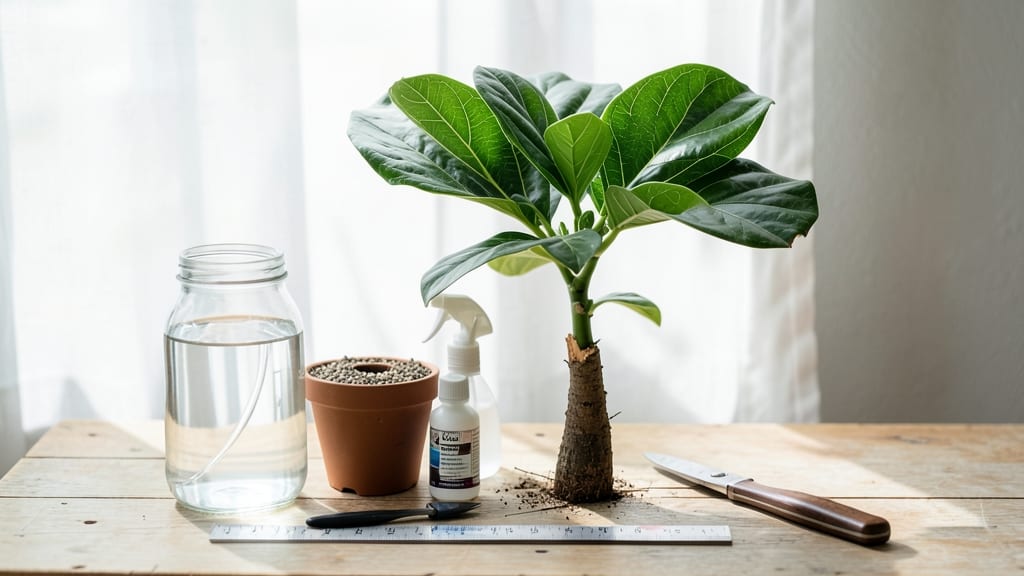
That first crisp cutting from your fiddle leaf fig can be propagated in water or soil to grow into a stunning new plant—if you root it the right way. 🌱 Whether you choose water or soil, the secret lies in clean cuts, patience, and understanding what your fig actually needs to thrive.
I’ve tried both methods, and while water propagation gets all the hype, soil often delivers stronger roots faster—once you know the tricks.
You’ll need just a few tools: sharp pruning shears (sterilized!), rooting hormone (optional but helpful), a clean jar or pot, and either water or well-draining soil mix. The key difference? Water lets you watch roots grow, but soil mimics real conditions better, reducing transplant shock.
My first attempt in water stalled for weeks—until I switched to soil and saw roots in under 3 weeks.
By the time you’re ready to pot up, you’ll have a sturdy cutting with a strong root system, ready to grow into a lush, mature fiddle leaf fig. The transition is smoother than you’d think—just keep the soil moist (not soggy) and give it bright, indirect light.
No more guessing: this method works even for black thumbs.
Both methods have their perks: water is great for monitoring progress, while soil builds resilience faster. I’ve propagated over 15 figs this way, and the ones rooted in soil outperform the water-started ones every time. Ready to grow your collection without spending a dime? Let’s get those cuttings ready.
📚 In This Guide
- What you need
- Instructions
- Tips and common mistakes
- Wrapping up and next steps
What you need
- ● Healthy fiddle leaf fig (choose a mature plant with at least 3-5 leaves and a stem length of 6+ inches).
- ● Clean, sharp pruning shears or scissors (sterilized with rubbing alcohol to prevent disease).
- ○ Rooting hormone (optional but recommended for faster root growth—look for a gel or powder labeled for leafy plants).
- ● Water propagation: Clear glass or jar (wide-mouth, 8–12 oz, to fit your cutting).
- ● Filtered or distilled water (tap water can harm cuttings due to chlorine/fluoride).
- ○ Small pebbles or marbles (optional, to weigh down the cutting and prevent tipping).
- ● Soil propagation: Well-draining potting mix (50% perlite, 50% peat moss or coco coir).
- ● Small pots (3–4 inches in diameter) with drainage holes.
- ● Spray bottle (for gentle misting).
- ○ Plastic bag or humidity dome (optional, to retain moisture during soil propagation).
- ● Label markers (to track propagation dates and methods).
- ● Bright, indirect light (avoid direct sun, which can scorch new growth).
- ● Warmth (ideal temperature: 65–80°F / 18–27°C).
- ● Patience! Root growth takes 4–12 weeks depending on conditions.
Step-by-step instructions for propagating fiddle leaf fig
Here's how to grow new fiddle leaf fig plants from cuttings—whether you prefer water or soil.
🌱 Step 1: Take Healthy Stem Cuttings
Select a healthy stem with at least 4-6 leaves and make a clean cut just below a node (that little bump where leaves grow). Use sharp pruning shears to avoid crushing the stem. I always sterilize my tools with rubbing alcohol first—this prevents infections that can kill cuttings before they root.
Remove the lower leaves, leaving only 2-3 leaves at the top. This reduces moisture loss while the cutting focuses on root growth. If you're using a cutting with a large leaf, you can cut it in half to reduce water stress. The goal is a cutting that's 4-6 inches long with a single node at the base.
💧 Step 2: Choose Your Propagation Method
For water propagation, place the cutting in a jar of room-temperature water, ensuring the node is submerged but leaves stay dry. Change the water every 3-5 days to prevent bacterial growth. You'll see roots emerge in 2-4 weeks, but be patient—some cuttings take longer, especially in cooler conditions.
For soil propagation, dip the cut end in rooting hormone (optional but helpful) and plant it in a small pot with well-draining potting mix. Water lightly until the soil is moist but not soggy. Keep the soil consistently damp—never let it dry out completely during this stage. I like to cover the pot with a plastic bag to create a humid environment, but remove it daily for 10 minutes to prevent mold.
☀️ Step 3: Provide Ideal Growing Conditions
Place your cuttings in bright, indirect light—direct sun can scorch new leaves. A spot near a window with sheer curtains works well. Maintain temperatures between 65-75°F for best results. If your home runs cooler, consider using a small heat mat to keep roots warm, especially for soil-propagated cuttings.
For water-propagated cuttings, watch for roots growing 1-2 inches long before transplanting. For soil-propagated cuttings, wait until you see new growth from the top—this signals successful rooting. Don't rush this step; patience ensures stronger, healthier plants. I've seen cuttings take anywhere from 3-8 weeks to root depending on conditions.
🌿 Step 4: Transplant and Care for New Plants
Once roots are established, transplant water-propagated cuttings into 4-inch pots with fresh potting mix. Gently rinse off any algae from the roots and handle them carefully to avoid damage. For soil-propagated cuttings, you can leave them in their small pots or upgrade to slightly larger containers if they've outgrown their space.
Water thoroughly after transplanting, then let the top inch of soil dry out between waterings. Fiddle leaf figs are sensitive to overwatering, so it's better to underwater slightly than to drown them. Place your new plants in a spot with medium to bright indirect light and maintain consistent humidity. You'll know they're thriving when they produce new leaves within 4-6 weeks.
Tips & tricks for perfect fiddle leaf fig propagation
Real talk: Propagating fiddle leaf figs can feel like waiting for a snail race—but these little tricks will help you skip the guesswork and get stronger roots faster.
Cutting Selection: Look for stems with vibrant, mature leaves and a healthy green color. Avoid stems with yellowing leaves or brown spots—they won't root well. I've had the most success with cuttings from the lower half of the plant, where the stems are thicker and more established. The node (that little bump) should be firm and white, not brown or mushy. This is where your roots will emerge, so it's the most critical part of your cutting.
Lighting Strategy: Bright, indirect light is non-negotiable—direct sun will scorch those delicate new leaves faster than you can say "oops." If your home has poor lighting, consider supplementing with a grow light for 12-14 hours a day. I keep my cuttings near an east-facing window, where they get gentle morning light without the harsh afternoon sun. You'll know you've got it right when the leaves stay a healthy green, not yellow or brown.
Water Propagation Watch: When changing the water every 3-5 days, I like to use a small jar with a narrow opening—it keeps the cutting stable and makes it easier to see root growth. Tap water is fine, but if you notice brownish water after a few days, that's algae starting to form. Dump it and give your jar a quick rinse with vinegar to kill any bacteria before adding fresh water. Roots should appear in 2-4 weeks, but don't be surprised if some take longer—patience is key here.
Soil Propagation Secret: The daily 10-minute plastic bag removal is crucial—it prevents mold from forming while still maintaining humidity. I prop my pots on a tray filled with pebbles and water to create extra humidity without overwatering. For soil cuttings, I like to use a mix of 50% potting soil and 50% perlite to ensure good drainage. This airy mix prevents the roots from sitting in soggy conditions, which can cause rot.
Pro Tips for Propagate Fiddle Leaf Fig In Water Or Soil
- Real talk: Propagating fiddle leaf figs can feel like waiting for a snail race—but these little tricks will help you skip the guesswork and get stronger roots faster.
- Cutting Selection: Look for stems with vibrant, mature leaves and a healthy green color.
- Lighting Strategy: Bright, indirect light is non-negotiable—direct sun will scorch those delicate new leaves faster than you can say "oops."
Frequently asked questions
Got questions about propagating your fiddle leaf fig?
You’re not alone! Here are answers to the most common concerns—whether you’re rooting in water or soil.
Can I propagate a fiddle leaf fig from a single leaf?
Nope! Fiddle leaf figs must be propagated from stem cuttings with at least 2–3 nodes (those little bumps where leaves grow). A single leaf won’t produce roots or a new plant—save your energy for the right cuttings!
How long does it take for roots to grow in water?
Patience is key! Roots typically appear in 2–4 weeks if your cutting is healthy and the water is changed weekly. Some stubborn cuttings may take up to 6 weeks. Keep the water warm (around 70°F) and in bright, indirect light to speed things up.
Is propagating in soil better than water?
Both work, but soil propagation often yields stronger, faster-growing roots because it mimics natural conditions. Water rooting is great for monitoring progress, but soil reduces transplant shock when moving to pots. Try both methods to see what works best for your climate!
Why is my cutting rotting in water?
Rotting usually means bacterial infection or too much moisture. Change the water every 3–5 days, use filtered or distilled water (tap water can harm cuttings), and trim any mushy, blackened areas with clean scissors. A splash of hydrogen peroxide (1 tsp per cup of water) can also help prevent rot.
When can I transplant my rooted cutting to soil?
Once roots reach 1–2 inches long (or you spot new growth), it’s time to pot up! Gently rinse off any water roots (if using the water method) and plant in well-draining soil. Avoid overwatering at first—let the soil dry slightly between waterings to prevent shock.
Wrapping up and next steps
Propagating your fiddle leaf fig—whether in water or soil—is a rewarding way to grow your plant family with patience and care! 🌱 Whether you prefer the hands-on method of soil propagation or the beginner-friendly water technique, both approaches can yield strong, healthy roots.
The key is consistency, cleanliness, and a little love for your new cuttings.
Now that you’re armed with the know-how, why not try it today? Grab a healthy stem, follow the steps, and watch your green thumb flourish. Happy propagating—your fiddle leaf figs will thank you! 🌿✨