
Flowers
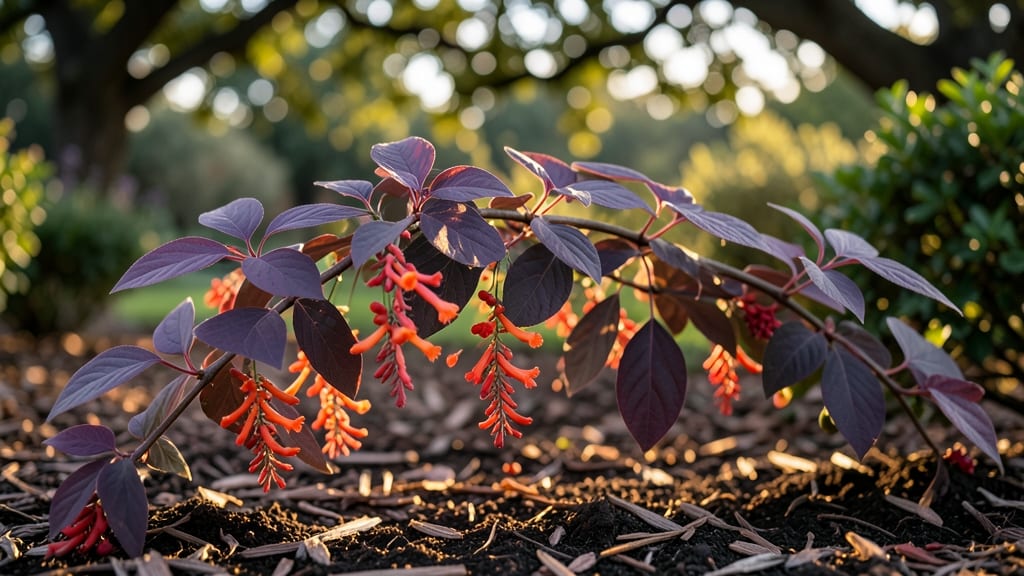
This purple leaf honeysuckle vine transforms any garden with its velvety foliage and sweet summer fragrance—no fancy skills required. 🌿 I planted mine last spring against a trellis, and now it drapes like a living tapestry, blooming from May through July with tubular pink flowers that hummingbirds adore.
The magic starts with full sun to partial shade and well-draining soil—it thrives in zones 4-8, even tolerating urban pollution better than many plants. A 3-foot spread in the first year turns into a 10-foot climbing masterpiece by year three, perfect for fences, arbors, or even training as a hedge.
Pruning is the secret to keeping it lush: trim back one-third in late winter to encourage dense growth, and deadhead spent blooms for nonstop color. Water deeply once established, but it’s drought-tolerant once roots take hold—my plant barely needs attention after the first season.
What you’ll love most? The year-round interest: purple-tinged leaves in spring, fragrant blooms in summer, and even winter stems that add texture. It’s the low-maintenance star that outshines high-fuss climbers every time.
📚 In This Guide
- What you need
- Instructions
- Tips and common mistakes
- Wrapping up and next steps
What you need
- ● Purple leaf honeysuckle plant: 1-3 nursery-grown plants (3-4 ft tall for faster results) or
- ● Seeds (if starting from scratch—germination can be slow!)
- ● Well-draining soil: Mix of garden soil + compost (or potting mix for containers). Pro tip: Purple leaf honeysuckle thrives in slightly acidic to neutral soil (pH 6.0-7.0).
- ● Organic mulch: 2-3 inches of wood chips or shredded bark to retain moisture and suppress weeds.
- ● Garden trowel or shovel (for transplanting)
- ● Pruning shears (sharp, sterilized—✨ always sanitize with rubbing alcohol!)
- ○ Gloves (optional but recommended for thorny stems)
- ● Watering can or hose with a gentle spray nozzle
- ● Support structure: Trellis, arbor, or fence (6-10 ft tall for climbing varieties)
- ○ Optional: Wire cage or stakes for bushier growth.
- ● Sunlight: Full sun (6+ hours/day) for best color and blooms.
- ● Hardiness zone: Plant in USDA Zones 4-9 (check your local climate!).
- ● Spacing: 3-5 ft apart if planting multiple shrubs.
Step-by-Step guide to planting and caring for purple leaf honeysuckle
This striking vine thrives with minimal fuss once you nail a few key steps.
🌱 Step 1: Choose the Perfect Planting Location
Purple leaf honeysuckle craves full sun to partial shade—at least 6 hours of direct sunlight daily for optimal foliage color and flowering. I always plant mine where the morning sun warms the leaves but afternoon shade prevents scorching, especially in hot climates. The vine’s rich purple leaves will fade to green if deprived of light, so avoid deep shade.
Select a spot near a sturdy trellis, arbors, or fence—this vine can climb 15-20 feet with proper support. The fragrant blooms attract hummingbirds, so position it where you can enjoy the show from a patio or deck. If planting near a wall, leave at least 3 feet of clearance for air circulation to prevent fungal diseases.
🪴 Step 2: Prepare the Soil and Plant Correctly
This vine tolerates most soil types but thrives in well-draining, slightly acidic to neutral soil (pH 6.0-7.0). Before planting, amend heavy clay with 2-3 inches of compost or sand to improve drainage. Purple leaf honeysuckle dislikes soggy roots, so avoid low-lying areas where water pools.
Dig a hole twice as wide as the root ball but only as deep. Place the plant so the top of the root ball sits level with the surrounding soil—burying too deep suffocates the stem. Gently loosen the roots if they’re circling in the container, then backfill with native soil. Water deeply to settle the soil and remove air pockets.
☀️ Step 3: Provide Support and Prune for Healthy Growth
Install a strong trellis or arbor immediately after planting—honeysuckle vines grow aggressively and need support from day one. I use 4-inch diameter wooden posts for stability, especially in windy areas. Tie the main stems loosely with soft plant ties or old fabric strips to guide growth without restricting it.
Prune in late winter or early spring before new growth begins. Remove dead, diseased, or crossing branches first, then cut back overly long stems by one-third to encourage bushier growth. Avoid heavy pruning in fall—this vine’s vibrant foliage provides winter interest, and late cuts can stimulate tender new growth that won’t survive frost.
💧 Step 4: Water and Fertilize for Vibrant Foliage
Water deeply once a week during the first growing season to establish roots, then taper to every 10-14 days once established—this vine is drought-tolerant once mature. You’ll know it’s thirsty when the leaves start wilting slightly or the soil feels dry 2 inches below the surface. Overwatering causes root rot, so always check before watering.
Feed with a balanced, slow-release fertilizer (10-10-10) in early spring when new growth appears. I skip summer fertilizing—too much nitrogen reduces flowering and dilutes the purple foliage. Mulch with 2-3 inches of shredded bark around the base to retain moisture and suppress weeds, but keep mulch 6 inches away from the stem to prevent rot.
✂️ Step 5: Maintain Year-Round with Minimal Effort
The real magic of purple leaf honeysuckle is its low-maintenance nature. Deadhead spent blooms in late spring to early summer to encourage more flowers, but leave some seed pods for winter interest. The vine’s dark purple foliage stays stunning even in winter, making it a standout in dormant landscapes.
Watch for aphids or spider mites on new growth—spray with neem oil if you see sticky residue or fine webbing. This vine rarely has pests, but crowded plants attract issues faster. Thin out overgrown areas in early spring to improve airflow. With proper support and occasional pruning, your purple leaf honeysuckle will thrive for decades with minimal intervention.
Tips & tricks for perfect purple leaf honeysuckle planting
Here's what nobody tells you about transforming this vine into a showstopper in your garden.
Sunlight Strategy: Those critical 6 hours of sunlight in Step 1 aren't just about color—they're about the vine's entire personality. Morning sun (when UV rays are less intense) preserves the deep purple hues while afternoon shade prevents leaf scorch. I've seen dramatic color shifts in just two weeks when plants get too much midday sun. If your location only gets 4-5 hours of direct light, supplement with a grow light for 2-3 hours daily during peak growing months.
Soil Science: The pH 6.0-7.0 range in Step 2 is your sweet spot, but don't stress if your soil tests slightly outside this. Purple leaf honeysuckle is more forgiving with pH than most vines. What truly matters is drainage—amend heavy clay with the full 2-3 inches of compost or sand as directed. I've had success using a mix of 50% compost and 50% perlite for particularly dense soils. The key is creating pockets where water can escape rather than pooling around roots.
Support System: That 15-20 foot climbing potential in Step 1 requires serious infrastructure from day one. I recommend installing your trellis or arbor before planting—you'll thank yourself when the vine starts its aggressive growth spurt. For windy areas, use the 4-inch diameter wooden posts as specified, but add guy wires at a 45-degree angle for extra stability. The soft plant ties mentioned should be replaced every 3-4 months as they degrade from moisture exposure.
Pruning Precision: The late winter/early spring timing in Step 3 is crucial, but what's often overlooked is the cutting technique. Always make clean cuts just above a leaf node (the bump where leaves attach) using sharp pruners. This encourages new growth from the exact spot you want. For the one-third reduction of overly long stems, measure each stem before cutting—this ensures balanced pruning across the entire plant. I've found that cutting back to about 6-8 inches from the base gives the best bushy regrowth.
Pro Tips for Purple Leaf Honeysuckle
- Here's what nobody tells you about transforming this vine into a showstopper in your garden.
- Sunlight Strategy: Those critical 6 hours of sunlight in Step 1 aren't just about color—they're about the vine's entire personality.
- Soil Science: The pH 6.0-7.0 range in Step 2 is your sweet spot, but don't stress if your soil tests slightly outside this.
Frequently asked questions
Is purple leaf honeysuckle invasive?
While purple leaf honeysuckle (Lonicera sempervirens) isn’t as aggressive as some invasive vines, it can spread quickly in ideal conditions. To keep it in check, prune regularly and avoid planting in wild or naturalized areas. Choose a controlled space (like a trellis or fence) to enjoy its beauty without worry!
How fast does purple leaf honeysuckle grow?
This vine is a moderate grower, typically adding 12–24 inches per year under optimal conditions. With proper care (sunlight, water, and pruning), it can reach 15–20 feet in height and spread. Patience pays off—it’s a long-term investment for stunning vertical interest!
Can I grow purple leaf honeysuckle in containers?
Yes! While it thrives as a climbing vine, you can grow it in large containers (at least 15-gallon size) with a sturdy trellis or support. Use well-draining soil and prune regularly to control its size. Just be prepared to bring it indoors in winter if you live in a cold climate (it’s not frost-hardy in all zones).
Why aren’t my honeysuckle flowers attracting hummingbirds?
If hummingbirds aren’t visiting, check these fixes:
- Timing: Blooms appear in spring/summer—ensure they’re in peak season.
- Location: Plant near sunny, sheltered spots (hummingbirds love easy access).
- Alternatives: Pair with bee balm or salvia to boost appeal.
How do I protect purple leaf honeysuckle in winter?
This semi-evergreen vine is hardy to USDA Zones 4–9, but young plants or colder climates need help. Mulch the base with 3–4 inches of shredded bark, wrap the trellis in burlap for wind protection, and avoid pruning until early spring. Water deeply before the first frost to prevent root stress.
Wrapping up and next steps
The purple leaf honeysuckle is a stunning, low-maintenance vine that brings year-round beauty to gardens with its vibrant foliage, fragrant blooms, and wildlife-friendly appeal. Whether you’re drawn to its bold purple leaves, delicate flowers, or resilience in various climates, this plant is a game-changer for any outdoor space.
Ready to transform your garden? 🌿
Start by choosing the perfect spot, gathering your supplies, and following the planting steps—soon, you’ll be enjoying the lush, fragrant rewards of this versatile vine. Happy gardening!