
Companion Plants
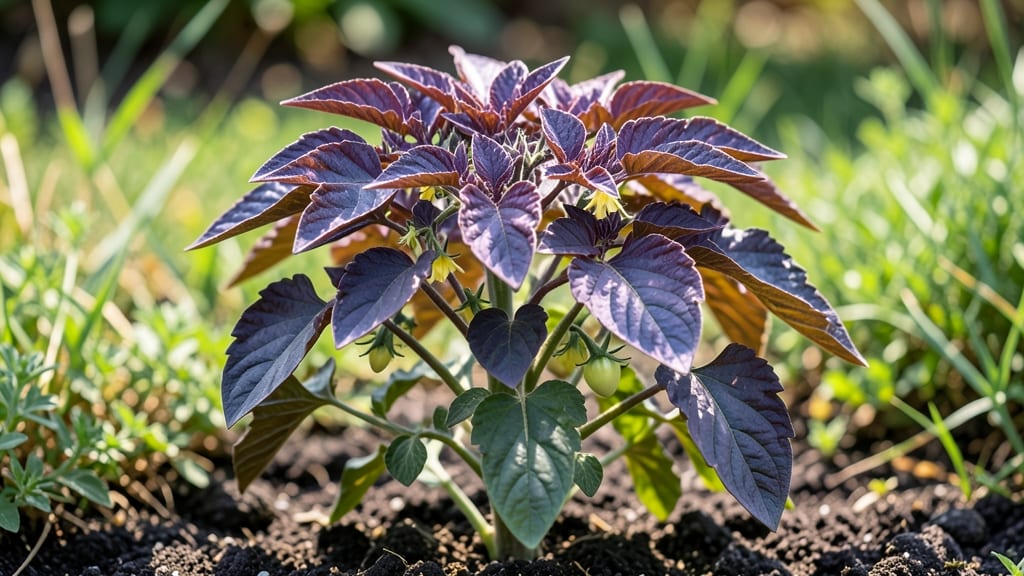
Purple leaf tomato plants bring a showstopping twist to your garden with their striking purple foliage that keeps the drama going long after blooms fade. 🌿 I fell for them the first time I saw their deep burgundy leaves framing glossy red fruit—it’s like having a living piece of art in your container garden.
These aren’t just pretty faces, though; they produce flavorful tomatoes too, though sometimes a little smaller than standard varieties.
Growing them is easier than you’d think, especially in containers where their compact size shines. You’ll need a 5-gallon pot (minimum), well-draining soil with compost, and a sunny spot getting 6-8 hours of light daily.
The secret to their vibrant color? Regular feeding with balanced fertilizer—those purple leaves stay intense when the plant gets enough nutrients.
Prune aggressively to encourage bushier growth and more fruit, but leave a few leaves near the top to protect developing tomatoes from sun scorch. Water at the base to avoid wetting the foliage (which can cause disease), and you’ll reward yourself with continuous blooms from early summer until frost.
The foliage alone makes them worth growing, but the sweet, tangy tomatoes are the cherry on top.
Perfect for small spaces, balconies, or even as a striking centerpiece in your garden beds. They pair beautifully with other container plants like basil or nasturtiums, creating a colorful, productive display. Here’s how to keep them thriving all season long—no green thumb required!
📚 In This Guide
- What you need
- Instructions
- Tips and common mistakes
- Wrapping up and next steps
What you need
- ● Purple leaf tomato seeds or seedlings: Choose a variety like 'Purple Calabash' or 'Indigo Rose' (1-2 plants per container).
- ● Containers: 5-gallon pots or larger (minimum 12" diameter) with drainage holes. Pro tip: 💡 Opt for self-watering pots if you travel often!
- ● High-quality potting mix: Well-draining, organic mix (avoid garden soil).
- ● Slow-release fertilizer: Balanced (10-10-10) or tomato-specific blend.
- ● Support system: Cages, stakes, or trellis (6+ feet tall for vining varieties).
- ● Gloves & trowel for planting.
- ● Watering can or hose with gentle spray (avoid wetting leaves).
- ○ Mulch (optional): Straw or shredded leaves to retain moisture.
- ● Pruning shears for trimming foliage (if needed).
- ● Companion plants: Basil or marigolds to deter pests.
- ● Grow lights (if indoors): LED full-spectrum for 12+ hours/day.
- ● pH test kit:** Ideal range: 6.0–6.8.
Step-by-step instructions for growing purple leaf tomato plants in containers
Here's how I grow these stunning plants with deep purple foliage that stays vibrant all season long.
🌱 Step 1: Choose the Right Container and Soil Mix
Select a container at least 12 inches deep with drainage holes—purple leaf tomatoes need room for strong roots. I use fabric grow bags because they prevent root circling and allow excess moisture to evaporate. Fill the pot halfway with a lightweight container-specific potting mix that drains quickly but retains moisture.
Tap the pot gently to settle the soil without compacting it. The goal is airy, fluffy mix that roots can easily penetrate. Add a handful of compost to the bottom for nutrients, but don't overdo it—too much organic matter can compact and suffocate roots. Leave 3 inches of space at the top for watering.
🌿 Step 2: Plant Transplants at the Correct Depth
Remove your purple leaf tomato transplant from its nursery pot and gently loosen the roots if they're circling. Place it in the container so the top of the root ball sits just below the soil surface—burying the stem too deep causes rot, while planting too high stresses the plant. You'll see the first set of true leaves above the soil line.
Fill around the roots with additional potting mix, pressing lightly to eliminate air pockets. Water thoroughly until moisture runs from the drainage holes. Purple leaf varieties are more sensitive to water stress than regular tomatoes, so keep the soil consistently moist but never soggy. You'll notice the leaves perk up within hours of proper watering.
☀️ Step 3: Position for Maximum Sunlight and Airflow
Purple leaf tomatoes need 6-8 hours of direct sunlight daily to maintain their vibrant foliage. Place your container on a south-facing patio, balcony, or deck where it gets full morning sun. If your space only offers partial sun, supplement with a grow light for 12-14 hours daily—without enough light, the purple hue fades to green.
Rotate the pot a quarter turn every 3-4 days so the plant grows evenly toward the light. Good airflow prevents fungal diseases that plague container tomatoes. I place a small fan nearby on low setting—you'll see stronger stems and glossier leaves as a result.
💧 Step 4: Water and Fertilize for Vibrant Growth
Water when the top 1-2 inches of soil feel dry to the touch. Purple leaf tomatoes hate soggy roots, so I use a self-watering system with a reservoir to maintain even moisture. Water deeply until it drains from the bottom, then empty the saucer to prevent root rot. The leaves will darken slightly when thirsty—this is your cue to water.
Feed every 2-3 weeks with a balanced liquid fertilizer (10-10-10 or 20-20-20) diluted to half strength. Purple leaf varieties respond well to a bit more phosphorus for foliage development, so I add a pinch of bone meal at planting time. You'll notice richer purple tones within two weeks of consistent feeding.
✂️ Step 5: Prune and Support for Bushy Growth
Pinch off the first few flower clusters that appear in early growth—this redirects energy to leaf production. Purple leaf tomatoes develop more intensely colored foliage when focused on vegetative growth. Install a cage or stakes early to support the plant as it grows, tying stems gently with soft plant ties every 6-8 inches.
Remove any suckers (side shoots) that form in the leaf axils to maintain the plant's energy on fruit production and leaf health. Prune any yellow or diseased leaves immediately—purple leaf varieties are more prone to fungal issues from crowded foliage. You'll see the plant fill out with deep purple leaves within 4-6 weeks of proper care.
Tips & tricks for perfect purple leaf tomato plants
These little details make all the difference when growing showstopping purple leaf varieties in containers.
Container Selection: Fabric grow bags are my top pick for purple leaf tomatoes because they prevent root circling, which is especially important for these varieties that develop deep root systems. If you're using traditional pots, make sure they have drainage holes—waterlogged roots will turn your beautiful purple foliage yellow within days. I also recommend adding a layer of pebbles at the bottom before soil to improve drainage further.
Lighting Strategy: The 6-8 hours of direct sunlight requirement isn't just about quantity—it's about quality. Morning sun is most important for maintaining that vibrant purple hue. If your plants start losing their color, it's usually a sign they're not getting enough light. For balcony gardeners, a simple LED grow light on a timer for 2-3 hours in the evening can make a dramatic difference in leaf color intensity.
Fertilizer Timing: Purple leaf tomatoes respond beautifully to the phosphorus boost mentioned, but timing matters. I apply that pinch of bone meal at planting time, then switch to liquid fertilizer only after the plant has established its root system—usually after about 3-4 weeks. The first two weeks are all about root development, not foliage color. Over-fertilizing early can actually stress the plant and dull those gorgeous purple tones.
Pruning Precision: When you're pinching off those early flower clusters in Step 5, be strategic. Focus on removing only the first few clusters that appear below the first set of true leaves. This redirecting of energy is what creates that lush, bushy growth with intensely colored foliage. I also recommend pruning in the morning when the plant is well-hydrated—this helps prevent stress and speeds up recovery.
Pro Tips for Purple Leaf Tomato Plants
- These little details make all the difference when growing showstopping purple leaf varieties in containers.
- Container Selection: Fabric grow bags are my top pick for purple leaf tomatoes because they prevent root circling, which is especially important for these varieties that develop deep root systems.
- Lighting Strategy: The 6-8 hours of direct sunlight requirement isn't just about quantity—it's about quality.
Frequently asked questions
Got questions about growing purple leaf tomato plants?
Here are answers to the most common ones—whether you're a beginner or a seasoned gardener!
How do I keep purple leaf tomato plants from turning yellow?
Yellowing leaves often signal overwatering, nutrient deficiency, or poor drainage. Ensure your container has drainage holes and use well-draining soil. Feed plants with a balanced fertilizer (like 10-10-10) every 4-6 weeks. Pro tip: Purple leaf varieties are drought-tolerant—let the top inch of soil dry before watering!
When is the best time to plant purple leaf tomatoes in containers?
Start seeds indoors 6-8 weeks before your last frost date, or transplant young plants after all danger of frost has passed. Purple leaf tomatoes thrive in warm soil (60°F+). If you’re in a short-season climate, opt for fast-maturing varieties like 'Purple Cherokee' or 'Black Krim' to maximize harvests.
Can I grow purple leaf tomatoes in small containers?
Yes! These compact plants adapt well to containers as small as 5-gallon pots, but 7-10 gallons is ideal for better root growth. Use a lightweight potting mix with added compost, and prune suckers to encourage bushier growth. Bonus: Container growing makes them perfect for patios, balconies, or urban gardens!
What pests commonly attack purple leaf tomato plants, and how do I prevent them?
Watch for aphids, whiteflies, and hornworms—all drawn to the vibrant foliage. Preventative tips: Use row covers early in the season, spray neem oil for soft-bodied pests, or introduce beneficial insects like ladybugs. Handpick hornworms (they’re easy to spot!) and drop them in soapy water.
Do purple leaf tomatoes taste different from regular tomatoes?
Not significantly! The color comes from anthocyanins in the leaves (great for antioxidants), but the fruit’s flavor depends more on variety. Some purple-leaf types, like 'Indigo Rose,' even have slightly sweeter fruit. Fun fact: The leaves are edible too—add them to salads for a nutty, peppery kick!
Wrapping up and next steps
Growing purple leaf tomato plants in containers isn’t just about adding a pop of color to your garden—it’s a rewarding way to enjoy both stunning foliage and delicious harvests!
With the right care, these versatile plants can thrive in small spaces, making them perfect for balconies, patios, or even sunny windowsills. 🌱
Now that you’re armed with tips on soil, sunlight, and companions, take the next step—plant your seeds or seedlings and watch your container garden come to life!
Whether you’re a seasoned gardener or a curious beginner, your purple leaf tomatoes are just a few weeks (and a little love) away from becoming the star of your space. Happy growing! 🌿✨