
Pruning
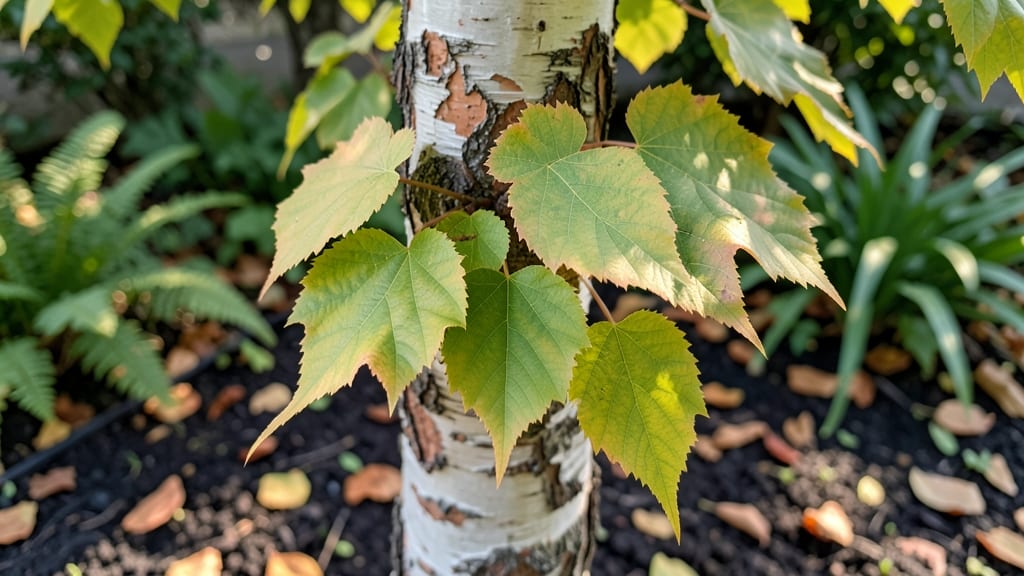
Recognizing a healthy river birch tree leaf starts with its signature serrated edges and delicate, papery texture. 🌿 These leaves unfurl in spring as soft, light-green ovals, then deepen to a rich golden-brown by fall—though they rarely turn brilliant red like some birches.
The key to keeping them vibrant lies in understanding what they need (and what they don’t), because stressed leaves signal bigger problems lurking beneath the bark.
Your birch thrives in full sun to partial shade, well-draining soil, and consistent moisture—but never soggy roots. Yellowing leaves often mean overwatering or poor drainage, while brown edges scream dry air or salt buildup.
The real game-changer? Pruning in late winter to remove dead branches before new growth starts. This prevents pests like bronze birch borers from turning your tree’s leaves into a buffet.
If you spot tiny holes or sawdust-like frass (chewed-up leaf bits), act fast: wrap the trunk with tree tape to deter borers. For leaf discoloration, adjust watering and mulch with compost to boost soil health. Healthy leaves mean a stronger tree—and fewer headaches when autumn winds arrive.
Pro tip: Avoid heavy pruning in summer, as it stresses the tree when leaves are already working hard. Instead, focus on shaping in winter and cleaning up fallen leaves to prevent fungal buildup. Your birch will reward you with lush, glossy foliage that stays stunning year-round.
📚 In This Guide
- What you need
- Instructions
- Tips and common mistakes
- Wrapping up and next steps
What you need
- ● Pruning shears – Bypass pruners (for cuts up to ½ inch thick) or anvil pruners (for thicker branches). Choose sharp, high-quality shears to avoid crushing stems.
- ● Loppers – Bypass loppers (for branches ½ to 1½ inches thick). Look for ergonomic handles and a smooth pivot for ease.
- ● Pruning saw – A curved-tooth pruning saw for branches thicker than 1½ inches. Opt for a lightweight, durable model.
- ● Extension pole – A 3- to 6-foot telescoping pole with a saw or pruner attachment for high branches (river birches can grow 40–70 feet tall!).
- ● Work gloves – Heavy-duty, cut-resistant gloves (e.g., Mechanix or similar) to protect hands from thorns and rough bark.
- ● Safety glasses – To shield eyes from debris, especially when sawing.
- ● Disinfectant – 70% isopropyl alcohol or a pruning sealant (like Tanglefoot Tree Wound Pruning Seal) to prevent disease spread.
- ● Rope or harness – For safety when working on ladders (if your birch is young and manageable).
- ● Marking spray – Paint or spray to mark branches for removal (useful for large-scale pruning).
- ● Wheelbarrow or bucket – To collect and dispose of trimmings.
- ● Check the weather – Prune on a dry, calm day to avoid slipping or spreading fungal spores.
- ● Review your pruning plan – Sketch a rough outline of cuts to maintain the tree’s natural shape and health.
- ● Gather first-aid supplies – Bandages and antiseptic for minor cuts or scrapes.
Instructions for pruning river birch trees for optimal growth
Pruning your river birch isn’t just about aesthetics—it’s about keeping your tree strong, healthy, and stunning year-round.
✂️ Step 1: Prune at the Right Time
Timing matters most with river birch. I always prune in late winter or early spring—just before new growth begins. This lets the tree heal before summer heat stress. Avoid pruning in fall, as new growth can’t harden off before winter, leaving branches vulnerable to cold damage.
Look for dormant buds that haven’t swollen yet—that’s your cue. If you see fresh green leaves, you’ve waited too long. Pruning in summer can trigger excessive sap flow, weakening the tree. For minor shaping, you can do light pruning in late summer after the heatwave, but never more than 10% of the canopy.
🌿 Step 2: Remove Dead, Diseased, or Damaged Branches
Start by identifying branches that are dead, diseased, or structurally weak. Dead branches snap easily when bent; diseased ones may have discolored bark, oozing sap, or fungal growth. Use sharp pruning shears (for branches under ½ inch thick) or a pruning saw (for thicker branches) to make clean cuts just outside the branch collar—the swollen area where the branch meets the trunk.
Don’t leave stubs—this invites decay. If a branch is larger than 3 inches in diameter, use a three-cut method: Make the first cut about 18 inches out from the trunk, then a second cut about 3 inches farther out, and finally remove the remaining wood. This prevents tearing the bark.
☀️ Step 3: Thin the Canopy for Better Airflow
River birch trees love airflow—it prevents fungal diseases like birch borer and powdery mildew. Focus on removing branches that cross or rub against each other, as these create wounds. Also, thin out branches from the inside of the tree to let light penetrate to the center. This encourages stronger, more uniform growth.
Never remove more than 25% of the canopy in one season—this stresses the tree. If you’re unsure, take it slow. You’ll see the difference in 1-2 years with thicker foliage and fewer bare spots. Avoid "lion’s tailing" (cutting branches back to a stub)—this leaves ugly scars and weakens the tree.
⏰ Step 4: Shape for Balance and Beauty
River birch has stunning peeling bark, so pruning should enhance its natural form. Step back and look at the tree—remove branches that spoil its symmetry or grow straight up (they’re weak and prone to breaking). Aim for a rounded, open shape that lets sunlight reach the lower branches.
For younger trees, prune to encourage a strong central leader—the main vertical trunk. If multiple leaders compete, remove the weaker ones at the base. For mature trees, focus on selective pruning to maintain an open center. Avoid heavy pruning on young trees—let them establish their structure first.
💧 Step 5: Clean Up and Protect the Tree
After pruning, sterilize your tools with rubbing alcohol to prevent spreading disease. Collect and dispose of all debris—don’t leave it on the ground, as it can harbor pests. If you’re pruning in late winter, you can leave larger branches on the ground to mulch the soil, but remove smaller debris immediately.
Water the tree deeply after pruning to help it recover. Mulch around the base (but keep it 3-4 inches away from the trunk) to retain moisture and protect roots. Monitor the tree for new growth in spring—that’s your sign it’s healing well. If you see excessive sap bleeding, it’s a sign you pruned too late or too aggressively.
Tips & tricks for pruning river birch trees
Here's what nobody tells you about keeping your river birch looking its best without stressing the tree.
The Timing Secret: I learned this the hard way after watching a neighbor's birch struggle with late-season pruning. The late winter or early spring window is non-negotiable for major pruning—this is when the tree's energy is focused on healing before summer growth. For that late summer touch-up, wait until after the worst heatwave has passed. The tree's natural defenses are strongest then, and you'll avoid that dreaded sap bleeding that signals over-pruning.
Branch Removal Technique: That three-cut method for branches over 3 inches thick isn't just about clean cuts—it's about preserving the tree's health. The first cut at 18 inches out creates a hinge that prevents bark tearing when you remove the branch. I've seen too many trees develop ugly scars from improper cuts. Always make your final cut just outside the branch collar—never flush with the trunk. This little detail makes all the difference in how well the wound seals.
Canopy Thinning Strategy: The 25% canopy limit might seem restrictive, but trust me on this—your tree will thank you. Focus on removing branches from the inside first to let light reach the center. This creates that beautiful, open shape while preventing fungal diseases that thrive in dark, damp conditions. I recommend marking branches with flagging tape before cutting to visualize your thinning plan. It's amazing how much more balanced the tree looks after just a few strategic cuts.
Post-Pruning Recovery: After you're done cutting, don't just walk away. Water deeply right after pruning to help the tree recover, then mulch 3-4 inches away from the trunk to protect roots. I've noticed that trees pruned in late winter often show new growth by early spring if they get this care. The mulch acts like a blanket, keeping roots moist while preventing weeds from competing for nutrients.
Pro Tips for River Birch Tree Leaf
- Here's what nobody tells you about keeping your river birch looking its best without stressing the tree.
- The Timing Secret: I learned this the hard way after watching a neighbor's birch struggle with late-season pruning.
- Branch Removal Technique: That three-cut method for branches over 3 inches thick isn't just about clean cuts—it's about preserving the tree's health.
Frequently asked questions
Got questions about keeping your river birch tree thriving with the perfect pruning touch? You’re not alone! Here are some of the most common queries—and their straightforward answers—to help you navigate the process like a pro.
When is the best time to prune river birch trees for optimal leaf health?
The ideal window is late winter or early spring (before buds swell) or mid-summer after new growth hardens. Avoid pruning in fall—it invites disease risks. For light shaping, summer pruning works too, but prioritize winter/early spring for major cuts to minimize stress.
How do I tell if I’m pruning too much or too little?
River birches are resilient, but never remove more than 25% of the canopy in one year. Signs of over-pruning: bare branches, stunted growth, or excessive water sprouts. Too little? Look for crowded limbs, weak structure, or leaf diseases—a light trim (10–15%) can refresh airflow and sunlight.
Why are my river birch leaves turning yellow/brown after pruning?
Yellowing/browning can signal stress, disease, or improper cuts. Check for:
- Ragged cuts: Use sharp tools for clean wounds (no jagged edges).
- Overwatering: Birches hate soggy roots—ensure drainage improves.
- Fungal spores: Sterilize tools with rubbing alcohol and avoid pruning during wet weather.
Can I use river birch leaves for mulch or compost?
Yes! Dried river birch leaves make excellent mulch (adds organic matter) or compost (breaks down slowly). Pro tip: Shred leaves first to speed decomposition. Avoid using diseased leaves—they can spread pathogens. For mulch, layer 2–3 inches around the base (keep 6" away from the trunk).
What’s the deal with river birch “peeling bark”—does pruning affect it?
The iconic peeling bark is a natural trait, not a disease, and pruning won’t harm it. However, avoid cutting into the bark—it’s sensitive to damage. Focus on dead/diseased wood or branches rubbing together. Prune to open the canopy, which actually enhances the bark’s visual appeal by improving sunlight exposure.
What’s a good alternative if my river birch isn’t thriving after pruning?
If your tree struggles with dieback, pests, or poor growth, consider:
- Paper birch: More cold-hardy but less pest-resistant.
- White birch: Faster-growing with similar leaf shape.
- Heritage river birch: Disease-resistant cultivars like ‘Heritage’ or ‘Crimson Frost’.
Wrapping up and next steps
Pruning your river birch tree isn’t just about keeping its leaves lush—it’s about nurturing its health, beauty, and longevity year after year. 🌿 With the right tools, timing, and techniques, you’ll transform your tree into a stunning centerpiece that thrives in every season.
Whether you’re a seasoned gardener or just starting, every careful cut brings you closer to a radiant, resilient landscape.
Ready to take the next step? Schedule your first pruning session this fall—before winter’s chill sets in—and watch your river birch flourish like never before! 🌳✨