
Size
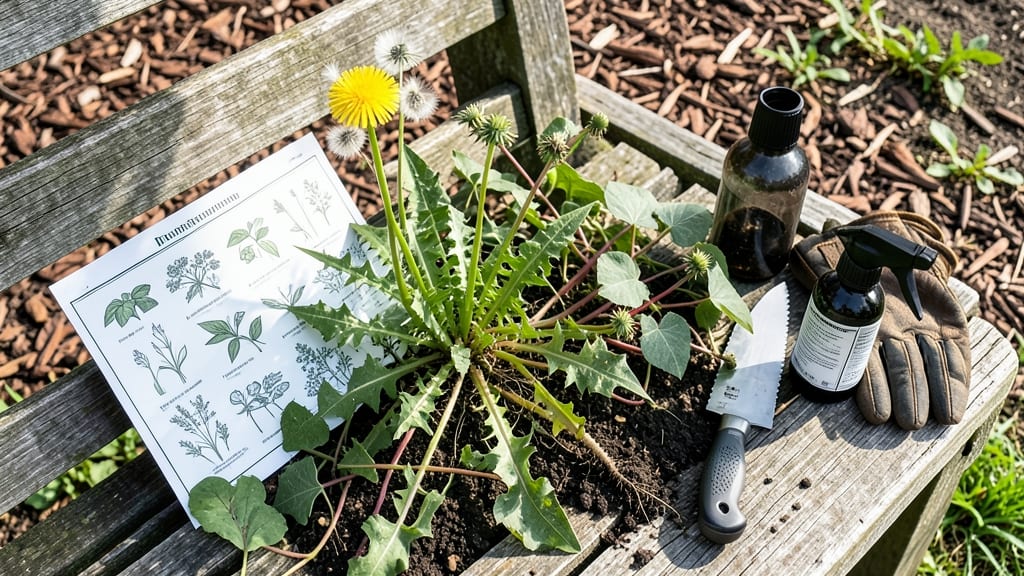
Those tall large-leaf weeds stealing your garden’s spotlight? 🌿 I’ve wrestled with them for years—lambsquarters, milkweed, and dock can turn a tidy plot into a jungle overnight. The key isn’t brute force but precision removal that stops them from sprouting back. Start by identifying them: broad leaves, no flowers yet?
That’s your cue to act. Pull when soil is moist (they resist dry), and twist roots to break the taproot—no regrowth. For stubborn patches, smother with cardboard or mulch after removal. Chemical options exist, but organic methods work just as well if done consistently.
You’ll reclaim your garden in weeks, not months, with fewer weeds than you’ve seen in years. The secret is timing: tackle them at 3–6 inches tall before they seed. No more losing battles—just strategic victories. This works for vegetable beds, flower borders, or even sidewalk cracks.
Let’s get those weeds under control for good.
The Hidden Triggers Behind Overgrowth
When those towering broadleaf weeds seem to pop up overnight, it’s rarely just bad luck—there’s usually a mix of environmental, biological, and even human factors at play. Understanding these causes is the first step to stopping them before they take over your yard or garden.
Let’s break down the science behind why these weeds grow so aggressively and how they outcompete your plants.
Weeds thrive in soggy conditions because their shallow roots can quickly absorb excess moisture, while many ornamental plants struggle in waterlogged soil. Here’s why this happens:
- Overwatering: Frequent or heavy watering (especially from sprinklers) creates a moist, weed-friendly environment. Unlike grasses, which have deeper roots, many large-leaf weeds like dandelions or bindweed germinate and grow rapidly in damp soil.
- Compacted or clay soil: Soil that doesn’t drain well traps water at the surface, giving weeds a head start. Test your soil’s drainage by digging a small hole—if water pools after 6 hours, you’ve got a problem.
- Irrigation runoff: Water trickling from hoses or sprinklers onto sidewalks or driveways can create micro-habitats where weed seeds sprout in force.
Actionable fix: Improve drainage with organic matter (compost or peat moss) and adjust your watering schedule to early morning, allowing soil to dry between sessions. 💡 Pro tip: Use soaker hoses for deep, targeted watering that reaches plant roots—not the weeds.
Some weeds are sun-seekers, while others dominate in shady spots. Large-leaf weeds often exploit light conditions that favor their rapid growth:
- Full-sun exposure: Weeds like purslane or lambsquarters grow aggressively in open, sunny areas because they photosynthesize faster than slower-growing plants. Their broad leaves capture sunlight efficiently, even in competition.
- Dappled or filtered light: Under trees or shrubs, shade-tolerant weeds (e.g., nutsedge) thrive where grass or flowers can’t. Their leaves adapt to lower light by growing taller to reach the canopy.
- Reflective surfaces: Pavement, driveways, or even white mulch can reflect heat and light, creating a "heat island" effect that speeds up weed seed germination.
Actionable fix:
- Mulch heavily (3–4 inches of wood chips or straw) to block light and smother weeds.
- Plant dense ground covers (like clover or creeping thyme) to outcompete weeds for sunlight.
- Prune trees/shrubs to reduce dappled shade patterns that encourage tall growth.
Weeds are opportunistic eaters—they exploit soil rich in nitrogen, phosphorus, or organic matter, which they convert into rapid leafy growth. Here’s how it happens:
| Nutrient Source | Weed Response | Examples |
|---|---|---|
| Fresh compost or manure | Explosive leaf and stem growth (e.g., chickweed, plantain) | Weeds sprout within days of adding organic matter. |
| Synthetic fertilizers (high nitrogen) | Lush, broad leaves and faster reproduction | Crabgrass, bindweed, and thistles thrive. |
| Decaying plant debris | Seeds germinate in disturbed, nutrient-dense soil | Dandelions and ragweed dominate after tilling. |
Actionable fix:
- Use slow-release fertilizers (like compost tea or balanced 10-10-10) to avoid nitrogen spikes.
- Test soil pH—weeds often dominate in slightly acidic to neutral ranges (6.0–7.0). Adjust with lime (to raise pH) or sulfur (to lower it).
- Avoid tilling—it buries weed seeds and brings fresh nutrients to the surface. 🌡️ Pro tip: Use a hoe to cut weeds at the base instead.
Weeds don’t just grow—they invade. Any disruption to the soil’s surface creates opportunities for their seeds to germinate and spread:
- Tilling or digging: Turns over weed seeds buried in the soil, bringing them to the surface where they germinate in batches.
- Foot traffic or erosion: Compacts soil and creates gaps where weeds like mallow or pigweed take root.
- Construction or landscaping: Exposes fresh soil, which weeds colonize within weeks if not treated.
- Thinning or dead plants: Leaves gaps that weeds rush to fill, especially in vegetable gardens.
Actionable fix:
- Apply pre-emergent herbicides (like corn gluten meal) to bare soil before planting.
- Use landscape fabric under mulch to block light and prevent seed contact with soil.
- Plant cover crops (e.g., winter rye) to protect soil and suppress weeds naturally.
Not all weed causes are visible. Beneath the surface, soil microbes and dormant seeds create a reserve army waiting for the right conditions:
- Dormant seed banks: Weeds like bindweed can lie dormant for 20+ years in soil, germinating only when disturbed or when temperatures rise.
- Fungal networks: Some weeds (e.g., nutsedge) rely on mycorrhizal fungi to spread underground, making them nearly impossible to eradicate with surface treatments.
- Animal activity: Birds, squirrels, and even wind carry weed seeds across yards, depositing them in fertile patches.
Actionable fix:
- Solarize soil in summer (cover with clear plastic for 6+ weeks) to kill dormant seeds and microbes.
- Encourage beneficial microbes (like Bacillus subtilis) to outcompete weed-promoting fungi.
- Remove weeds before they seed—even a single dandelion can produce 15,000 seeds per year! ✨
Targeted Tactics for Weed Control
Tall, broad-leaved weeds can turn a well-maintained yard into a wild jungle if left unchecked. But with the right approach, you can eliminate them effectively—without them bouncing back. Below, we break down solutions by the most common causes, paired with actionable fixes and long-term prevention strategies.
When soil is compacted, nutrient-depleted, or overshadowed by dense plant growth, weeds thrive. Fix it by:
🔥 Step 1: Clear the Competition
- Pull by hand (best for small patches). Use gloves and grip the base firmly to avoid breaking the root.
- Mulch heavily (3–4 inches) with wood chips or straw to block sunlight and smother weeds naturally.
👨🍳 Step 2: Aerate & Amend Soil
- Rent a core aerator to loosen compacted soil, or spike it manually with a garden fork.
- Mix in compost or a slow-release fertilizer to restore nutrients. Aim for a 2:1 soil-to-amendment ratio.
🌡️ Prevention Tip:
Plant ground covers like clover or creeping thyme to outcompete weeds before they sprout. These plants thrive in thin soil and suppress weed seeds.
Overwatering or inconsistent irrigation creates the perfect conditions for fast-growing weeds. Adjust your routine with these fixes:
🍳 Step 1: Deep Water Less Often
- Water deeply 2–3 times per week (early morning) instead of daily light sprinkles. This encourages deep root growth in grass/desired plants while stressing weeds.
- Use a soaker hose or drip irrigation to target roots directly.
⏰ Step 2: Adjust for Season
- Spring/Fall: Water lightly to help grass recover; weeds struggle in cooler temps.
- Summer: Increase depth but reduce frequency to dry out weed seeds.
🎯 Prevention Tip:
Install a rain sensor on your sprinkler system to halt watering after 0.25" of rain, saving water and starving weeds.
Weeds often dominate when your lawn or garden lacks diversity or proper care. Rebalance with these methods:
🔪 Step 1: Selective Herbicides (When Needed)
- Use a spot-treatment herbicide (like glyphosate-free options) for stubborn weeds like dandelions or plantain. Apply on wind-free days and avoid overspray on desired plants.
- For organic control, try vinegar + dish soap (1 gallon vinegar + 1 tbsp soap) in a spray bottle—reapply every 2–3 days until dead.
🌱 Step 2: Overseed or Plant Strategically
- For lawns: Overseed with a dense, shade-tolerant grass mix (e.g., fine fescue) in early fall.
- For gardens: Interplant weeds with fast-growing crops (e.g., radishes) to shade out seeds before they germinate.
✨ Prevention Tip:
Test your soil’s pH (ideal: 6.0–7.0 for most plants). Adjust with lime (to raise pH) or sulfur (to lower it) to create an inhospitable environment for weeds.
Weeds like lamb’s quarters or pigweed spread via seeds carried by wind or animals. Stop the cycle with these barriers:
🏡 Step 1: Create Physical Barriers
- Install landscape fabric under mulch in garden beds to block weed seeds from sprouting.
- Use metal edging around lawns to prevent creeping weeds from invading.
🐇 Step 2: Animal-Proof Your Yard
- For pets: Train them to avoid digging in specific areas or use gravel-filled trenches as deterrents.
- For wildlife: Plant native, low-maintenance shrubs (e.g., boxwood) as natural borders that animals avoid.
💡 Prevention Tip:
Mow high (3–4 inches) to shade out weed seeds. Tall grass also discourages animals from foraging in your yard.
Even after pulling weeds, they can return if roots or seeds remain. Prevent regrowth with these final steps:
🌡️ Step 1: Solarize Bare Spots
- Cover cleared areas with clear plastic sheeting for 4–6 weeks in hot sun. This bakes weed seeds and roots.
- Remove plastic, then replant with desired vegetation.
🌱 Step 2: Maintain Vigilance
- Weekly checks: Scan your yard for new sprouts, especially after rain.
- Pre-emergent herbicide: Apply in early spring (before weed seeds germinate) to create a chemical barrier.
🎯 Long-Term Strategy:
Adopt a "weed-smart" routine: Combine manual removal, soil health, and preventive planting for a weed-resistant landscape. Consistency is key!
Frequently asked questions
How do I tell if a large-leaf plant is a weed or an edible vegetable?
Look for key differences: weeds often have hairy stems or milky sap (like milkweed), while edibles like spinach or kale have smoother leaves and grow in orderly rows. Check leaf shape—weeds like lambsquarters have jagged edges, while edible greens are more uniform. When in doubt, research your region’s common weeds vs. crops.
Will vinegar kill large-leaf weeds permanently?
Vinegar works best on young weeds (3–6 inches tall) and kills above-ground growth, but roots may regrow. For permanent removal, reapply every 2–3 days until leaves turn crispy. Add 1 tablespoon dish soap to help it stick. For stubborn weeds, combine with hand-pulling to remove roots completely.
Why do my large-leaf weeds keep coming back after I pull them?
Weeds often regrow because you didn’t remove the entire root system or seeds. Twist roots when pulling to break them, and check for underground runners (like nutsedge). After removal, cover the area with cardboard + mulch to block sunlight and prevent new growth for 3–4 weeks.
Are there any large-leaf weeds that are actually beneficial?
Yes! Some weeds like dandelions (edible leaves/flowers) and purslane (nutrient-rich greens) are great for pollinators and human consumption. Others, like clover, fix nitrogen in soil. Before removing, identify if the weed serves a purpose—like attracting bees or improving soil health.
How long does it take to see results from mulching to prevent weeds?
With proper mulching (3–4 inches thick), you’ll see a noticeable reduction in weeds within 2–4 weeks. For best results, apply mulch after removing existing weeds and maintain it consistently. In high-traffic areas, reapply mulch every 6 months to keep weeds suppressed.