
Pests and Diseases
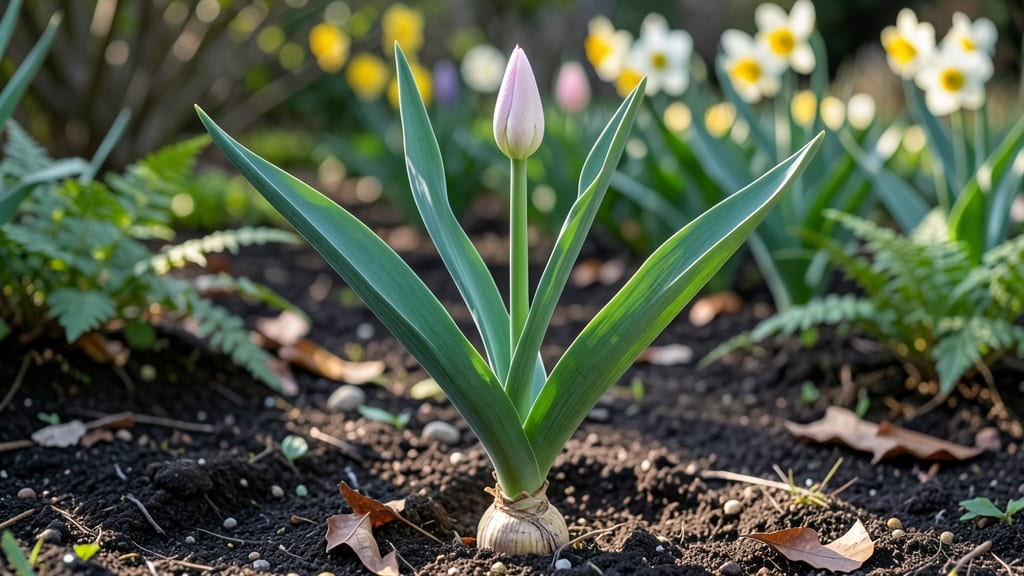
The tulip leaf shape is long and lance-shaped with smooth, slightly curved edges and parallel veins, arranged in a fan-like pattern around the stem. While specific varieties may show slight variations, all maintain this distinctive narrow, elongated form.
The shape of tulip leaves isn't just visually striking—it's a clever adaptation for survival. 🌱 These elongated blades maximize surface area for photosynthesis while minimizing water loss, which is especially important in tulips' native regions where winters can be harsh.
The parallel veins create a sturdy structure that supports the heavy flower buds, preventing them from drooping under their own weight. What's fascinating is how this design also creates a natural cooling effect, keeping the leaves from overheating during sunny days.
Beyond their functional benefits, tulip leaves reveal clues about the plant's health and variety. For example, Tulipa gesneriana typically has broader leaves than Tulipa fosteriana, which tend to be narrower and more pointed.
Some rare hybrids even develop marbled or striped patterns on their foliage—a trait that can help gardeners identify specific cultivars. If you're growing tulips, paying attention to leaf shape can help you spot early signs of disease or nutrient deficiencies before they affect the blooms.
💡 In This Article
- How Tulip Leaf Anatomy Supports Flower Growth
- Identifying Tulip Varieties by Leaf Shape and Patterns
How tulip leaf anatomy supports flower growth
The tulip's iconic leaf shape is a masterclass in botanical efficiency. These elongated blades—typically 2-4 inches wide and 12-24 inches long—create a high surface-area-to-volume ratio, which is critical for photosynthesis.
The parallel venation (where veins run parallel to each other) distributes water and nutrients evenly, preventing weak spots that could lead to disease or breakage.
This vascular design also creates a rigid structure that supports the heavy flower stem, which can weigh up to 50% more than the leaves themselves during peak bloom.
The fan-like arrangement of leaves around the stem isn't random—it's a strategic adaptation called "phyllotaxis." By spacing leaves at roughly 137.5-degree angles (the golden angle), tulips maximize sunlight exposure without shading each other.
This spiral pattern allows light to penetrate deeper into the plant, ensuring all leaves receive optimal energy for sugar production.
In tulips' native Central Asian steppes, where sunlight is intense but water is scarce, this arrangement minimizes water loss while capturing maximum energy. 🌿 The slightly curved edges of the leaves also create microclimates that reduce evaporation, a clever survival tactic in arid conditions.
Beneath the surface, the leaf's anatomy plays a hidden role in flower development. The parallel veins contain specialized cells called "bundle sheath cells" that protect the vascular bundles from damage while channeling water and minerals directly to the growing flower buds.
This direct nutrient pathway explains why tulips can produce such large, vibrant blooms relative to their leaf size—often 3-5 times the leaf area.
The leaves essentially act as "nutrient pumps," converting sunlight into the energy needed for flower formation, which is why healthy foliage is a reliable indicator of strong blooms.
What's often overlooked is how this leaf shape influences the tulip's growth cycle. The elongated form allows the plant to store excess nutrients in its bulb during the growing season, which are then used to fuel next year's blooms.
This storage mechanism is why tulips can survive harsh winters—their leaves, despite appearing delicate, are engineered to be both productive and resilient. The smooth edges also reduce wind resistance, preventing the leaves from tearing in storms, which could expose the plant to fungal infections.
For gardeners, understanding this anatomy offers practical insights. If you notice leaves that are too broad or irregularly shaped, it may signal overwatering or poor drainage, which can weaken the plant's structural integrity.
Conversely, leaves that are too narrow or yellowing might indicate nutrient deficiencies, particularly a lack of nitrogen or magnesium. The key is to maintain a balance—tulips thrive when their leaves can perform their dual role of photosynthesis and structural support without stress.
Consider this: the next time you see a tulip, look closely at how the leaves fan out.
That arrangement isn't just for show—it's a testament to millions of years of evolution fine-tuning a plant to survive in some of the harshest environments on Earth. 🌟 The same principles apply whether you're growing tulips in a garden bed or a container; their leaf shape is a blueprint for both beauty and functionality.