
Plants
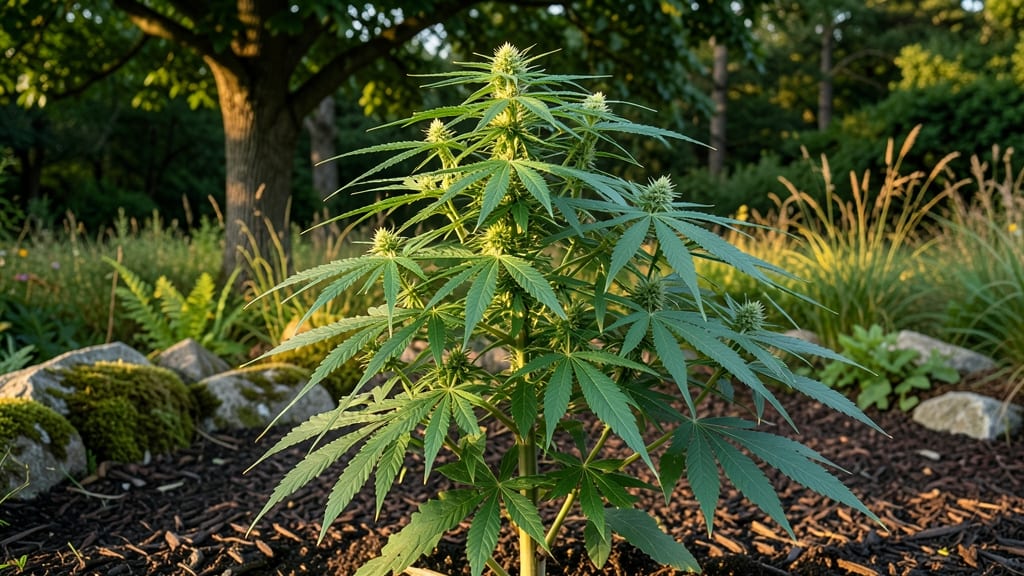
That fast-growing vine with five leaf clusters is Virginia creeper—nature’s green wall that climbs faster than you can say "instant privacy." 🌿 I’ve watched it transform bare walls into lush vertical gardens in just one growing season, its glossy leaves forming perfect hand-shaped clusters that catch the light beautifully.
This hardy perennial thrives in partial shade to full sun and adapts to almost any soil, making it the ultimate low-maintenance climber.
Whether you’re covering a fence, trellis, or unsightly wall, Virginia creeper delivers 10-15 feet of growth per year with minimal effort—just water it regularly and let it work its magic.
By late summer, you’ll have a thriving canopy of deep green leaves that turn brilliant red in fall, plus clusters of blue-black berries that birds adore. The best part? It’s pest-resistant and rarely needs pruning beyond occasional shaping to keep it in check.
Works beautifully in urban gardens, rural landscapes, or even as a ground cover. Here’s how to plant and care for it like a pro—no green thumb required!
Understanding Leaf Cluster Quirks
If your vine is sprouting clusters of exactly five leaves, you’re likely witnessing a fascinating—and sometimes puzzling—botanical phenomenon. While some gardeners may see this as a sign of a healthy plant, others wonder why this specific pattern emerges.
The answer lies in a mix of genetic programming, environmental triggers, and even nutritional cues. Let’s break down the science behind those five-leaf clusters.
Many vines, including popular climbers like Passiflora (passionflower) or Actinidia (kiwi), follow a phyllotactic pattern—a mathematical arrangement of leaves around a stem. Some species are hardwired to produce clusters of five leaves due to their meristem growth habits (the plant’s growth points).
- Helical growth: Leaves spiral in a 137.5° angle (the "golden angle"), but certain vines group leaves in sets of five for structural stability.
- Compound leaves: Some vines, like Wisteria, have palmate compound leaves—where multiple leaflets radiate from a single point, often in clusters of three to seven (with five being common).
- Hybrid traits: If your vine is a grafted or hybrid variety (e.g., a Clematis × jackmanii), it may inherit this trait from its parent plants.
💡 Pro Tip: If you’re growing from seed, the five-leaf cluster trait is likely inherited. For grafted plants, consult the breeder’s notes—some varieties are bred specifically for this aesthetic.
While genetics play a role, environmental factors can amplify or alter leaf cluster formation. Plants often adjust their growth patterns in response to stress, and five-leaf clusters can be a survival adaptation.
- Light exposure:
- Insufficient sunlight can trigger etiolation—where vines grow elongated stems with clustered leaves to maximize light capture.
- Too much direct sun may cause leaf curling or scorching, forcing the plant to produce denser clusters for protection.
- Temperature fluctuations:
- Cool nights followed by warm days can stimulate rapid cell division, leading to compact leaf groupings.
- Heat stress may reduce leaf size but increase cluster density as a water-conservation tactic.
- Wind or physical damage:
- Windy conditions can stunt growth near the stem base, causing leaves to bunch in clusters for stability.
- Pruning or accidental breakage may trigger basal sprouting, where new shoots emerge with tightly grouped leaves.
✨ Actionable Fix: If clusters appear due to stress, adjust care:
- Move to partial shade if leaves are scorched.
- Use windbreaks or trellises to support vines.
- Water deeply but consistently to avoid temperature shocks.
Over-fertilization—especially with high-nitrogen or phosphorus-heavy feeds—can lead to luxuriant but abnormal growth, including clustered leaves. Here’s how nutrients influence the pattern:
| Nutrient | Effect on Leaf Clusters | Signs of Overuse |
|---|---|---|
| Nitrogen (N) | Promotes rapid leaf production, but excess can cause compact, crowded clusters as the plant focuses on foliage over stem elongation. | Dark green, soft leaves; weak stems; yellowing edges (if overwatered). |
| Phosphorus (P) | Encourages root and flower development, but too much can lead to stunted, clustered leaves as energy shifts away from vine growth. | Purple-tinged stems/leaves; slow vine climbing; excessive flower buds. |
| Potassium (K) | Balances growth; deficiency can cause small, clustered leaves due to poor water regulation. | Yellowing leaf margins; weak, brittle stems; poor disease resistance. |
🎯 Correction Steps:
- Switch to a balanced fertilizer (e.g., 10-10-10 or 5-5-5) to avoid nutrient lock.
- Flush soil with water to leach excess salts if over-fertilized.
- Test soil pH—acidic soil (pH < 6.0) can lock out nutrients, mimicking deficiency.
While less common, pathogens or pests can disrupt normal leaf development, sometimes resulting in clustered growth as a defensive response. Here’s how:
- Viral infections (e.g., Tobacco Mosaic Virus):
- Can cause stunted, clustered leaves due to disrupted cell division.
- Look for mosaic patterns or leaf puckering.
- Fungal issues (e.g., Powdery Mildew):
- Fungal spores can block stomata, leading to compact, clustered growth as the plant conserves energy.
- Check for white powdery coating on leaves.
- Sap-sucking insects (e.g., Spider Mites, Aphids):
- These pests extract nutrients, forcing the plant to grow smaller, denser leaves in affected areas.
- Inspect undersides of leaves for webbing or sticky residue.
🔥 Treatment:
- Isolate infected plants to prevent spread.
- Use neem oil or insecticidal soap for pests.
- Apply copper fungicide for mildew (follow label instructions).
Most of the time, five-leaf clusters are harmless and even desirable—a sign of a robust, genetically programmed vine. But if the pattern changes suddenly or coincides with poor health, use this guide to diagnose and adjust care. Happy growing! 🌿
Practical fixes for leaf cluster issues
When your vine with five leaf clusters starts looking less than vibrant, don’t panic—most problems have simple, actionable solutions. Below, we’ve mapped common issues to their fixes, along with prevention tips to keep your climber thriving.
Whether it’s pests, disease, or poor growth, these steps will get your vine back on track.
If you spot chewed leaves, sticky residue, or tiny critters crawling on stems, pests are likely the culprit. Here’s how to tackle them:
🔥 Identify the Pest
- Aphids (tiny green/black bugs) cluster on new growth.
- Spider Mites (red/yellow specks) cause webbing and yellowing.
- Caterpillars (green/black worms) chew leaves into lace-like patterns.
🍳 Quick Fixes
- Spray with Neem Oil (1 tsp neem oil + 1 tsp mild soap + 1 quart water). Reapply every 5–7 days until pests vanish.
- Introduce Beneficial Insects like ladybugs or lacewings—they eat aphids naturally.
- Prune Infested Areas and dispose of them in a sealed bag (not compost).
🌱 Prevention Tips
- Inspect New Plants before bringing them home.
- Encourage Predatory Bugs by planting marigolds nearby.
- Water Early in the Day to discourage spider mites (they hate humidity).
Yellow spots, mold, or mushy stems? Fungal infections like powdery mildew or black spot can stunt your vine’s progress. Act fast:
🔪 Treatment Steps
- Remove Affected Leaves with sterilized pruners (dip in rubbing alcohol).
- Apply Baking Soda Spray (1 tbsp baking soda + 1 quart water + dash of soap). Spray undersides of leaves weekly.
- Improve Airflow by thinning dense foliage or spacing vines apart.
✨ Prevention Tips
- Water at the Base (avoid wetting leaves to prevent spores).
- Space Plants Properly (3–4 feet apart for good airflow).
- Use Fungicide Preventatively in humid climates (copper-based sprays work well).
Pale leaves, stunted clusters, or yellowing veins? Your vine might be hungry. Here’s how to feed it right:
📊 Diagnose the Deficiency
| Symptom | Likely Nutrient Missing | Quick Fix |
|---|---|---|
| Yellow lower leaves | Nitrogen | Apply balanced fertilizer (10-10-10) |
| Purple stems/leaves | Phosphorus | Use bone meal or compost tea |
| Weak, brittle stems | Potassium | Add wood ash or banana peel tea |
| Small, pale leaves | Magnesium | Spray Epsom salt solution (1 tbsp/gal) |
💪 Fertilizer Tips
- Test Soil First (pH 6.0–7.0 is ideal for most vines).
- Feed in Stages: Light applications every 4–6 weeks (overfeeding burns roots).
- Use Organic Options: Compost, worm castings, or fish emulsion for slow-release nutrients.
Wilting despite wet soil? Root rot or compacted soil could be the issue. Drainage fixes are simple but critical:
👨🍳 Step-by-Step Drainage Upgrade
- Check the Soil: Dig 6 inches deep—if it’s soggy after 24 hours, drainage is poor.
- Amend the Soil: Mix in perlite, sand, or coconut coir (20% of the soil volume).
- Raise Planting Beds: If in containers, elevate pots with bricks or use saucers with drainage holes.
- Water Deeply but Less Often: Aim for 1–1.5 inches per week (adjust for climate).
💡 Pro Tip
- Mulch Properly: Use wood chips (not plastic) to retain moisture without suffocating roots.
Too many leaf clusters can shade lower stems, inviting disease. Prune strategically:
🔪 When & How to Prune
- Best Time: Late winter or early spring (before new growth).
- Cut Back: Remove 1/3 of the oldest stems to encourage new, vigorous growth.
- Shape It Up: Trim leggy vines to 2–3 feet tall to promote bushiness.
✨ Bonus Tip
- Deadhead Spent Flowers to redirect energy into leaf clusters (not seed production).
Most vine issues stem from neglect or overcorrection. Stick to a weekly check-in routine:
- Inspect leaves for pests/disease.
- Water deeply but mindfully.
- Fertilize lightly but regularly.
With these fixes, your five-leaf-cluster vine will bounce back stronger—and faster—than ever. 🌿✨
Frequently asked questions
What are the most common vines with five leaf clusters?
The classic examples are Virginia creeper (with its iconic hand-shaped leaves) and grapevines, though many passionflower varieties and wisteria also exhibit this pattern. For fast-growing options, look for Parthenocissus species—they're perfect for quick vertical coverage.
Can I grow a vine with five leaf clusters indoors?
Try passionflower vines or Boston ivy in containers with 10+ hours of bright light daily. Use a trellis or moss pole for support, and keep soil consistently moist (not soggy). Just watch for spider mites—they love indoor dryness.
Why does my vine's leaf clusters look different now?
Seasonal changes, nutrient shifts, or stress often alter leaf patterns. If clusters appear smaller or darker, check for over-fertilization (especially nitrogen). If they're larger and sparse, your vine might need more sunlight or water. Always examine the stems for pests first.
How do I tell Virginia creeper apart from poison ivy?
Easy! Virginia creeper has five leaflets with smooth edges, while poison ivy has three leaflets with jagged edges. Also, Virginia creeper turns brilliant red in fall, while poison ivy stays green. Never touch unknown vines—when in doubt, consult a local nursery.
What's the fastest way to establish a vine with five leaf clusters?
Start with container-grown plants (not seeds) for instant results. Plant in spring when roots are active, and use a trellis or fence for support. Water deeply 2-3 times per week for the first month, then taper to 1 inch per week once established.