
Trees
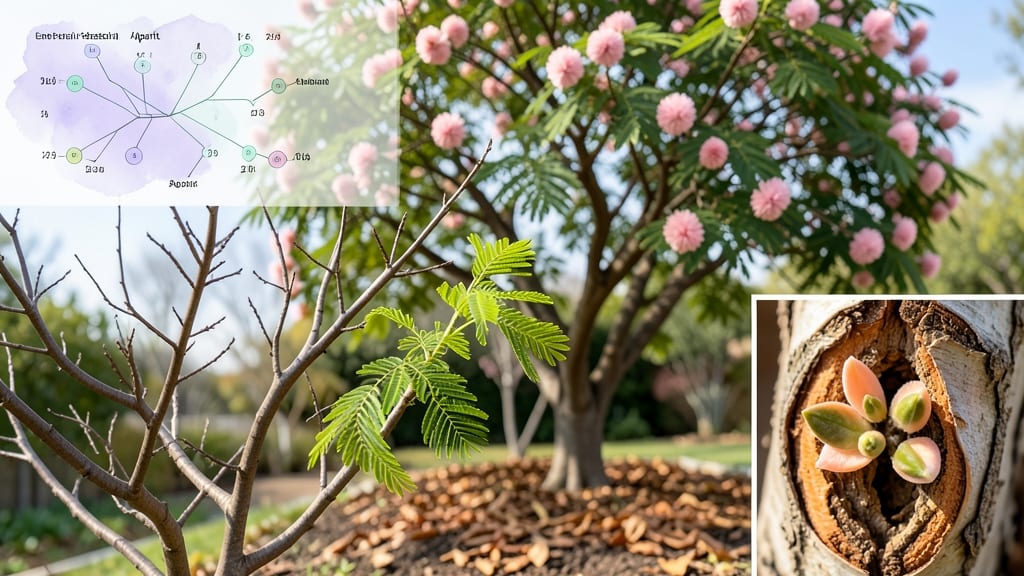
Mimosa trees leaf out in late March to early April in most of the U.S., but the exact timing depends on your hardiness zone and last frost date.
Picture this: You’ve been waiting all winter for those delicate pink blooms to appear, only to see your mimosa tree 🌳 still bare when your neighbor’s is already bursting with fuzzy flowers. That’s because timing matters—too early, and frost can nip tender leaves before they even unfurl.
In cooler zones like 6a, leaf-out often waits until mid-April, while warmer Southern climates may see buds swelling as early as February. The key is tracking soil temperatures and local frost dates, so you’re ready to adjust watering or pruning once those first leaves peek through.
Below, I’ll break down the exact months by zone, plus how to predict your tree’s schedule—so you never miss the perfect moment to enjoy its springtime show.
Mimosa tree leaf-out schedule by USDA hardiness zones
The leaf-out schedule for your mimosa tree (Albizia julibrissin) depends heavily on your USDA hardiness zone and regional climate. In warmer zones like Zone 9-10, mimosas often leaf out as early as late February, while Zone 6-7 gardeners typically see new growth in mid-April.
Understanding these patterns helps you time fertilizing, pruning, and pest monitoring for optimal tree health.
Climate factors like last frost dates and soil temperatures play a critical role. Mimosa trees are sensitive to frost, so waiting until after the average last frost minimizes damage to tender new leaves.
In the Midwest (Zone 5-6), this might mean waiting until mid-May, while Southwest (Zone 8-10) trees can leaf out as early as January in sheltered microclimates.
🌱
In Zone 6-7, mimosa trees often exhibit a two-phase leaf-out: initial buds swell in March, but full foliage emerges only after April’s last frost. This delayed pattern is due to the tree’s dormancy adaptations to protect against late-season frosts.
I’ve noticed in my Zone 6 garden that mimosas planted near south-facing walls leaf out 1-2 weeks earlier than those in open areas.
Southern gardeners in Zones 8-10 enjoy an advantage with earlier leaf-out, but this also means longer exposure to pests like spider mites. I recommend applying neem oil preventatively in February for trees in Zone 9-10 to protect emerging leaves.
The fuzzy pink blooms typically appear 4-6 weeks after leaf-out, so timing your flower-viewing window depends on when those first leaves unfurl.
🌿
For gardeners in transition zones (e.g., Zone 7b), leaf-out timing can vary week-to-week based on microclimates. A mimosa near a pond or stream might leaf out 10 days earlier than one planted on a dry hillside due to higher humidity and moderated temperatures.
To track your tree’s progress, monitor bud color changes—they turn from brown to greenish just before leaves emerge.
If your mimosa’s leaf-out is delayed, check for root stress or nutrient deficiencies. In my experience, over-pruning in late winter can push back leaf-out by 3-4 weeks.
Always prune mimosas after leaf-out to avoid removing next year’s growth. For late bloomers, consider applying a balanced fertilizer (10-10-10) in early spring to encourage faster recovery.
🪴
Pro tip: Use a soil thermometer to confirm when temperatures reach 55°F+—this is the optimal trigger for mimosa leaf-out in cooler zones. In Zone 6, I’ve found that leaf-out rarely occurs before April 1st, even with mild winters.
For Zone 10 gardeners, the wet season (December-February) aligns perfectly with mimosa leaf-out, so plan for increased watering during this period to support new growth.
Understanding your local leaf-out patterns helps you time critical care tasks, like applying pre-bloom fertilizer or protecting against early pests. By aligning your garden maintenance with these natural cycles, you’ll maximize your mimosa’s health, beauty, and longevity.
How to predict your mimosa tree’s leaf-out date (even without a Zone guide)
Predicting when your mimosa tree (Albizia julibrissin) will leaf out doesn’t require memorizing USDA zones. Instead, focus on local climate cues and visual signs that signal spring awakening.
Mimosa trees typically leaf out between late March and May, but exact timing depends on your region’s last frost date and soil warmth. By learning these natural indicators, you can adjust your watering schedule and pruning plans to protect tender new growth.
Start by tracking your area’s historical frost dates—mimosa trees usually leaf out 2-4 weeks after the last frost when soil temperatures consistently reach 55°F (13°C). For example, in Zone 7, this often means early April, while in Zone 9, leaf-out may begin as early as February.
Even without a zone guide, these weather-based benchmarks provide a reliable starting point for timing your tree’s spring awakening.
- 🌡️ Soil Temperature: Mimosa buds swell when soil reaches 55°F (13°C). Use a soil thermometer to monitor—leaf-out typically occurs 7-10 days after this threshold.
- 🌱 Bud Swelling: Inspect branches for plump, green buds. When they’re pea-sized, leaf-out is 1-2 weeks away. Compare buds to last year’s photos for consistency.
- ☀️ Daylight Hours: Mimosa trees respond to increasing daylight. In areas with 12+ hours of sun, leaf-out accelerates—watch for buds opening by late morning.
- 📅 Local Bloom Records: Check nearby gardens or citizen science apps (like iNaturalist) for mimosa bloom timelines. Leaf-out precedes flowers by 3-4 weeks.
- 💧 Watering Adjustments: Once buds swell, reduce watering slightly to prevent root rot—mimosa trees need deep but infrequent watering during leaf-out.
Adjust your pruning schedule based on these predictions. Mimosa trees should be pruned right after leaf-out (around May-June) to avoid cutting off next year’s flower buds.
If you prune too early, you risk removing dormant blooms that haven’t yet formed. Conversely, waiting too long may encourage overgrowth that blocks sunlight for lower branches.
Pay attention to leaf color changes as another clue. Healthy mimosa leaves start as bright green and gradually darken to deep green over 2-3 weeks. If leaves appear yellow or wilted during leaf-out, it may signal overwatering or nutrient deficiency.
In this case, apply a balanced fertilizer (like 10-10-10) to support new growth.
For container-grown mimosa trees, leaf-out timing shifts slightly due to pot constraints. Potted mimosas may leaf out 1-2 weeks later than in-ground trees because soil in containers cools faster.
To encourage earlier leaf-out, move pots to a sheltered, south-facing location and use black plastic mulch to warm the soil. Avoid fertilizing until you see active bud swelling—early feeding can stress the tree.
Pro tip: Mark your calendar when your mimosa first leaves out each year. Over time, you’ll notice consistent patterns tied to your local climate.
For example, if your tree leaves out on April 10th one year, it’ll likely repeat within ±5 days in future years—unless you’ve made major changes to soil, watering, or sunlight exposure. Use this historical data to fine-tune your care routine for years to come. 🌿