
Pests and Diseases
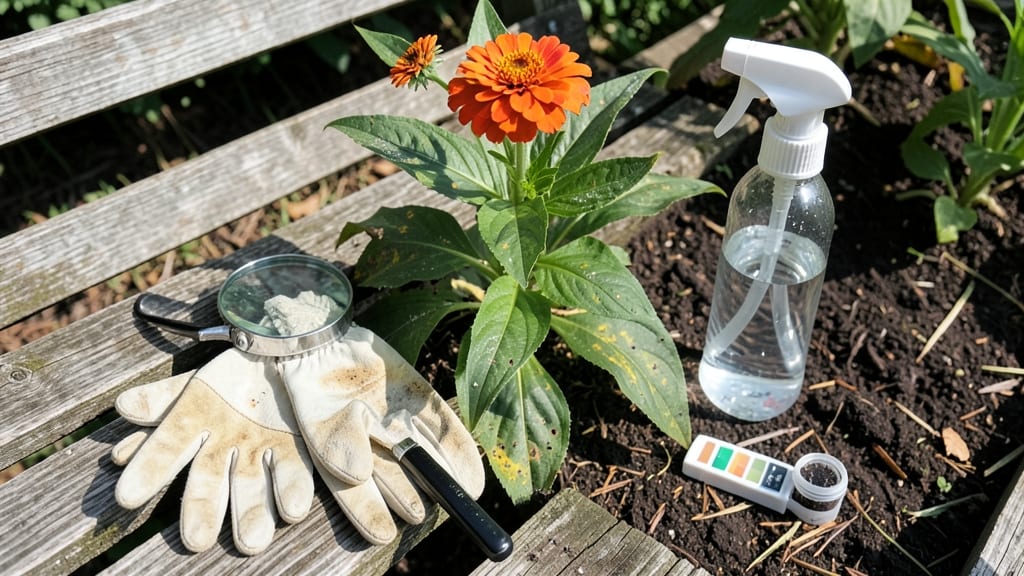
Your zinnias are supposed to be bold and cheerful—not sad, spotted, or shriveled. 🌼 Zinnia leaf damage comes from pests, diseases, or simple care mistakes, but each problem has a clear fix.
I’ve seen powdery mildew turn vibrant blooms into sad shadows, and aphids strip leaves faster than you can blink. The good news? Most issues are preventable with a few smart tweaks.
Powdery mildew leaves a white, dusty coating, while bacterial spots show up as dark, water-soaked marks. Spider mites create tiny yellow speckles, and aphids cluster on undersides, leaving sticky residue.
Overwatering or poor soil drainage? That’s often the root of wilting or yellowing. The first step is identifying the culprit—because the fix depends on what’s attacking your plants.
Once you know the problem, solutions are simple: for mildew, space plants for airflow; for pests, spray with neem oil or introduce ladybugs. Adjust watering to keep soil moist but not soggy, and fertilize lightly to avoid nutrient burn.
Within days, your zinnias will bounce back—stronger and even more vibrant than before.
This works for container gardens, raised beds, or in-ground plots. The key is acting fast and staying consistent. Your zinnias deserve to shine, not struggle. Let’s get them back on track—no sad leaves allowed!
Root Causes of Zinnia Leaf Issues
Zinnia leaves can develop damage for a variety of reasons, ranging from environmental stressors to biological threats. Understanding the underlying causes is the first step to restoring your plants to their vibrant best.
Below, we break down the most common reasons why your zinnias might be showing signs of distress—so you can diagnose the problem and take action.
Fungal pathogens are among the most frequent culprits behind zinnia leaf damage. These microscopic invaders thrive in warm, humid conditions and can cause a range of symptoms, from discolored spots to wilting leaves.
- Powdery Mildew: This fungal disease appears as a white, powdery coating on leaves, often starting on the undersides. It thrives in high humidity (above 75%) and poor air circulation.
Over time, infected leaves may turn yellow and drop prematurely. - Why it happens: Fungal spores land on leaves and germinate when conditions are favorable.
Zinnias with dense foliage or those grown in shaded areas are particularly vulnerable. - Actionable fix: Space plants 12–18 inches apart for better airflow, avoid overhead watering, and apply a fungicide with neem oil or sulfur if early signs appear.
- Alternaria Leaf Spot: Dark, irregular spots with yellow halos indicate this fungal infection. Severe cases can lead to leaf drop and weakened stems. - Why it happens: The fungus spreads via water splashes or contaminated tools, especially in wet, warm conditions (70–80°F).
Overwatering or poor drainage exacerbates the problem. - Actionable fix: Remove infected leaves immediately, water at the base (not overhead), and rotate crops annually to prevent soil-borne spores from lingering.
- Rust: Orange or brown pustules on leaf surfaces signal rust fungus. These spores can spread rapidly in humid, damp climates, reducing photosynthesis and stunting growth. - Why it happens: Rust fungi overwinter in plant debris or soil, then infect new growth when conditions are moist.
Zinnias grown in containers with poor drainage are at higher risk. - Actionable fix: Prune infected leaves, sterilize pruners with rubbing alcohol, and ensure containers have drainage holes. Copper fungicides can help suppress spores.
Insects and mites feed on zinnia leaves, causing holes, chewed edges, or sticky residue. Their damage weakens plants, making them more susceptible to secondary infections.
- Aphids: These tiny, sap-sucking pests cluster on new growth, leaving behind sticky honeydew (which attracts sooty mold). Infested leaves may curl or yellow. - Why it happens: Aphids are drawn to tender new growth and thrive in crowded plants with little airflow.
They reproduce quickly in warm weather (60–80°F). - Actionable fix: Blast them off with a strong stream of water or introduce ladybugs (natural predators). For heavy infestations, use insecticidal soap or neem oil.
- Spider Mites: Tiny yellow or red mites spin webs on leaf undersides, causing stippling (tiny white dots) and leaf browning. They flourish in dry, hot conditions (above 85°F). - Why it happens: Drought stress triggers mites to multiply rapidly.
They thrive in low-humidity environments, especially indoors or in greenhouses. - Actionable fix: Increase humidity with a misting bottle or pebble tray, and spray leaves with water daily to deter them. Neem oil or horticultural oil can smother them.
- Japanese Beetles: These metallic-green beetles chew large, irregular holes in leaves, often leaving only the leaf veins intact. - Why it happens: Adult beetles emerge in late summer and are attracted to zinnias’ bright flowers.
They feed aggressively during peak sunlight hours. - Actionable fix: Handpick beetles into soapy water, or use milky spore powder (a natural bacterial treatment) to reduce their numbers long-term.
Zinnias are hardy, but extreme or inconsistent growing conditions can lead to leaf damage. These issues are often preventable with simple adjustments.
- Overwatering or Poor Drainage: Waterlogged soil deprives roots of oxygen, leading to yellowing leaves (chlorosis) or blackened stems. Fungal diseases like root rot may follow. - Why it happens: Zinnias prefer well-draining soil and 1–1.5 inches of water per week.
Containers without drainage holes or clay-heavy soil trap excess moisture. - Actionable fix: Amend soil with perlite or compost to improve drainage, and ensure pots have drainage holes. Water only when the top inch of soil is dry.
- Underwatering or Drought Stress: Wilting, crispy leaf edges, or drooping flowers signal thirsty zinnias. Prolonged drought weakens plants, making them susceptible to pests. - Why it happens: Zinnias are drought-tolerant once established, but young plants or those in full sun need consistent moisture.
Heatwaves (above 90°F) increase water loss. - Actionable fix: Mulch around the base to retain moisture, and water deeply in the morning to reduce evaporation.
- Temperature Extremes: Zinnias struggle in frost (below 32°F) or intense heat (above 95°F). Cold snaps cause blackened, mushy leaves, while heat stress leads to bleached or scorched foliage. - Why it happens: Zinnias are annuals and prefer moderate temperatures (60–75°F).
Sudden temperature swings disrupt photosynthesis. - Actionable fix: Provide light shade cloth during heatwaves, and cover young plants with frost blankets if frost is forecasted.
- Nutrient Deficiencies: Yellowing between leaf veins (iron deficiency) or purple stems (phosphorus deficiency) can stunt growth and weaken leaves. - Why it happens: Zinnias need balanced fertilizer (10-10-10) every 4–6 weeks.
Over-fertilizing with nitrogen can also burn roots, causing leaf damage. - Actionable fix: Test soil pH (zinnias prefer 6.0–7.0) and amend with compost or a slow-release fertilizer. Avoid liquid fertilizers during drought.
Sometimes, leaf damage isn’t biological—it’s mechanical. Wind, hail, or even human error can leave zinnias looking worse for wear.
- Wind or Hail: Torn leaves or bruised spots on zinnias are often the work of strong winds or storms. Delicate petals and leaves can shred easily. - Why it happens: Zinnias have stems that bend but break under pressure.
Coastal areas or open gardens are high-risk. - Actionable fix: Stake tall varieties or plant in sheltered spots. After storms, prune damaged leaves to encourage new growth.
- Improper Pruning or Handling: Rough cutting or tugging leaves can leave jagged edges or torn stems, inviting infections.
- Why it happens: Using dull shears or pulling stems instead of cutting can cause unnecessary trauma.
- Actionable fix: Always use sterilized, sharp pruners and cut at a 45-degree angle just above a leaf node.
Pesticides, herbicides, or even hard water can damage zinnia leaves if misapplied. Always check labels for plant compatibility before spraying.
- Herbicide Drift: Glyphosate or other broadleaf herbicides can bleach or burn zinnia leaves if sprayed nearby.
- Why it happens: Wind can carry herbicide particles to non-target plants, especially in dry, hot conditions.
- Actionable fix: Avoid spraying herbicides when zinnias are in bloom, and use targeted, shielded applications.
- Fertilizer Burn: Overapplying synthetic fertilizers (especially high-nitrogen ones) can cause brown leaf tips or crispy edges.
- Why it happens: Excess salts in soil disrupt water uptake, leading to cellular damage.
- Actionable fix: Flush soil with water after fertilizing, and switch to organic, slow-release options.
When inspecting damaged leaves, ask:
- **Is the damage localized (
Quick Fixes for Zinnia Leaf Troubles
Zinnia leaf damage can be frustrating, but the right approach can restore your plants to their vibrant best. Below are practical, step-by-step solutions tailored to common causes—from pests to fungal issues—plus prevention tips to keep your zinnias thriving. Let’s get those leaves looking healthy again!
If tiny invaders are munching on your zinnias, act fast to stop the spread.
🔥 Spider Mites: Knock Them Out
Signs: Yellowing leaves, fine webbing, tiny moving dots (use a magnifying glass). Fix: 1. Blast them off 💦: Spray leaves with a strong stream of water to dislodge mites.
- Neem oil spray 🌿: Mix 1 tbsp neem oil + 1 tsp mild soap in 1 quart water. Spray undersides of leaves every 5–7 days.
- Introduce predators 🐞: Release ladybugs or lacewings—they love spider mites!
Prevent: Keep plants well-watered (mites thrive in dry conditions) and prune for airflow.
🍳 Aphids: Drown the Invasion
Signs: Sticky residue (honeydew), curled leaves, clusters of tiny green/black bugs. Fix: 1. Soapy water spray 🧼: Mix 1 tsp dish soap in 1 quart water. Spray directly on aphids (repeat daily until gone).
- Hose them away 💦: A strong jet of water early in the morning works wonders.
- Encourage wasps 🐝: Parasitic wasps naturally control aphids—plant dill or fennel nearby to attract them.
Prevent: Avoid over-fertilizing with nitrogen (aphids adore it) and inspect new plants before adding them to your garden.
👨🍳 Japanese Beetles: Trap and Trap Again
Signs: Irregular holes in leaves, skeletonized foliage, shiny green beetles chewing away. Fix: 1. Handpick beetles 🖐️: Drop them into soapy water (wear gloves—they bite!).
- Beer trap 🍺: Bury a container filled with beer at soil level. Beetles drown in it overnight.
- Neem oil or kaolin clay 🌿: Spray leaves to create a barrier they dislike.
Prevent: Plant trap crops like roses or marigolds far from zinnias to lure beetles away.
Fungal damage (like powdery mildew or leaf spot) thrives in damp conditions. Break the cycle with these fixes.
🔪 Powdery Mildew: Scrub and Prevent
Signs: White, powdery coating on leaves, stunted growth. Fix:
- Prune infected leaves ✂️: Remove heavily affected foliage and dispose of it (don’t compost!).
- Baking soda spray 🧂: Mix 1 tbsp baking soda + 1 tsp soap + 1 quart water.
Spray every 7–10 days. 3. Improve airflow 🌬️: Space plants 12–18 inches apart and avoid overhead watering.
Prevent: Water in the morning so leaves dry quickly, and avoid mulching too close to stems.
⏰ Leaf Spot: Isolate and Heal
Signs: Brown/yellow spots with yellow halos, holes in leaves. Fix: 1. Remove infected leaves 🗑️: Snip off damaged leaves and sterilize pruners with rubbing alcohol.
- Copper fungicide 🛡️: Apply according to package instructions to stop spread.
- Water at the base 💧: Avoid wetting leaves to prevent spores from splashing.
Prevent: Space plants properly and water early in the day for fast drying.
Sometimes, damage isn’t from pests or disease—but from growing conditions.
💡 Overwatering or Poor Drainage
Signs: Yellowing leaves, wilting despite wet soil, mushy stems. Fix: 1. Check soil moisture 🌱: Stick your finger 1 inch into soil—water only if dry.
- Improve drainage 🏗️: Amend soil with perlite or sand, and ensure pots have drainage holes.
- Adjust watering ⏰: Water deeply but infrequently (zinnias hate soggy roots).
Prevent: Use well-draining soil and avoid planting zinnias in low-lying areas where water pools.
☀️ Sun Scorch or Heat Stress
Signs: Crispy, brown edges on leaves, wilting in hot afternoons. Fix:
- Provide afternoon shade 🌳: Use shade cloth (30–50%) if temperatures exceed 90°F.
- Mulch heavily 🌿: Apply 2–3 inches of mulch to retain moisture and cool roots.
- Water deeply in heat 💦: Soak soil early in the day to reduce evaporation.
Prevent: Choose heat-tolerant zinnia varieties (like ‘Benary’s Giant’) and plant in late spring after soil warms.
🌟 Pro Tip: Always rotate your prevention strategies—pests and diseases adapt! Mix up sprays, handpick regularly, and monitor your plants weekly for early signs of trouble. With these fixes, your zinnias will bounce back stronger than ever. 🌸
Frequently asked questions about zinnia leaf damage
Why are my zinnia leaves turning yellow?
Yellowing zinnia leaves usually signal overwatering, nutrient deficiencies (like iron or nitrogen), or root rot. Check soil moisture—zinnias prefer 1–1.5 inches of water per week. If soil is waterlogged, improve drainage with perlite or compost. For yellowing between veins, test soil pH (ideal: 6.0–7.0) and amend with iron supplements if needed.
What do spider mite damage and aphid damage look like on zinnias?
Spider mites create tiny white/yellow speckles and fine webbing on leaf undersides, while aphids leave sticky honeydew and curled, distorted leaves. Use a magnifying glass to spot mites (they’re microscopic!). Aphids cluster on new growth—blast them off with water or spray with insecticidal soap for fast results.
Can I save zinnias with powdery mildew?
Yes! Prune infected leaves immediately and space plants 12–18 inches apart for airflow. Spray with a baking soda mix (1 tbsp baking soda + 1 tsp soap + 1 quart water) every 7–10 days. Avoid overhead watering—water at the base in the morning instead. With these steps, new growth should stay mildew-free within 2–3 weeks.
Why are my zinnia leaves getting holes, but no pests are visible?
Holes with no visible pests often mean Japanese beetles (they chew irregular patterns) or wind/hail damage. Check for shiny green beetles during daylight—handpick them into soapy water. If no pests are found, prune damaged leaves and stake tall zinnias to prevent future wind stress. Mulch heavily to protect roots from drying out.
How often should I fertilize zinnias to prevent leaf damage?
Zinnias need light feeding every 4–6 weeks with a balanced fertilizer (10-10-10). Over-fertilizing (especially with nitrogen) causes leaf burn or weak growth. Use organic options like compost or slow-release granules, and always water before applying fertilizer to avoid root damage.