
Planting
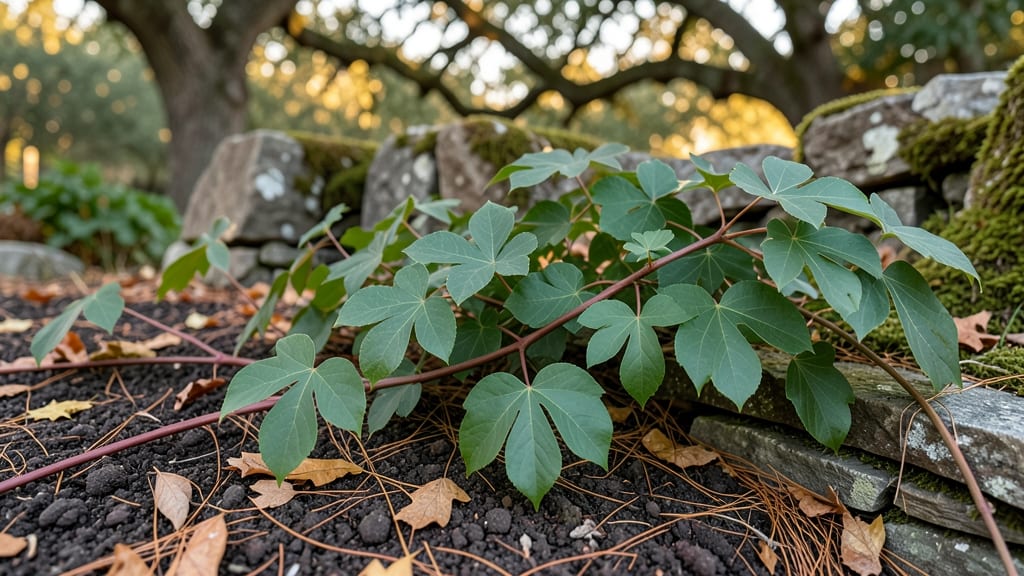
That five-leaf plant that looks like poison ivy creeping through your yard might not be the skin-irritating menace you fear—but how do you tell for sure? ✨ The difference between a harmless look-alike and a rash-triggering plant comes down to three key details: leaf edges, stem color, and that infamous "touch-test" trick I learned the hard way after a weekend of itchy rashes.
Poison ivy has smooth-edged leaves with a single oil (urushiol) that causes reactions, while Virginia creeper has toothed edges and grows in clusters of five. Box elder leaves have uneven bases and grow in pairs.
The real game-changer? Rubbing a leaf between your fingers—if it leaves a milky white sap, it’s poison ivy. If it’s just green, you’re in the clear.
Once you know what you’re dealing with, removal gets easier. Bag the plant in plastic, seal it tight, and toss it with your trash—not your compost. Even dead poison ivy can trigger reactions, so gloves and long sleeves are your best friends.
For gardeners, this means double-checking nursery plants and avoiding areas where poison ivy thrives.
If you’re still unsure, snap a photo and compare it to local plant databases—some regions have invasive look-alikes that behave differently. Prevention starts with knowing your neighbors’ foliage, so you can plant with confidence instead of worry.
Nature’s Deceptive Leaf Patterns
When you spot a five-leafed plant that resembles poison ivy, it’s usually not an accident—it’s biology at work. These lookalikes thrive because of evolutionary adaptations, environmental mimicry, and even human behavior.
Understanding why these plants fool us helps you spot the real deal faster. Let’s break down the science behind the confusion.
Many plants with three leaves (or sometimes five) have evolved to resemble poison ivy (Toxicodendron radicans) as a survival strategy. This phenomenon, called Batesian mimicry, tricks herbivores into avoiding them—even if they’re harmless. Here’s how it plays out:
- Herbivore Deterrence: Animals like deer, rabbits, and even insects learn to avoid plants that look like poison ivy because of their toxic reputation. If a non-toxic plant mimics this warning signal, predators steer clear, giving it an unfair advantage.
- Chemical vs. Visual Cues: Poison ivy contains urushiol oil, which causes allergic reactions. Some lookalikes (like Virginia creeper) don’t produce urushiol but have similar leaf shapes to exploit this association.
- Competitive Edge: In dense forests or gardens, plants that blend in with toxic species reduce browsing pressure, allowing them to grow taller and reproduce more successfully.
Actionable Tip: 💡 If a plant has five leaves but grows in clusters (not in threes), it’s almost certainly safe—poison ivy’s leaves grow in groups of three!
Not all five-leafed plants are mimics—they might just be reacting to their environment. Stress, nutrient availability, or even pruning can alter leaf development, creating false poison ivy lookalikes. Here’s what causes it:
| Factor | Effect on Leaves | Why It Happens |
|---|---|---|
| Nutrient Deficiency | Leaves may split or grow extra lobes, resembling poison ivy’s jagged edges. | Plants under stress (e.g., low nitrogen) sometimes produce compound leaves with more segments to maximize photosynthesis. |
| Pruning or Damage | New growth can sprout with irregular leaf shapes, including five-leaf clusters. | When a plant is cut back, it prioritizes rapid regrowth, sometimes sacrificing normal leaf structure for speed. |
| Genetic Variations | Some plants (like boxelder or maple saplings) naturally produce five-leafed variants. | Genetics can cause polymorphism, where the same species grows differently based on location or lineage. |
Pro Tip: 🌡️ Check the stem! Poison ivy has smooth, hairless stems, while many lookalikes (like Virginia creeper) have rough or hairy textures.
Sometimes, we’re the ones making the mistake. Gardeners, landscapers, and even plant sellers can unintentionally propagate confusion by:
- Mislabeling Plants: Nurseries may sell Virginia creeper or boxelder as "poison ivy alternatives" without clarifying the differences.
- Over-Pruning for Aesthetics: Trimming plants to look "neater" can encourage abnormal leaf growth, making them resemble poison ivy.
- Ignoring Regional Varieties: Some areas have native plants (like eastern poison oak) that grow in five-leaf clusters, leading to misidentification.
Quick Fix: ✨ Take a photo and compare it to a local plant database (like iNaturalist or your state’s extension service) to rule out regional lookalikes.
Now that you know why these plants fool us, the next step is learning how to tell them apart—keep reading for foolproof ID tricks!
How to Tell Them Apart Safely
If you’ve spotted a five-leaf plant that sends shivers down your spine, the first step is correct identification—because one could be harmless while the other is a painful nuisance. Here’s how to solve the confusion with practical, foolproof methods:
Poison ivy (Toxicodendron radicans) and its lookalikes share similar leaf shapes, but their growth patterns differ. Use this quick checklist:
- Poison Ivy:
- Leaves grow in groups of 3 (though sometimes 5) with a long central stem (petiole).
- The middle leaf is usually the largest.
- Hairless (smooth) underside of leaves.
- Safe Lookalikes (e.g., Virginia Creeper, Box Elder):
- Virginia Creeper: Leaves in groups of 5, but with smooth edges and no oil (see next step).
- Box Elder: Leaves in opposite pairs, not clusters.
- Five-Leaf Akebia: Leaves in whorls of 5, but hairy stems and no rash-causing oil.
✨ Pro Tip: Snap a photo and compare it to a field guide app (like iNaturalist or PlantNet) for instant verification.
If you’re absolutely sure it’s poison ivy (or suspect it), avoid skin contact—but if you’ve already touched it, act fast:
- Wash Immediately 🚿
- Use cold water + soap (hot water opens pores, spreading oil).
- Scrub for at least 10 minutes to remove urushiol (the rash-causing oil).
- Rinse with Alcohol or Dish Soap 🧴
- Technu® (a poison ivy wash) or rubbing alcohol can break down urushiol.
- Dish soap (like Dawn) works too—its grease-cutting properties help remove oil.
- Monitor for Rash 🚨
- If redness or itching appears within 12–48 hours, see a doctor for calamine lotion, antihistamines, or steroids.
💡 Prevention Tip: Wear gloves when handling unknown plants, especially in spring/summer (when poison ivy is most active).
If you must remove poison ivy (to protect your yard or garden):
- Wear Protective Gear 🛡️
- Long sleeves, gloves, and goggles (oil can spread via airborne particles).
- Bag & Burn or Seal 🔥🗑️
- Option 1: Bag the plant and burn it (if local laws allow).
- Option 2: Seal in a plastic bag for 3 months (urushiol degrades over time).
- Spray with Vinegar or Herbicide 🌱
- Vinegar (5% acetic acid): Spray directly on leaves (may take 2–3 weeks to kill).
- Glyphosate (Roundup): Follow label instructions for broadleaf plants.
⚠️ Warning: Never burn poison ivy near your home—oil can travel in smoke and cause rashes.
Once you’ve confirmed it’s not poison ivy, you can safely enjoy your five-leaf friend! Here’s how to keep your garden rash-free:
- Label New Plants 📝 – Use plant tags to track species.
- Learn Local Flora 🌎 – Join a gardening group or take a wild edibles class.
- Grow Alternatives 🌿 – Virginia Creeper (safe, great for trellises) or Five-Leaf Akebia (edible flowers!).
Final Reminder: When in doubt, don’t touch it—your skin will thank you! 😉
Frequently asked questions
What’s the quickest way to tell if a five-leaf plant is poison ivy?
Use the touch-test: Rub a leaf between your fingers. If it leaves milky white sap, it’s poison ivy. If it’s just green, it’s safe. Also check the leaf arrangement—poison ivy grows in groups of 3 (not 5), though some vines may have occasional five-leaf clusters.
Can Virginia creeper cause a rash even though it looks like poison ivy?
No, Virginia creeper is completely harmless—it just mimics poison ivy’s leaf shape as a survival trick. The key difference? Virginia creeper has toothed leaf edges and grows in clusters of 5, while poison ivy’s leaves have smooth edges and grow in threes.
How do I safely remove poison ivy from my yard?
Wear long sleeves, gloves, and goggles—urushiol oil can spread through the air. Bag the plant immediately, then either burn it (if local laws allow) or seal it in a plastic bag for 3 months (oil degrades over time). Never compost it!
What should I do if I already touched a suspicious plant?
Wash your skin with cold water + soap for 10+ minutes immediately. Use Technu® or rubbing alcohol to break down urushiol. If a rash develops within 12–48 hours, see a doctor—don’t wait for symptoms to appear!
Are there any five-leaf plants that are actually edible?
Yes! Five-Leaf Akebia (chocolate vine) has edible flowers and berries, and Virginia creeper is safe (though not edible). Always double-check with a local plant guide—some regional lookalikes may have different safety rules.