
Pruning
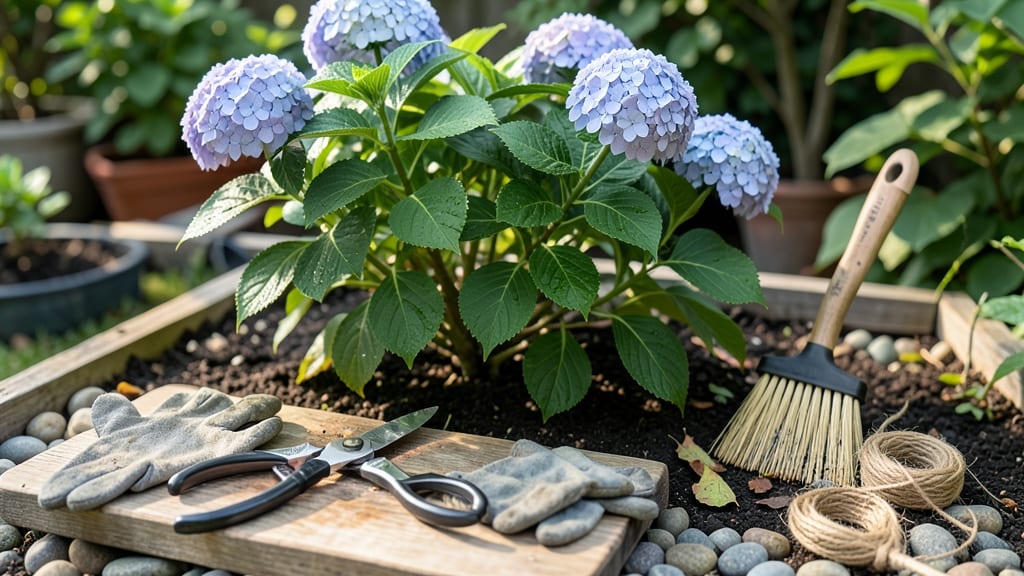
Pruning big leaf hydrangeas in fall sets the stage for next year’s showstopping blooms. ✂️ I’ve learned the hard way that timing matters—prune too early, and you risk winter damage; too late, and you cut off next season’s flower buds.
The secret lies in a late fall approach that balances cleanup with preservation, tailored to your climate.
You’ll need sharp pruners, gloves, and a clear day to work. Start by removing dead or diseased branches first—these are easy to spot and should never linger.
Then focus on thinning out crowded growth by about one-third, always cutting just above a leaf node or outward-facing bud to encourage fresh, open growth.
The payoff comes in spring when your hydrangeas burst with vibrant, abundant blooms because you’ve given them room to breathe. Mulch heavily afterward to protect roots from freezing, and avoid heavy pruning in colder zones until after the last frost—this keeps those critical buds safe.
This method works for both warm and cool climates, though exact timing shifts by 2-4 weeks depending on your first frost date. The key is patience: fall pruning rewards you with stronger stems, better airflow, and fewer surprises come summer.
📚 In This Guide
- What you need
- Instructions
- Tips and common mistakes
- Wrapping up and next steps
What you need
- ● Bypass pruners: A sharp, clean pair (1 set) for precise cuts—avoid dull blades that crush stems.
- ● Loppers: Medium-sized (16–24" blades) for thicker branches (up to 2" diameter).
- ○ Hand saw: Optional but handy for stubborn, woody stems (1 saw with a fine-tooth blade).
- ● Disinfectant (70% isopropyl alcohol or bleach solution): To sterilize tools between cuts and prevent disease spread.
- ● Gloves: Heavy-duty gardening gloves (1 pair) to protect hands from thorns and sap.
- ○ Pruning sealant (optional but recommended): For large cuts (e.g., Tree Seal) to prevent pests/disease entry.
- ● Trash bags or bucket: For collecting pruned debris (1–2 bags/bucket).
- ● Notebook & pen: To jot down notes on cuts made (e.g., branch locations, sizes).
- ● Weather: Prune on a dry, mild day (50–65°F) to reduce stress on the plant and ensure clean cuts.
- ● Lighting: Natural daylight or a bright workspace to spot dead/diseased wood clearly.
- ● Safety gear: Long sleeves/pants to guard against scratches and a hat for sun protection.
Step-by-step instructions for pruning big leaf hydrangeas in fall
Fall pruning is where big leaf hydrangeas thrive—here's how to clean up your plants for stronger blooms next spring.
✂️ Step 1: Wait for the Right Time
Prune after the first hard frost when leaves have turned brown and fallen, but before winter dormancy sets in. This usually falls in late November or December in most climates. You'll know it's time when you see dormant buds forming along the stems but no new growth.
Don't prune too early—hydrangeas need their foliage to photosynthesize until frost. And never prune in spring when buds are swelling, as you'll remove next year's blooms. The goal is to clean up dead growth while preserving the plant's energy reserves.
🌿 Step 2: Assess and Remove Dead or Diseased Wood
Start by examining each stem carefully. Dead wood appears brown and brittle, while diseased stems may show blackened spots or unusual growths. Use sharp, clean pruning shears to cut these stems back to the base. I always disinfect my tools with rubbing alcohol between cuts to prevent spreading disease.
Remove any stems that are completely hollow or show signs of pest damage. These won't recover and will only drain the plant's resources. You'll typically find 20-30% of the plant needs removal, but this varies by plant health and your climate's winter severity.
✂️ Step 3: Thin Out Overcrowded Branches
Next, focus on the remaining healthy stems. Big leaf hydrangeas bloom on new wood, so you want to maintain a strong framework of 3-5 main stems. Look for branches that cross or rub against each other—these create wounds that invite disease. Remove the weaker of the two crossing stems at its base.
Also cut back any stems that grow toward the center of the plant, as these create a dense, shaded interior that promotes rot. Aim to create an open, vase-like shape with good air circulation. You'll notice the plant's natural growth habit emerges more clearly as you make these cuts.
🌱 Step 4: Cut Back Last Year's Flower Stems
Now for the most important step: cutting back the previous year's flower stems. These are the woody stems with dried flower heads that grew last summer. Cut them back to 2-3 inches above the ground or to a strong outward-facing bud if you prefer a taller plant.
This dramatic cut might look harsh, but it's essential for next year's blooms. The plant will produce new stems from the base, which will carry next season's flowers. I always make these cuts at a 45-degree angle, about 1/4 inch above a bud or side branch to prevent water from pooling.
🪴 Step 5: Clean Up and Protect for Winter
After pruning, remove all plant debris from the base of the hydrangea and surrounding area. This prevents pests and diseases from overwintering. I like to add a 2-3 inch layer of mulch around the base, keeping it several inches away from the stems to prevent rot.
For extra protection in cold climates, consider wrapping the plant with burlap or frost cloth after the ground freezes. This helps prevent winter desiccation where cold winds dry out the stems. Water deeply before the ground freezes to ensure the plant has enough moisture through winter.
Tips & tricks for pruning big leaf hydrangeas in fall
Here's what nobody tells you about making fall pruning work perfectly for your big leaf hydrangeas.
Timing is Everything: The window between late November and December is critical—this is when your hydrangea has finished its natural cycle but hasn't yet entered deep dormancy. I learned this the hard way after pruning too early and accidentally removing next year's flower buds. Look for those dormant buds forming along the stems as your signal to start. If your area gets a particularly early frost, wait until after that first hard freeze when leaves have completely browned and fallen.
Tool Prep Prevents Problems: Your pruning shears should be as sharp as possible to make clean cuts that heal quickly. I always disinfect my tools with rubbing alcohol between cuts to prevent spreading any potential diseases from one branch to another. For larger stems, consider using loppers—just make sure they're clean too! This step might seem tedious, but it's what separates healthy plants from those that struggle the next season.
Shape Matters More Than You Think: When you're thinning out overcrowded branches in Step 3, remember that big leaf hydrangeas bloom on new wood. Aim for that open vase shape with 3-5 main stems radiating outward. This isn't just about looks—proper air circulation prevents fungal issues and helps the plant focus its energy where it matters most. I like to visualize the plant's natural growth habit as I prune, which helps me make more intuitive cuts.
Winter Protection Secrets: That 2-3 inch layer of mulch around your hydrangea base is doing more than just looking pretty. It acts like a blanket, protecting roots from extreme temperature fluctuations. I've found that keeping mulch several inches away from the stems prevents rot while still providing insulation. For extra protection in harsh climates, wrap the plant with burlap after the ground freezes—this prevents winter desiccation that can dry out stems.
Pro Tips for Prune Big Leaf Hydrangeas In Fall
- Here's what nobody tells you about making fall pruning work perfectly for your big leaf hydrangeas.
- Timing is Everything: The window between late November and December is critical—this is when your hydrangea has finis...
- Tool Prep Prevents Problems: Your pruning shears should be as sharp as possible to make clean cuts that heal quickly....
Frequently asked questions
Got questions about pruning big leaf hydrangeas in fall? You’re not alone! Here are some of the most common concerns—and expert answers—to help you prune with confidence.
Can I prune big leaf hydrangeas in late fall?
Yes, but time it right! Prune after the first hard frost (when the plant is dormant) but before winter’s worst chill. This helps prevent disease and ensures healthy regrowth in spring. Avoid pruning too early—wait until late November or December in most climates.
Do I need to remove all the old blooms?
Not necessarily! Big leaf hydrangeas bloom on new wood, so you can trim back up to ⅓ of the plant without fear. Remove dead or weak stems first, then shape the plant by cutting just above a set of buds. Leave some stems for winter interest and next year’s blooms.
What if I prune too much by mistake?
Don’t panic! Big leaf hydrangeas are forgiving. If you over-prune, the plant may take longer to recover, but it won’t die. Focus on healthy stems next year—new growth will emerge from the base. Just avoid cutting into old, woody stems with no buds.
Should I fertilize after pruning?
Yes! After pruning, apply a balanced, slow-release fertilizer (like 10-10-10) to support root growth over winter. Avoid high-nitrogen fertilizers—they encourage leafy growth at the expense of blooms. Feed in early spring instead for best results.
How do I know if my hydrangea is big leaf vs. another type?
Check the leaves and blooms:
- Big leaf hydrangea: Large, crinkled leaves (3–7 inches) and mophead or lacecap flowers.
- Oak leaf hydrangea: Long, oak-shaped leaves and cone-like blooms.
- Panicle hydrangea: Smooth leaves and cone-shaped flowers that turn pink in fall.
Wrapping up and next steps
Pruning your big leaf hydrangeas in fall is your secret weapon for stunning blooms next season—just remember to wait until late fall and focus on shaping, not size. With the right tools, timing, and technique, you’ll encourage healthier growth and vibrant flowers while keeping your plant happy and thriving.
Now that you’re armed with the know-how, there’s no better time to grab those shears and give your hydrangeas the TLC they deserve!
Ready to take the next step? Mark your calendar for late fall (after the first frost but before winter’s bite) and watch your hydrangeas shine brighter than ever! 🌿✨