
How To
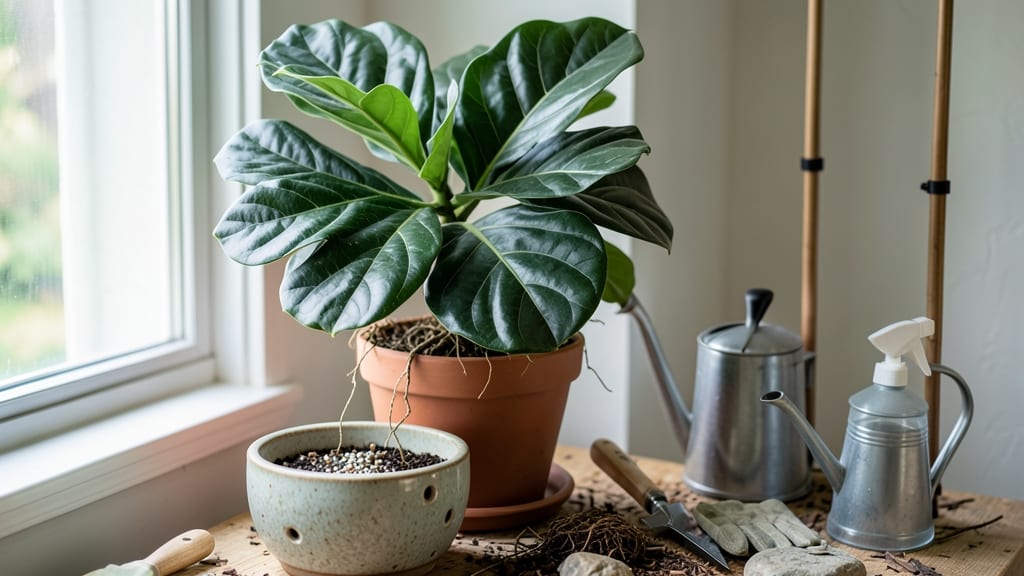
Transplanting your fiddle leaf fig without causing shock is easier than you think—just time it right and handle those roots with care. 🌿 I’ve moved mine twice, and the secret is in the prep: fresh soil, the right pot size, and a little patience.
Most people rush this step, but taking 30 minutes to do it properly means your plant stays happy for years.
Start by choosing a container just 2-3 inches larger in diameter than the current pot—too big stresses the roots. Mix well-draining soil with perlite or orchid bark to prevent soggy roots, and water the plant lightly the day before to reduce shock.
When you’re ready, gently tease out tangled roots and place the plant at the same depth it was growing before. The first few weeks are critical, so keep it in bright, indirect light and avoid watering until the soil feels dry to the touch.
📚 In This Guide
- What you need
- Instructions
- Tips and common mistakes
- Wrapping up and next steps
What you need
- ● New pot: Choose a container 1-2 inches larger in diameter than the current one (e.g., if your plant is in a 10-inch pot, opt for an 11-12-inch pot). Ensure it has drainage holes at the bottom.
- ● Well-draining potting mix: Use a high-quality, airy mix designed for fiddle leaf figs or tropical plants. Avoid garden soil—it can compact and suffocate roots. Recommended ratio: 50% potting soil, 30% perlite/pumice, and 20% orchid bark or coco coir.
- ● Gloves: Wear gardening gloves to protect your hands from soil and potential root irritation.
- ● Trowel or small shovel: A sturdy, narrow trowel (4-6 inches wide) for scooping soil and loosening roots.
- ● Watering can or spray bottle: A gentle spray nozzle helps mist roots and new soil without over-saturating.
- ○ Rooting hormone (optional but helpful): A powder or gel (like Clonex or RootBoost) to encourage faster root growth and reduce transplant shock.
- ● Newspaper or tray: Place under the pot to catch soil runoff during watering.
- ● Mulch or pebbles: Decorative stones or mulch to add a polished look to your new pot.
- ● Plant support (if needed): A small stake or trellis if your fig is top-heavy or leggy.
- ● Fertilizer (light dose): A balanced, water-soluble fertilizer (e.g., 5-5-5 or 10-10-10) to give your plant a gentle post-transplant boost. Wait 4-6 weeks before applying.
Step-by-Step instructions for transplanting a fiddle leaf fig
Here’s how I move these picky plants without shocking their roots or dropping leaves.
🪴 Step 1: Pick the Right Pot and Soil Mix
Choose a container just 1-2 inches wider than the current pot—fiddle leaf figs hate too much extra space, which leads to soggy soil. I like terracotta because it breathes, but any pot with drainage holes works. Skip the decorative cachepot until after transplanting.
Use a well-draining potting mix—fiddle leaf figs despise soggy roots. I blend 50% premium potting mix with 30% perlite and 20% orchid bark for aeration. Moisten the mix until damp but not dripping, so it’s ready to settle around roots without displacing them.
✂️ Step 2: Gently Remove the Plant and Loosen Roots
Water the plant 12 hours before transplanting so the soil holds together when you lift it. Turn the pot sideways and tap the edges firmly—fiddle leaf figs often resist coming out. If the root ball stays stubborn, slide a butter knife around the edges to loosen it.
Once out, inspect the roots. If you see any black, mushy roots, trim them with clean scissors—these are rotten and will spread disease. Gently tease apart the outer inch of roots with your fingers (no tools!) to encourage them to spread into the new soil.
💧 Step 3: Plant and Water Without Overwhelming Roots
Place the root ball into the new pot and fill gaps with your prepared mix, pressing lightly as you go. The top of the root ball should sit ½ inch below the pot’s rim—this prevents water from spilling over and keeps the plant stable. Don’t pack the soil too tightly; fiddle leaf figs need air around their roots.
Water sparingly at first—just enough to moisten the soil without saturating it. Overwatering now causes root rot, and fiddle leaf figs are famously sensitive. After a week, you can water more deeply, but only when the top 2 inches of soil feel dry.
☀️ Step 4: Give It Time to Recover in Low Light
Move the plant to a bright, indirect light spot for 2-3 weeks—no direct sun yet. Fiddle leaf figs are fussy about light changes, and too much too soon causes leaf scorch. If your home has low light, a grow light 12 inches away for 6 hours daily keeps them happy.
Watch for yellowing leaves—this is normal for the first few weeks as the plant adjusts. If leaves crisp or drop, you’re overwatering or giving too much light. Mist the leaves occasionally to raise humidity, but avoid soggy soil. After 4 weeks, you can gradually reintroduce normal care.
Tips & tricks for transplanting fiddle leaf figs
Here's what I learned after moving these divas without losing a single leaf.
Pot Size Matters: That 1-2 inch wider rule isn't arbitrary—fiddle leaf figs develop root rot when given too much space. I've seen people use pots that are 3-4 inches larger, and within weeks, the roots suffocate in soggy soil. If you're unsure, measure your current pot's diameter and add just 1 inch. Pro tip: Use your finger to test soil moisture at the edges before watering again.
Root Inspection is Critical: When you see those black, mushy roots in Step 2, don't hesitate to trim them—they're like a disease waiting to spread. I've had to remove entire root balls when people ignored this step. After trimming, I like to dip the roots in a fungicide solution (like hydrogen peroxide mixed with water) for 5 minutes before replanting. This gives your plant an extra layer of protection against future rot.
Watering Wisdom: The "sparingly" in Step 3 means exactly that—you're aiming for damp soil, not wet. I've made the mistake of thinking "just a little water" would be fine, only to have my plant develop root rot within days. After transplanting, I use a spray bottle to lightly mist the soil until water runs out the drainage holes. Then I wait until the top 2 inches feel completely dry before watering again—usually about 10-14 days.
Light Recovery Timeline: Those 2-3 weeks in bright, indirect light are non-negotiable. I've seen people rush this process and end up with crispy leaves that look like they've been sunburned. If your home has fluorescent lighting, place the plant within 2 feet of the bulbs for that 6 hours daily. For artificial light, I recommend LED grow bulbs—they're gentler on the leaves than regular bulbs.
Pro Tips for Transplant A Fiddle Leaf Fig
- Here's what I learned after moving these divas without losing a single leaf.
- Pot Size Matters: That 1-2 inch wider rule isn't arbitrary—fiddle leaf figs develop root rot when given too much space.
- Root Inspection is Critical: When you see those black, mushy roots in Step 2, don't hesitate to trim them—they're like a disease waiting to spread.
Frequently asked questions
Got questions about transplanting your fiddle leaf fig? You’re not alone—this process can feel tricky at first! Here are answers to the most common concerns to help you feel confident and keep your plant happy.
When is the best time to transplant my fiddle leaf fig?
The ideal time is spring or early summer when the plant is actively growing. Avoid transplanting in winter (dormant period) or during extreme heat—roots need time to recover. If your plant is root-bound or showing stress (yellow leaves, slow growth), don’t wait!
How often should I transplant a fiddle leaf fig?
Transplant every 1–2 years for mature plants, or when roots circle the pot or poke through drainage holes. Younger plants may need repotting annually. Overcrowded roots = stunted growth or leaf drop. Check roots gently during watering to spot signs it’s time!
Can I use regular potting soil, or do I need something special?
Nope—regular potting mix won’t cut it! Fiddle leaf figs thrive in well-draining, aerated soil like a mix of peat moss, perlite, and orchid bark (or a cactus/succulent blend). Avoid heavy garden soil—it causes root rot. Pro tip: Add a handful of orchid bark for extra airflow!
What if my fiddle leaf fig’s leaves turn yellow or drop after transplanting?
Don’t panic! Yellow leaves or leaf drop are normal stress responses for 2–4 weeks post-transplant. To help recovery:
- Place the plant in bright, indirect light (no direct sun).
- Avoid overwatering—let the top 2 inches of soil dry out.
- Mist leaves lightly to boost humidity.
Can I propagate my fiddle leaf fig while transplanting?
Transplanting is the perfect time to propagate. Take 4–6 inch stem cuttings with at least 2–3 nodes, dip in rooting hormone (optional), and place in water or moist soil. Keep humidity high and avoid direct sun. New plants may take 4–8 weeks to root—patience pays off!
Wrapping up and next steps
Transplanting your fiddle leaf fig doesn’t have to be stressful—with the right tools, timing, and care, you’ll give your plant a fresh start for years of lush, happy growth. 🌱 Remember, the key is patience, gentle handling, and mimicking its natural habitat.
Now that you’re equipped with these steps, take a deep breath and enjoy the process—your fiddle leaf fig will thank you with vibrant leaves and stronger roots!
Ready to level up your plant parenting? Next, explore how to keep your fiddle leaf fig thriving year-round—from pruning to pest prevention. Happy growing! 🌿