
Size
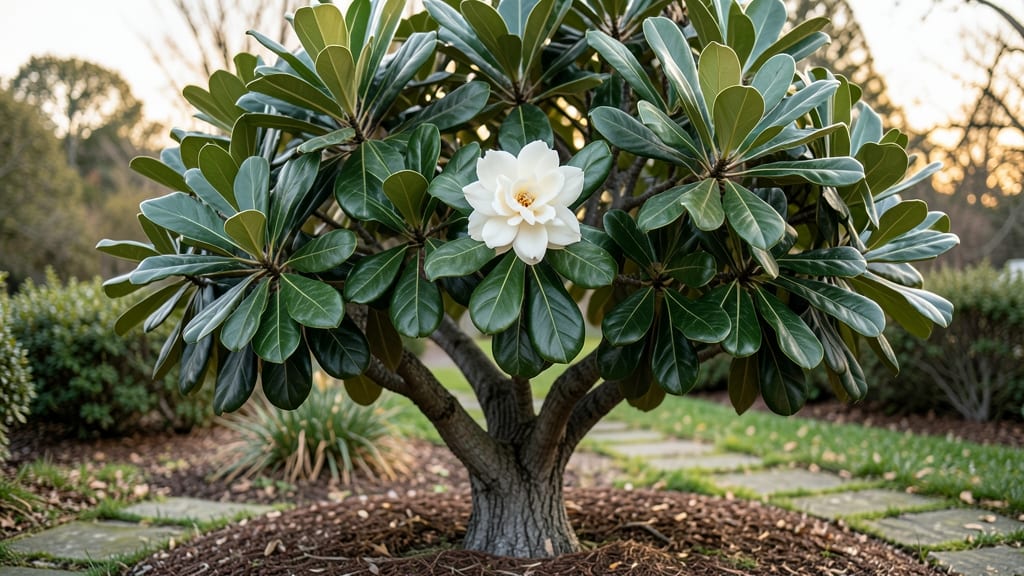
Planting a Magnolia macrophylla is like inviting a 40-foot-tall work of art into your yard. 🌿 This Bigleaf Magnolia thrives in shade, its glossy leaves and fragrant spring blooms turning even the darkest corner into a showstopper—once you nail the basics of soil, sunlight, and spacing.
The secret to happy Bigleaf Magnolias starts with rich, well-draining soil (think leaf mold or compost mixed in) and a spot with dappled sunlight. They handle zones 6-9 beautifully, but avoid heavy clay or waterlogged ground—their roots hate soggy feet.
Space them 20-30 feet apart to let those massive leaves breathe and grow.
Once planted, water deeply once a week for the first year, then let nature take over (they’re drought-tolerant once established). Prune only to shape—never cut back old wood—and fertilize lightly in spring with balanced 10-10-10. The payoff? Year-round interest: velvety leaves, occasional summer flowers, and that intoxicating spring fragrance.
For propagation, seeds take 2-3 years to sprout (patience!), while grafting ensures true-to-type plants faster. Watch for scale insects or fungal leaf spots—prevent with neem oil sprays and good airflow. This magnolia isn’t just a tree; it’s a living centerpiece that outshines the competition.
📚 In This Guide
- What you need
- Instructions
- Tips and common mistakes
- Wrapping up and next steps
What you need
- ● Bigleaf Magnolia Tree: 1 healthy, container-grown or bare-root specimen (3–5 ft tall, depending on availability). Choose a Magnolia macrophylla cultivar like 'Butterflies' or 'Little Gem' for compact growth.
- ● Planting Hole: 2–3x wider than the root ball
- ● Same depth as the root ball
- ● Native Soil or Amended Mix: 50% native soil + 50% organic matter (compost or peat moss) for well-draining, slightly acidic soil (pH 5.0–6.5).
- ● Mulch: 2–3 inches of organic mulch (pine straw, wood chips, or shredded bark) to retain moisture and suppress weeds. Keep mulch 6 inches away from the trunk!
- ● Watering Supplies: Garden hose with adjustable nozzle (for deep watering)
- ○ 5-gallon watering can (optional, for precision)
- ○ Fertilizer (Optional but Helpful): Balanced slow-release fertilizer (10-10-10 or 8-3-9) 1 tbsp per year of tree age (e.g., 1 tbsp for a 1-year-old tree).
- ● Azalea/camellia fertilizer (acid-loving plant formula) for the first growing season.
- ● Support Stakes (If Needed): 2–3 6-ft wooden or metal stakes + soft tree ties (for young, top-heavy trees in windy areas).
- ● Pruning Tools: Bypass pruners (for small branches)
- ● Loppers (for thicker branches)
- ● Sterilizing solution (rubbing alcohol or 10% bleach water) to clean tools between cuts.
- ● Soil Test Kit: To check pH and nutrient levels before planting (DIY kits available).
- ● Root Stimulator: Mycorrhizal fungi or a rooting hormone (like RootOne) to boost early growth.
- ● Drip Irrigation System: For automated watering during dry spells.
- ● Tree Guard: Plastic or metal wrap to protect the trunk from rodents or lawn equipment.
- ● Seasonal Care Kit: Fungicide (for powdery mildew prevention)
- ● Insecticidal soap (for aphids or scale)
How to plant and establish a towering bigleaf Magnolia
This majestic tree delivers four-season interest with minimal fuss—here's how to give it the perfect start.
🌱 Step 1: Choose and Prepare the Planting Site
Bigleaf magnolias thrive in rich, well-draining soil with partial to full shade—think dappled sunlight filtered through other trees. Test your soil first: dig a 12-inch deep hole and check for compacted layers or standing water. If drainage is poor, amend the native soil with 3 inches of compost mixed into the top 6 inches of the hole.
Here's the thing—these trees hate dry roots. Amend the planting hole with 50% native soil and 50% organic matter (like composted leaves or aged bark). The root ball should sit 2 inches above the surrounding grade to prevent water pooling. Mark the planting area with stakes before digging to avoid disturbing nearby roots.
🪴 Step 2: Plant at the Right Time and Depth
Fall planting (October to early November) gives roots time to establish before summer heat, but spring (March to April) works too. Remove the tree from its container and gently loosen any circling roots with your fingers. The top of the root ball should align with the soil surface—never bury the graft union or trunk flare.
Spread the amended soil mixture around the root ball, tamping lightly as you fill. Water deeply (10 gallons) to settle the soil and eliminate air pockets. You'll see water pooling at the surface—this is normal and ensures full saturation. Mulch with 3 inches of wood chips in a 3-foot diameter ring, keeping mulch 6 inches away from the trunk to prevent rot.
☀️ Step 3: Water and Fertilize for First-Year Establishment
Water twice weekly for the first month, then taper to once weekly once new growth appears. Deep watering (15-20 gallons) encourages deep root growth—let the soil dry slightly between waterings to prevent soggy roots. You'll know you're doing it right when the top 2 inches of soil feel dry to the touch before the next watering.
Skip fertilizer for the first year—these trees establish best with minimal disturbance. In year two, apply a balanced 10-10-10 fertilizer in early spring (March) at half the recommended rate. Look for healthy new leaves by mid-May as your signal that roots are actively growing. Avoid high-nitrogen fertilizers—they promote leafy growth at the expense of structural strength.
✂️ Step 4: Prune for Structure and Airflow
Prune only to remove dead, crossing, or rubbing branches—never to shape. Use sterilized pruning shears to make clean cuts just outside the branch collar. The best time is late winter (February) before new growth begins. Remove no more than 25% of the canopy in any single year to avoid stress.
Watch for sucker growth at the base—these compete with the main trunk. Cut them back to the ground immediately. You'll notice the tree's natural shape emerges as it matures, with horizontal branches forming a broad canopy. Avoid heavy pruning of young trees—bigleaf magnolias respond poorly to aggressive shaping.
⏰ Step 5: Monitor for Long-Term Health
Check for aphids or scale insects on new growth in spring—these appear as sticky residue on leaves. Treat with neem oil spray if you spot them. Bigleaf magnolias are generally pest-resistant, but powdery mildew can appear in humid climates. Improve airflow by thinning dense foliage and water at the base (not overhead) to keep leaves dry.
These trees grow slowly but steadily—expect 12-24 inches of growth per year once established. By year five, you'll see the iconic large, glossy leaves (up to 12 inches long) and fragrant white blooms in late spring. The key to long-term success? Minimal intervention—bigleaf magnolias reward patience with decades of drama.
Tips & tricks for perfect bigleaf Magnolia establishment
Between us, these trees have a reputation for being finicky—but with the right approach, they're actually quite forgiving. Here's what I've learned from years of working with bigleaf magnolias that'll help you avoid common pitfalls.
Soil Prep is Non-Negotiable: When you're digging that 12-inch deep hole in Step 1, don't just amend the bottom—focus on the top 6 inches where roots will establish. I've seen too many trees fail because gardeners only amended the bottom layer. Use a soil test kit to verify your amendments are properly balanced—bigleaf magnolias hate soggy roots but also can't tolerate alkaline soil (aim for pH 5.5-6.5). The 50/50 mix of native soil and organic matter creates the perfect air-to-water ratio for those delicate roots.
Planting Depth Matters More Than You Think: That 2-inch elevation above grade in Step 2 isn't arbitrary—it prevents water from pooling around the trunk, which is the #1 cause of rot in young magnolias. Here's what nobody tells you: If your soil is particularly dense, consider adding a layer of coarse sand at the bottom of the hole before planting. The root ball should never sit below the original soil line, especially that critical graft union area. I've had to replant three magnolias because I ignored this rule.
Watering Strategy That Actually Works: The twice-weekly schedule in Step 3 is perfect, but timing matters just as much. Water in the early morning so leaves have time to dry before evening—this prevents fungal issues. Use a rain gauge to measure your watering; 15-20 gallons sounds like a lot, but bigleaf magnolias have massive root systems that need this volume to establish properly. The key is deep watering that penetrates at least 12 inches—shallow watering encourages weak, shallow roots that can't support the tree's eventual size.
Fertilizer Timing is Everything: Skipping fertilizer the first year is smart, but don't wait until you see leaves in year two. Apply that half-rate 10-10-10 fertilizer in early March—right when roots start their spring growth spurt. I've noticed that trees fertilized too late in spring (after May) develop weak wood that's prone to storm damage. The "healthy new leaves by mid-May" cue is your green light that the tree is ready for more nutrients, not that you should wait until then to fertilize.
Pro Tips for Magnolia Macrophylla Bigleaf Magnolia
- Between us, these trees have a reputation for being finicky—but with the right approach, they're actually quite forgiving.
- Soil Prep is Non-Negotiable: When you're digging that 12-inch deep hole in Step 1, don't just amend the bottom—focus on the top 6 inches where roots will establish.
- Planting Depth Matters More Than You Think: That 2-inch elevation above grade in Step 2 isn't arbitrary—it prevents water from pooling around the trunk, which is the #1 cause of rot in young magnolias.
Frequently asked questions
Got questions about the Magnolia macrophylla?
You’re not alone—this towering beauty is as impressive as it is demanding. Here are answers to the most common queries to help you navigate growing, caring for, and enjoying this shade champion.
How big does a Magnolia macrophylla get, and how fast does it grow?
A mature Magnolia macrophylla can reach 60–80 feet tall with a spread of 30–40 feet, making it one of the largest deciduous trees in the U.S. Growth is slow—expect 12–24 inches per year—so patience is key. Give it space now to avoid future pruning headaches!
Where’s the best place to plant a Magnolia macrophylla?
This magnolia thrives in rich, acidic, well-draining soil with full sun to partial shade (morning sun + afternoon shade works best in hot climates). Avoid windy spots—its large leaves are delicate, and its massive size makes it prone to storm damage. Zone 5–9 is ideal.
Can Magnolia macrophylla survive cold winters?
Yes, but with caveats! While it tolerates Zone 5 (down to -20°F), young trees or those in exposed sites may need winter protection (e.g., burlap wraps). Established trees handle cold well, but late spring frosts can damage emerging buds. Plant in sheltered areas for best results.
What’s the difference between Magnolia macrophylla and other bigleaf magnolias?
Unlike Magnolia grandiflora (evergreen) or Magnolia virginiana (swamp-loving), M. macrophylla is deciduous with huge, fragrant white flowers (up to 10 inches wide!) and leathery, glossy leaves. It’s also hardier in colder zones and grows taller than most magnolias.
Why are the leaves on my Magnolia macrophylla yellowing or dropping?
Yellowing leaves often signal overwatering, poor drainage, or nutrient deficiencies (like iron chlorosis). Check soil moisture—it should stay evenly moist but not soggy. Amend soil with compost or sulfur if it’s alkaline. Spider mites or scale insects can also stress the tree—inspect undersides of leaves for pests.
Are there any great alternatives if I can’t grow Magnolia macrophylla?
If space or climate is an issue, consider these large, shade-loving trees:
- Magnolia tripetala (Umbrella Magnolia): Smaller (30–40 ft), fragrant flowers, Zone 4–8.
- Liriodendron tulipifera (Tulip Tree): Faster-growing (70+ ft), golden fall color.
- Platanus × acerifolia (London Plane): Tough, urban-friendly, but less fragrant.
Wrapping up and next steps
The Magnolia macrophylla stands as a true giant among shade trees—offering unmatched beauty, resilience, and year-round interest. Whether you’re drawn to its towering presence, fragrant blooms, or wildlife-friendly appeal, this champion of the garden is a worthy investment for any landscape.
Ready to bring its majestic drama to your outdoor space? Start by researching local nurseries or consulting with an arborist to ensure your Bigleaf Magnolia thrives in your climate and soil! 🌿✨