
Plants
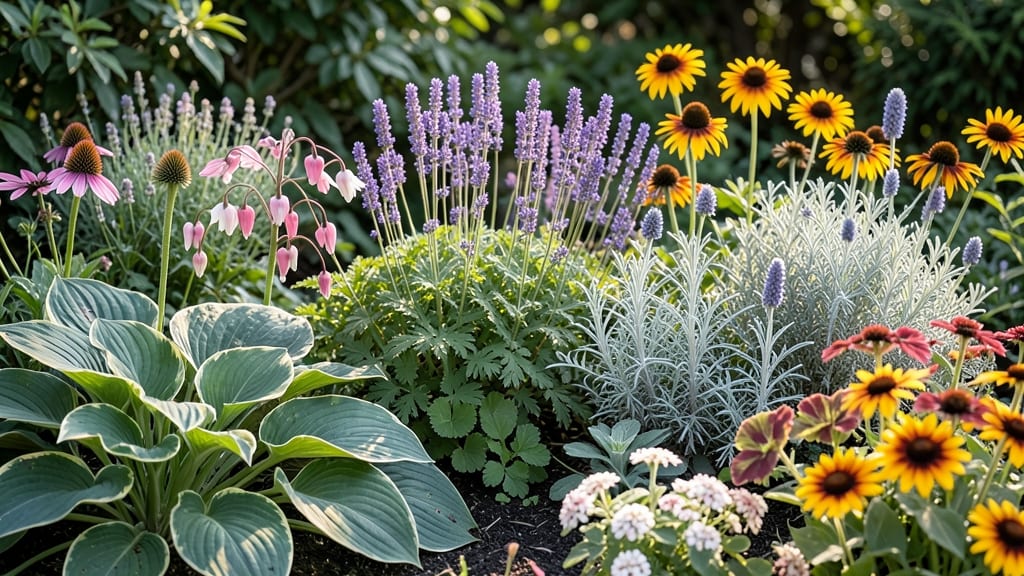
Perennial plant identification by leaf pictures feels like solving a botanical puzzle—once you learn the clues. 🌿 The shape, edges, and veins of a leaf tell you more about a plant than its flowers ever could. My first "hosta or taro?" moment led me down a rabbit hole of leaf anatomy that now lets me name plants at a glance.
Start with the basics: lobed leaves (like hostas) vs. smooth-edged ones (like taro), or the difference between serrated and entire margins. A quick look at leaf arrangement—alternate, opposite, or whorled—narrows it down further.
Most perennials reveal their secrets within 30 seconds of close inspection, and you’ll spot common mistakes that even experienced gardeners make.
By the end, you’ll confidently match leaves to plants like hostas, astilbes, or ferns—and know exactly where they thrive. The care tips that follow turn identification into action: sunlight needs, watering habits, and soil preferences for each type.
This isn’t just about naming plants—it’s about unlocking the right growing conditions for each. Download the comparison tool to test your skills, and soon you’ll be the go-to leaf detective in your gardening circle.
Why Leaf Traits Deceive Identification
Misidentifying perennials by leaf pictures often boils down to a few key factors—some rooted in biology, others in human perception. Understanding these causes can sharpen your eye and help you avoid common pitfalls when matching leaves to plants. Here’s why confusion happens, and how to outsmart it.
Leaves aren’t static—they change shape, color, and texture depending on the season, age, or even time of day. What you see in a summer snapshot might not match the same plant in spring or fall.
- 🌿 New Growth vs. Mature Leaves:
- Young leaves (like those on Hosta or Helleborus) often emerge crinkled or lobed before unfolding into their mature form. A picture of a puckered baby leaf won’t match the glossy, broad adult leaf.
- Actionable fix: Compare multiple growth stages. Use apps like iNaturalist or PlantNet to cross-reference images across seasons.
- 🍂 Autumn’s Camouflage:
- Some perennials (e.g., Astilbe or Cimicifuga) develop deep veins or reddish hues in fall, making them look entirely different from their summer selves.
- Pro tip: 💡 Note the leaf attachment (alternate vs. whorled) and stem texture—these traits stay consistent year-round.
Photography isn’t a botanist’s microscope—it distorts, flattens, or exaggerates leaf features. A single picture might hide critical details like hairiness, glandular dots, or underside color.
- ✨ Lens Distortions:
- Macro shots can stretch veins into false patterns (e.g., making Lamium leaves look more toothed than they are).
- Fix: Compare multiple angles. Hold the leaf up to a magnifying glass or use a 10x loupe to spot tiny features like glandular hairs (common in Mentha or Salvia).
- 🌞 Backlit Illusions:
- Translucent leaves (like Tiarella or Heuchera) appear darker or veined when photographed against light, mimicking other species.
- Actionable fix: Snap photos with diffused light (e.g., under a sheer curtain) to reveal true colors and textures.
Many perennials are cultivars or hybrids bred for specific traits—often with leaves that don’t match their "wild-type" ancestors. A garden-center Hosta ‘Blue Angel’ might look nothing like its original Hosta sieboldiana.
- 🔬 Genetic Mix-Ups:
- Hybrids like ‘Walker’s Low’ Rhododendron or ‘Goldheart’ Hosta have been selectively bred for leaf color, variegation, or size, diverging from their parent plants.
- Solution: Check the cultivar name (e.g., Hosta ‘Francee’) and search for breeder-specific guides. Websites like Missouri Botanical Garden’s PlantFinder list hybrid traits.
- 🎨 Variegation Variations:
- Variegated leaves (e.g., ‘Variegata’ Euonymus) can shift patterns with light exposure or age. A picture might show heavy cream streaks, but in shade, the yellow may fade to pale green.
- Pro tip: 🌡️ Observe the ratio of colors (e.g., 60% green/40% white) and whether variegation is marginal, central, or speckled.
Plants evolve differently based on climate, soil, and elevation. A Sedum leaf in a dry Mediterranean garden will look tougher and thicker than one grown in a damp Pacific Northwest forest.
- 💧 Water Stress Effects:
- Drought-tolerant perennials (e.g., Sempervivum or Dianthus) develop thicker, waxier leaves in arid conditions, while the same species in a rainforest may appear thin and delicate.
- Actionable fix: Note the leaf thickness and surface texture (e.g., succulent vs. leathery) and cross-reference with USDA hardiness zone maps.
- 🌡️ Temperature Triggers:
- Cold-hardy plants (like Heuchera) might develop anthocyanins (purple/red pigments) in winter, altering their appearance. In warmer zones, they stay green year-round.
- Solution: Use climate-specific plant databases (e.g., Lady Bird Johnson Wildflower Center) to filter by region.
By accounting for these variables, you’ll start seeing leaves as dynamic clues—not just static images. Next time you’re stumped, ask: “Is this leaf young or old? Sunlit or shaded? A hybrid or a wild type?” The answer might just be in the details you’ve been overlooking.
Quick Fixes for Leaf ID Confusion
Got stuck trying to match a leaf to its plant? Don’t panic—these practical, step-by-step solutions will help you decode even the trickiest foliage. Whether you’re dealing with blurry photos, overlapping species, or just a lack of plant knowledge, here’s how to turn confusion into clarity.
Cause: Poor lighting, shaky hands, or a distant shot can make leaf details vanish.
Fix It: 🔥 Step 1: Capture a Clearer Image
- Hold the leaf flat against a white background (a sheet or poster board works).
- Use natural light (avoid harsh shadows) or a ring light for even illumination.
- Zoom in without pixelation—use your phone’s macro mode or a 10x magnifying app like PlantNet or iNaturalist.
🍳 Step 2: Enhance the Photo Digitally
- Use free tools like Snapseed or Adobe Lightroom Mobile to:
- Boost contrast (helps veins stand out).
- Adjust sharpness (focus on the leaf’s edges).
- Crop to exclude distractions (like stems or soil).
👨🍳 Step 3: Compare with High-Res References
- Cross-check your enhanced photo with detailed leaf databases like:
- [USDA Plants Database](https://plants.usda.gov/)
- [Floridata’s Leaf Gallery](https://www.floridata.com/)
- Google Lens (upload the photo for instant matches).
💡 Pro Tip: If veins are key, trace them with a pencil on paper first—sometimes a sketch is clearer than a photo!
Cause: Many perennials share similar shapes, colors, or textures (e.g., hostas vs. lilies, ferns vs. ivy).
Fix It: 🥘 Step 1: Narrow Down by Plant Type Ask yourself:
- Is it a broadleaf or needle-like leaf? (Deciduous vs. coniferous.)
- What’s the leaf arrangement? (Alternate, opposite, whorled?)
- Any unique features? (Fuzzy texture? Thorns? Strong scent?)
🔪 Step 2: Check the Stem and Growth Habit
- Herbaceous perennials (like peonies) often have hairy stems or bulbous bases.
- Woody perennials (like shrubs) may have bark ridges or bud scales.
- Vines (like clematis) twist clockwise/counterclockwise—note the direction!
⏰ Step 3: Observe Over Time
- New growth vs. mature leaves can differ (e.g., young hosta leaves are puckered).
- Seasonal changes: Some leaves turn purple in fall (e.g., Heuchera), while others stay green.
🎯 Pro Tip: Use a field guide app like PictureThis or LeafSnap—they’ll ask follow-up questions to refine results.
Cause: You’re new to botany, and terms like “palmate” or “serrate” sound like a foreign language.
Fix It:
🌡️ Step 1: Learn the Basics of Leaf Anatomy
Bookmark this cheat sheet for quick reference:
Term
What It Means
Example
Shape
Ovate, lanceolate, cordate, etc.
Maple = palmate; Oak = lobed
Margin
Edge type: smooth (entire), toothed (serrate), lobed
Raspberry = serrate; Oak = lobed
Venation
Veins: parallel (grasses), netted (most broadleaves)
Monstera = prominent veins; Basil = fine net
✨ Step 2: Start with Easy Groups Begin with common perennials you’re likely to see:
- Hostas (thick, wavy leaves)
- Hosta vs. Lily (hosta = heart-shaped base; lily = long, strap-like)
- Ferns (delicate, feathery fronds vs. ivy’s glossy leaves)
💡 Pro Tip: Follow #PlantID on Instagram—gardeners post daily challenges with answers. It’s like a masterclass in real time!
- Carry a mini notebook in your garden—sketch leaves with color swatches (e.g., “blue-green with purple underside”).
- Label new plants immediately with stakes or plant tags (even if you’re unsure).
- Join a local gardening group—experts can verify IDs in person.
- Use a leaf rub technique: Place a leaf under paper, rub with a pencil, and study the vein imprint.
- Download offline apps (like iNaturalist) for ID help when you’re offline.
Remember: Even experts misidentify leaves at first—practice makes perfect. The more you observe, the faster your brain will recognize patterns. Happy leaf sleuthing! 🕵️♂️🌿
Frequently asked questions
What’s the quickest way to tell if a leaf belongs to a hosta or a lily?
Look at the leaf base! Hostas have heart-shaped bases (cordate) that wrap around the stem, while lilies have straight, strap-like leaves with parallel veins. Also check the texture—hosta leaves are thick and wavy, while lily leaves are smooth and flat.
Can I identify perennials just from a close-up leaf photo, or do I need the whole plant?
You can often ID perennials from leaves alone, but focus on key details: leaf shape, margin type (smooth/serrated), vein pattern, and arrangement (alternate/opposite). For tricky cases, check the stem texture or underside color. Apps like PictureThis work best with clear close-ups of both leaf and stem.
Why do some perennials look completely different in photos than in real life?
Lighting, season, and leaf age cause the biggest differences! Young leaves (like Hosta) are often puckered, while fall colors (e.g., Heuchera) turn purple. Take photos with diffused light and compare multiple growth stages—apps like iNaturalist help cross-reference real vs. digital appearances.
What’s the most common mistake beginners make when identifying leaves?
Ignoring the underside! Many perennials (like Heuchera) have red or fuzzy undersides that look entirely different from the top. Always flip the leaf—it’s often the key detail that separates look-alikes like Tiarella vs. Lamium.
Are there any perennials that can’t be identified by leaves alone?
Some tricky cases need extra clues! For example, Allium (ornamental onions) and Liatris have similar grass-like leaves, but their flower spikes differ. If leaves are identical, check the root system (bulbs vs. rhizomes) or flower structure—these often reveal the plant’s true identity.