
Diseases
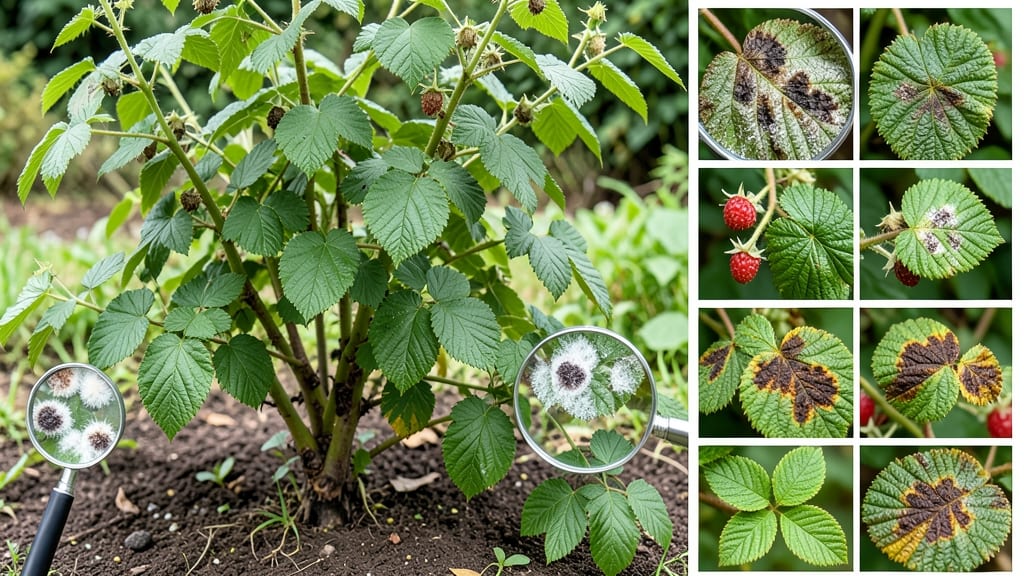
Spotting raspberry leaf diseases with these pictures can save your harvest—and I’ve seen firsthand how quickly those tiny spots or rusty patches can spread if you miss them. 🌿 This visual guide breaks down the most common fungal infections like powdery mildew, leaf spot, and cane blight, showing you exactly what to look for on the undersides of leaves, stems, and new growth.
Most of these diseases start with subtle signs—yellowing between veins, white powdery coatings, or dark brown patches—that many gardeners mistake for nutrient deficiencies. The truth? Fungal spores spread fastest in warm, humid conditions, and once they take hold, they can weaken your plants enough to reduce fruit production by half.
But catching them early means you can prune infected leaves and treat the plants before they spiral.
You’ll learn to recognize the key visual cues for each disease, from the fuzzy white threads of powdery mildew to the crinkled, distorted leaves of cane blight.
With the right prevention—like proper spacing, watering at the base, and fungicide sprays at the first sign of trouble—you can keep your raspberry patch thriving all season long.
Whether you’re dealing with a single plant or a whole row, this guide gives you the tools to act fast. No more guessing what’s wrong—just clear, labeled descriptions of the symptoms so you can protect your plants before the damage gets worse.
Understanding Disease Triggers
Raspberry leaf diseases rarely appear out of thin air—they’re the result of a perfect storm of environmental, biological, and cultural factors. To stop them in their tracks, you need to know why they happen.
Below, we break down the root causes of common raspberry leaf diseases, from fungal infections to bacterial invaders, so you can address the problem at its source.
Fungi are the #1 culprit behind raspberry leaf diseases, thriving in damp, humid conditions. Here’s why they take hold:
- 💦 Excess Moisture & Poor Airflow Fungi like Didymella applanata (a common cause of leaf spot) and Phragmidium (raspberry rust) love high humidity (above 75%) and stagnant air.
Overhead irrigation, dense canopies, or shaded plants trap moisture on leaves, creating a fungal buffet. - Actionable fix: Space plants 3–4 feet apart for airflow and water at the base (not leaves) in the early morning.
- 🍂 Debris & Old Leaves Infected leaves, canes, or fallen fruit harbor fungal spores over winter. When spring arrives, these spores explode into new infections.
- Actionable fix: Prune and remove all plant debris in fall, then compost it away from the garden (or solarize it).
- 🌡️ Warm, Wet Springs Temperatures between 60–75°F (15–24°C) with frequent rain or dew trigger fungal outbreaks. Botrytis cinerea (gray mold) thrives in these conditions, causing brown, mushy patches on leaves.
- Actionable fix: Use mulch to moderate soil temp and avoid late-season nitrogen (which promotes lush, moisture-loving growth).
Bacteria like Xanthomonas fragariae (causing angular leaf spot) and Pseudomonas syringae spread via: - 🌧️ Rain Splash & Wind Bacteria cling to water droplets, hitching rides to new leaves.
Wounds (from pruning, hail, or insects) let them instantly infect the plant. - Actionable fix: Sanitize pruners with 70% isopropyl alcohol between cuts and avoid pruning during wet weather.
- 🐞 Insect Vectors Aphids, mites, and thrips carry bacterial cells on their bodies, depositing them as they feed. Pseudomonas often spreads this way.
- Actionable fix: Monitor for pests and use neem oil or horticultural oil to disrupt their life cycles.
- 🌱 Contaminated Tools & Hands Touching infected plants with dirty gloves or tools transfers bacteria to healthy ones. Even well-meaning gardeners can spread disease unknowingly.
- Actionable fix: Wash hands with soap, disinfect tools with bleach water (1 part bleach to 9 parts water), and sterilize containers when propagating.
A stressed raspberry plant is like an open door for pathogens.
Common stressors include: - ⚖️ Nutrient Imbalances Too much nitrogen (lush growth) or deficient potassium (weak cell walls) make leaves more susceptible to fungal/bacterial attacks. - Actionable fix: Test soil pH (ideal: 5.5–6.5) and amend with potassium-rich compost or wood ash (sparingly).
- 💧 Overwatering or Drought Overwatering causes root rot (Phytophthora), while drought stress weakens leaves, making them easier targets for Didymella.
- Actionable fix: Water deeply 1–2x/week (1–1.5 inches) and mulch to retain moisture without soggy soil.
- 🌿 Physical Damage Hail, strong winds, or improper pruning create entry points for pathogens. Even bird pecks can introduce infections.
- Actionable fix: Prune selectively (remove only diseased canes) and protect plants with row covers during storms.
Diseases don’t strike randomly—they follow seasonal patterns:
- 🍂 Fall Cleanup Neglect Leaving infected canes or leaves over winter means spores survive and multiply, ready to pounce in spring.
- Actionable fix: Burn or bag all plant debris (don’t compost it near raspberries).
- 🌿 Monoculture Planting Growing raspberries in the same spot year after year builds up pathogen populations in the soil.
- Actionable fix: Rotate crops every 3–4 years or plant disease-resistant varieties like ‘Heritage’ or ‘Boyne’.
- 🌡️ Climate Shifts Unusual heatwaves or sudden cold snaps shock plants, lowering their resistance. Botrytis thrives in these conditions.
- Actionable fix: Mulch heavily in winter and provide shade cloth in extreme heat.
Even the best gardeners make mistakes that invite disease:
- 🌱 Buying Infected Plants Nursery plants with hidden infections (like rust spores) can introduce diseases to your garden.
- Actionable fix: Inspect plants for yellow spots, powdery coatings, or black pustules before buying.
- 💦 Overhead Irrigation Watering leaves (not soil) splashes spores onto healthy foliage, spreading disease faster than a wildfire.
- Actionable fix: Switch to drip irrigation or soaker hoses.
- 🚫 Ignoring Early Symptoms Waiting until leaves are half-eaten by spots means the disease has already spread via spores.
- Actionable fix: Scout weekly and remove infected leaves immediately (don’t compost them).
| Disease | Primary Cause | Trigger Conditions | Prevention Key |
|---|---|---|---|
| Leaf Spot | Didymella applanata (fungus) | Wet leaves, high humidity, old debris | Prune debris, improve airflow |
| Rust | Phragmidium (fungus) | Cool (60–70°F), moist springs | Remove infected canes, rotate crops |
| Gray Mold | Botrytis cinerea (fungus) | Warm (75°F), damp nights, wounds | Space plants, avoid late nitrogen |
| Angular Leaf Spot | Xanthomonas (bacteria) | Rain splash, contaminated tools | Sanitize tools, water at base |
| Cane Blight | Leptosphaeria (fungus) | Poor drainage, high organic matter in soil | Improve drainage, solarize soil |
Pro Tip: 💡 The best defense is offense—healthy plants resist disease! Focus on prevention (cleanup, airflow, sanitation) rather than cure, and you’ll keep your raspberries thriving.
Fix Raspberry Leaf Issues Fast
Now that you’ve identified the problem—whether it’s powdery mildew, rust, or bacterial blight—it’s time to act. Early intervention is key to saving your raspberry plants and ensuring a bountiful harvest. Below are practical, step-by-step solutions tailored to each common disease, plus prevention tips to keep future outbreaks at bay.
Powdery mildew thrives in humid, shaded conditions, but you can reverse its spread with these steps:
🔥 Step 1: Prune and Remove Infected Leaves
- 👨🍳 Cut away heavily infected leaves (look for white, powdery patches).
- ⏰ Do this early in the morning to avoid spreading spores.
- 🔪 Sterilize pruners with rubbing alcohol between cuts to prevent cross-contamination.
🥘 Step 2: Apply Fungicidal Sprays
- Baking soda spray (1 tsp baking soda + 1 quart water + a drop of dish soap) – spray both sides of leaves every 7–10 days.
- Neem oil (1 tbsp neem oil + 1 quart water + a few drops of soap) – disrupts fungal growth and deters reinfection.
- Commercial fungicides (like sulfur-based or copper-based sprays) for severe cases—follow label instructions.
🛡️ Step 3: Improve Airflow and Light
- ✨ Thin out canes to allow sunlight to penetrate the plant.
- 🌡️ Space plants 2–3 feet apart to reduce humidity buildup.
- 💡 Use reflective mulch (like white plastic) to bounce light onto leaves.
💡 Prevention Tip: Water at the base (not overhead) and avoid late-season nitrogen fertilizers, which encourage lush, mildew-prone growth.
Rust (caused by Kuehneola uredinis) turns leaves orange and brittle, but you can stop its progress with these fixes:
🔥 Step 1: Collect and Destroy Fallen Leaves
- 🍂 Rake up and dispose of all infected leaves—do not compost them.
- 🔪 Burn or trash severely infected foliage to prevent spore survival over winter.
🍳 Step 2: Apply Copper Fungicide
- 🥘 Use copper fungicide (like Copper Soap or TriBasic Copper) every 10–14 days during wet seasons.
- 🌡️ Mix homemade copper spray (1 tbsp copper sulfate + 1 gallon water + 1 tsp soap) for a budget-friendly option.
🛡️ Step 3: Rotate Planting Locations
- ✨ Avoid planting raspberries in the same spot for at least 3 years—rust spores linger in soil.
- 💡 Choose resistant varieties like ‘Boyne’ or ‘Nova’ if rust is recurrent in your area.
💡 Prevention Tip: Mulch with straw (not wood chips) to reduce soil moisture, which rust loves.
Bacterial blight (Xanthomonas fragariae) causes dark, water-soaked spots and can spread rapidly. Here’s how to contain and treat it:
🔥 Step 1: Remove and Destroy Infected Canes
- 🍃 Cut out and bag any canes with blackened, oozing lesions.
- 🔪 Sterilize tools between cuts to avoid spreading bacteria.
🍳 Step 2: Apply Copper Bactericide
- 🥘 Use a copper-based bactericide (like Copper Hydroxide) every 7–10 days.
- 🌡️ For organic growers, try 1% hydrogen peroxide spray (mix 1 oz per gallon of water) to reduce bacterial load.
🛡️ Step 3: Improve Drainage and Spacing
- ✨ Ensure soil drains well—bacterial blight thrives in soggy conditions.
- 💡 Space plants 3–4 feet apart to reduce humidity and airflow issues.
💡 Prevention Tip: Avoid overhead watering—use drip irrigation instead to keep leaves dry.
No matter the issue, these proactive steps will strengthen your raspberry plants’ defenses:
| Action | How to Do It | Why It Works |
|---|---|---|
| 🌱 Rotate crops | Avoid planting raspberries in the same spot yearly. | Prevents soil-borne diseases from building up. |
| 💦 Water wisely | Water early in the day at the base. | Reduces humidity and fungal growth. |
| 🍃 Prune properly | Remove dead/diseased canes in early spring. | Stops spores from overwintering. |
| 🌡️ Monitor humidity | Use a fan in greenhouses or space plants well. | Lowers conditions ideal for mildew/rust. |
| 🧪 Test soil | Check pH (ideal: 5.5–6.5) and nutrients. | Healthy soil = stronger plants. |
Final Thought: 🌟 Act fast, stay consistent, and prioritize prevention—your raspberry bushes will thank you with vibrant leaves and sweet berries all season long!
Frequently asked questions
What are the most common raspberry leaf diseases I should watch for?
Look for these five troublemakers: powdery mildew (white fuzzy patches), leaf spot (dark brown/black spots with yellow halos), rust (orange pustules on undersides), angular leaf spot (brown triangles with yellow edges), and cane blight (dark streaks on stems). These appear most often in humid conditions or after rainy springs.
How can I tell if my raspberry leaves have a fungal infection vs. a bacterial one?
Fungal diseases like powdery mildew or rust show powdery coatings or rust-colored spots, while bacterial infections like angular leaf spot create water-soaked, oily-looking spots that often ooze when wet. Fungal spots usually have halos, while bacterial spots appear angular with crisp edges.
Can I still harvest berries if the leaves have diseases?
It depends! For fungal diseases (like powdery mildew), the berries are usually safe to eat if the fruit itself isn’t infected. But with bacterial diseases (like angular leaf spot), the bacteria can spread to the fruit—so remove heavily infected canes first. Always wash berries thoroughly before eating, just in case.
What’s the fastest way to stop powdery mildew from spreading?
Start by pruning infected leaves immediately (sterilize your shears with rubbing alcohol first!). Then spray with a baking soda mix (1 tsp baking soda + 1 quart water + a drop of dish soap) every 7–10 days. Improve airflow by spacing plants 3–4 feet apart and watering at the base instead of overhead.
Why do my raspberry leaves keep getting diseases every year?
Likely because fungal spores overwinter in old leaves or soil. To break the cycle: remove all plant debris in fall, rotate crops (don’t plant raspberries in the same spot yearly), and choose disease-resistant varieties like ‘Heritage’ or ‘Boyne’. Proper spacing and mulching also help prevent future outbreaks.