
Shrubs
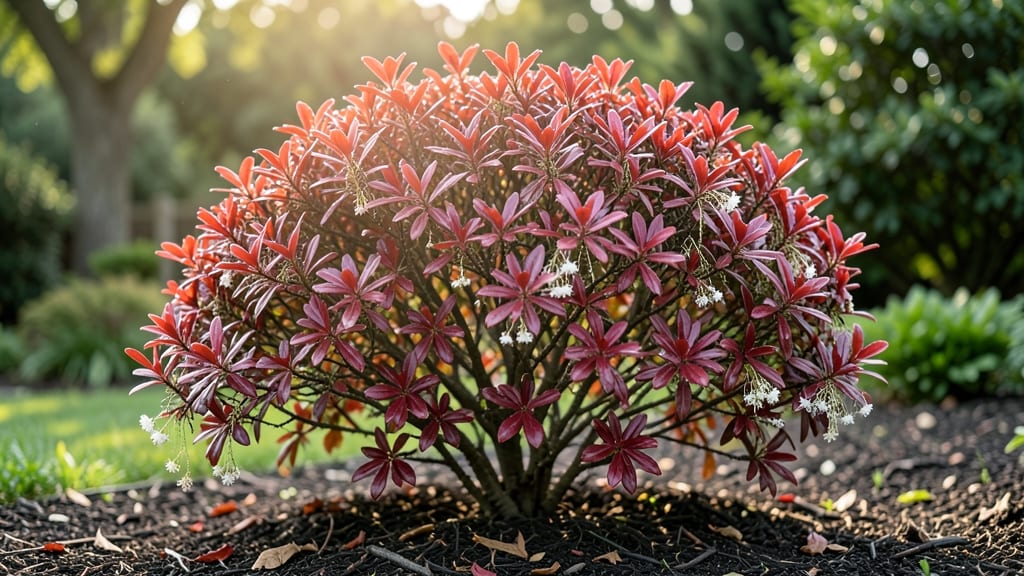
Mastering the red leaf shrub identification feels like solving a botanical mystery—one leaf at a time. 🌿 I’ve spent years distinguishing between fiery red maples, deep burgundy barberries, and glossy cotoneasters, and the key lies in leaf shape, edge texture, and how the color shifts with seasons.
The first clue is always the leaf shape: lobed like a maple’s hand or smooth-edged like barberry’s shield. Then check the margins—serrated, entire, or slightly wavy—and note if the underside has a dusting of fine hairs. A simple magnifying glass reveals details that separate similar shrubs.
Once you’ve nailed the ID, care becomes straightforward: most thrive in full sun to partial shade, with well-draining soil that keeps roots happy but not soggy. Prune after flowering to maintain that vibrant color, and watch how the foliage deepens in cooler months.
Whether you’re filling a shady corner or brightening a sunny border, these shrubs deliver year-round drama with minimal fuss. Start with just one—then let the collection grow as you master the clues.
Understanding Leaf Color Shifts
If you’ve noticed your once-green shrubs turning a stunning (or alarming) shade of red, don’t assume it’s just autumn’s doing. Red leaves on shrubs can stem from a mix of natural, seasonal, and even stress-related causes.
Below, we break down the science behind why your shrub’s foliage might be blushing—so you can tell whether it’s a healthy glow or a cry for help.
Some shrubs are genetically predisposed to produce red or burgundy leaves, especially in cooler weather or bright sunlight. This isn’t a problem—it’s their branding!
- Anthocyanins at work: These pigments (the same ones that color berries and apples) thrive in high-light, low-temperature conditions. Shrubs like Cornus sericea (red-osier dogwood) or Berberis thunbergii (Japanese barberry) use them to protect leaves from UV damage and attract pollinators.
- Seasonal color shifts: Evergreen shrubs like Ilex glabra (inkberry holly) or Rhododendron may turn reddish-purple in winter as chlorophyll breaks down, revealing underlying pigments.
- Juvenile vs. mature leaves: Young leaves on shrubs like Viburnum dentatum (arrowwood viburnum) often emerge red before greening up—a normal part of their growth cycle.
💡 Pro Tip: If your shrub’s red leaves appear consistent across seasons and the plant looks otherwise healthy, you’re likely dealing with a cultivar trait. Check its label or a plant database to confirm!
Extreme temperatures—whether scorching summers or freezing winters—can trigger reddening as a survival mechanism. Think of it as your shrub’s way of saying, “I’m struggling, but I’m fighting back!”
| Cause | How It Affects Leaves | What to Watch For |
|---|---|---|
| ❄️ Cold Stress | Chill damages cell membranes, causing anthocyanins to flood the leaves as a protective antioxidant response. |
|
| 🔥 Heat Stress | High temps reduce chlorophyll production, while anthocyanins ramp up to shield leaves from UV radiation. |
|
| 🌞 Sunburn | Direct, intense sunlight (especially after transplanting) causes oxidative damage, triggering red pigmentation. |
|
✨ Fix It: If heat or cold is the culprit, provide afternoon shade in summer or winter mulch (2–4 inches of shredded bark) to insulate roots. Gradually acclimate young shrubs to full sun to prevent sunburn.
Water—either a drought or an overabundance—can send your shrub’s leaves into panic mode, often manifesting as red or purple hues. Here’s how to decode the signals:
- 🌵 Drought Stress:
- Reddening occurs as the shrub conserves water by reducing chlorophyll and increasing anthocyanins.
- Common in drought-tolerant shrubs like Cotoneaster or Pyracantha when soil dries out.
- Fix: Deep water 1–2 times per week (check soil 2 inches down—if dry, it’s time to water).
- 💦 Overwatering:
- Poor drainage or soggy soil starves roots of oxygen, leading to red or yellow leaves as a sign of root rot.
- Often seen in heavy clay soils with shrubs like Azalea or Andromeda.
- Fix: Improve drainage with organic matter (compost or perlite) and water only when the top 1–2 inches of soil are dry.
🔍 Test Your Soil: Stick a screwdriver into the soil—if it slides in easily, you’re overwatering. If it feels like a brick, it’s time to hydrate.
Not all red leaves are harmless—some signal an invasion or infection. Here’s how to spot the difference:
- 🐛 Spider Mites or Aphids:
- These sap-suckers cause reddish-purple stippling or curling as leaves struggle to photosynthesize.
- Check the undersides of leaves for tiny webs or insects.
- Fix: Blast off pests with a strong spray of water or use neem oil (1 tsp per quart of water).
- 🍄 Fungal Infections (e.g., Powdery Mildew):
- Red or purple leaves with white powdery spots indicate fungal stress, common in humid climates.
- Target shrubs: Hydrangea, Weigela, or Rose of Sharon.
- Fix: Apply baking soda spray (1 tbsp baking soda + 1 tsp soap per gallon of water) or copper fungicide.
- 🐞 Root-Boring Insects:
- Shrubs like Lilac or Forsythia may develop red or wilted leaves if larvae chew through roots.
- Look for sawdust-like frass at the base of the plant.
- Fix: Treat soil with beneficial nematodes or systemic insecticide (like imidacloprid).
🚨 Warning Sign: If red leaves accompany yellow
Revive Your Shrub’s Vibrancy
When your shrub’s leaves turn a fiery red, it’s often a cry for help—but don’t panic! With the right approach, you can restore its health and prevent future color shifts. Below, we’ve mapped common causes to practical fixes, along with proactive tips to keep your shrub thriving.
Signs: Yellowing or reddening leaves, soggy soil, wilting despite water. Why it happens: Too much moisture suffocates roots, leading to stress and discoloration.
How to Fix It: 🔥 Step 1: Check the Soil
- Stick your finger 2 inches into the soil. If it’s damp, hold off on watering.
- Test drainage: Fill a container with water and pour it over the soil. If water pools on top after 30 minutes, drainage is poor.
🍳 Step 2: Adjust Watering Habits
- Water deeply once a week (or less in rainy climates) and let the top 2–3 inches of soil dry out between sessions.
- Avoid overhead watering—use a drip system or soaker hose to deliver moisture at the roots.
👨🍳 Step 3: Improve Soil Drainage
- Mix in compost or perlite to loosen heavy clay soil.
- If planting a new shrub, amend the hole with gravel or sand for better airflow.
🥘 Step 4: Prune Affected Leaves
- Snip off severely discolored leaves to redirect energy to healthy growth.
Prevention Tips: ✨ Mulch wisely: Use 2–3 inches of organic mulch (like wood chips) to retain moisture without smothering roots. 🌡️ Monitor weather: Reduce watering during prolonged rain or humidity.
Signs: Bright red or crispy leaf edges, especially on south-facing sides. Why it happens: Intense sunlight or sudden heat waves scorch leaves, mimicking stress signals.
How to Fix It: 🔥 Step 1: Provide Shade
- Install lightweight shade cloth (30–50% coverage) if the shrub is in full sun.
- Temporary fix: Use a reflective tarp on the west side to deflect afternoon heat.
🍳 Step 2: Water Strategically
- Morning watering (before 10 AM) reduces evaporation and cools roots.
- Mist leaves on extremely hot days to raise humidity slightly.
👨🍳 Step 3: Adjust Mulch
- Switch to light-colored mulch (like straw) to reflect heat instead of absorbing it.
🥘 Step 4: Fertilize for Resilience
- Apply a balanced, slow-release fertilizer (10-10-10) to strengthen cell walls against heat.
Prevention Tips: 💡 Acclimate gradually: If moving a shrub to a sunnier spot, do it over 2–3 weeks to harden it off. 🎯 Choose heat-tolerant varieties: Opt for shrubs like Dwarf Fountain Grass or Abelia if your climate is scorching.
Signs: Reddish-brown spots, mushy stems, or white powdery growth. Why it happens: Fungi or bacteria thrive in damp, crowded conditions, causing leaf discoloration.
How to Fix It: 🔥 Step 1: Identify the Culprit
- Powdery mildew? White fuzzy coating on leaves.
- Leaf spot? Dark, water-soaked marks.
- Bacterial blight? Yellow halos around red spots.
🍳 Step 2: Prune and Dispose
- Cut off infected branches ½ inch below the damage. Do not compost—bag and trash them.
👨🍳 Step 3: Apply Fungicide
- Spray with neem oil (natural) or copper fungicide (for severe cases). Reapply every 7–10 days.
🥘 Step 4: Improve Airflow
- Thin out dense shrubs to allow sunlight and air to circulate.
- Space new plants 3–5 feet apart to prevent future outbreaks.
Prevention Tips: 🌡️ Water at the base—avoid wetting foliage to discourage fungal spores. ✨ Clean tools: Sterilize pruners with rubbing alcohol between cuts to prevent spreading pathogens.
Signs: Pale yellow leaves with red veins (iron chlorosis) or overall weak, small leaves (nitrogen deficiency). Why it happens: Poor soil pH or lack of essential nutrients stresses the shrub.
How to Fix It: 🔥 Step 1: Test Your Soil
- Use a home soil test kit (available at garden centers) to check pH and nutrient levels.
🍳 Step 2: Amend the Soil
- For iron deficiency (high pH):
- Mix in chelated iron or sulfur to lower pH gradually.
- For nitrogen deficiency:
- Apply compost, fish emulsion, or a high-nitrogen fertilizer (like 20-5-5).
👨🍳 Step 3: Feed Regularly
- Spring and fall: Use a balanced fertilizer to maintain nutrients.
- Organic option: Spread alfalfa meal for slow-release nitrogen.
🥘 Step 4: Mulch for Nutrients
- Use leaf mold or well-rotted manure as mulch to enrich the soil over time.
Prevention Tips: 💡 Mulch annually to replenish organic matter. 🎯 Rotate fertilizers to avoid over-reliance on one nutrient.
Signs: Reddish stippling, webbing, or sticky residue (honeydew) on leaves. Why it happens: Pests suck sap, causing leaves to turn red or yellow as they weaken.
How to Fix It: 🔥 Step 1: Inspect Leaves
- Look for tiny webs, specks, or crawling insects on the undersides of leaves.
🍳 Step 2: Blast Off Pests
- Strong spray: Hose down the shrub with water to dislodge mites and aphids.
- Soap solution: Mix 1 tsp mild dish soap per quart of water and spray affected areas.
👨🍳 Step 3: Introduce Predators
- Ladybugs or lacewings (available at garden centers) eat aphids naturally.
🥘 Step 4: Use Row Covers
- For severe infestations, drape fine mesh netting over the shrub for 2–3 weeks.
Prevention Tips: 🌡️ Encourage beneficial insects by planting marigolds or dill nearby. ✨ Avoid broad-spectrum pesticides—they kill helpful bugs too!
Final Pro Tip: 📊 Keep a garden journal to track watering, fertilizing, and weather patterns. This helps you spot trends and act fast before red leaves become a chronic issue!
Frequently asked questions about red leaf shrubs
How do I tell if my shrub’s red leaves are natural or a sign of stress?
Observe the consistency and pattern of the red color. Healthy shrubs like Japanese barberry (Berberis thunbergii) or cotoneaster naturally develop vibrant red foliage in cooler weather or full sun. Stress-related red leaves often appear as uneven patches, crispy edges, or accompany other symptoms like wilting or yellowing. Check the undersides of leaves for pests or fungal spots.
Which red leaf shrubs thrive in full sun vs. partial shade?
For full sun, try Berberis thunbergii (Japanese barberry) or Cotoneaster dammeri—both handle 6+ hours of direct sunlight and maintain their color. For partial shade (3–6 hours of sun), Acer palmatum (Japanese maple) or Viburnum dentatum (arrowwood viburnum) shine. Always match the shrub’s native habitat to your light conditions for best results.
Can I propagate red leaf shrubs from cuttings?
Yes! Many red leaf shrubs like Cotoneaster or Weigela root easily from softwood cuttings in late spring. Take 4–6 inch tips, remove lower leaves, and dip in rooting hormone. Place in moist perlite or sand, keeping humidity high with a plastic bag. Roots typically form in 4–6 weeks. Avoid propagating during extreme heat or cold.
Why do some red leaf shrubs lose their color in summer?
Intense summer heat can bleach out anthocyanins (the pigments responsible for red color) in shrubs like Cornus sericea (red-osier dogwood). To preserve color, provide afternoon shade during peak heat and mulch with 2–3 inches of organic matter to regulate soil temperature. Water deeply once a week to prevent stress-induced color loss.
Are red leaf shrubs deer-resistant?
Not all! While Berberis thunbergii (Japanese barberry) is moderately deer-resistant due to its spiny stems, others like Acer palmatum (Japanese maple) are highly palatable. For deer-prone areas, opt for Cotoneaster varieties or Pyracantha, which have thorns. Apply deer repellent sprays in early spring when new growth emerges.