
Trees
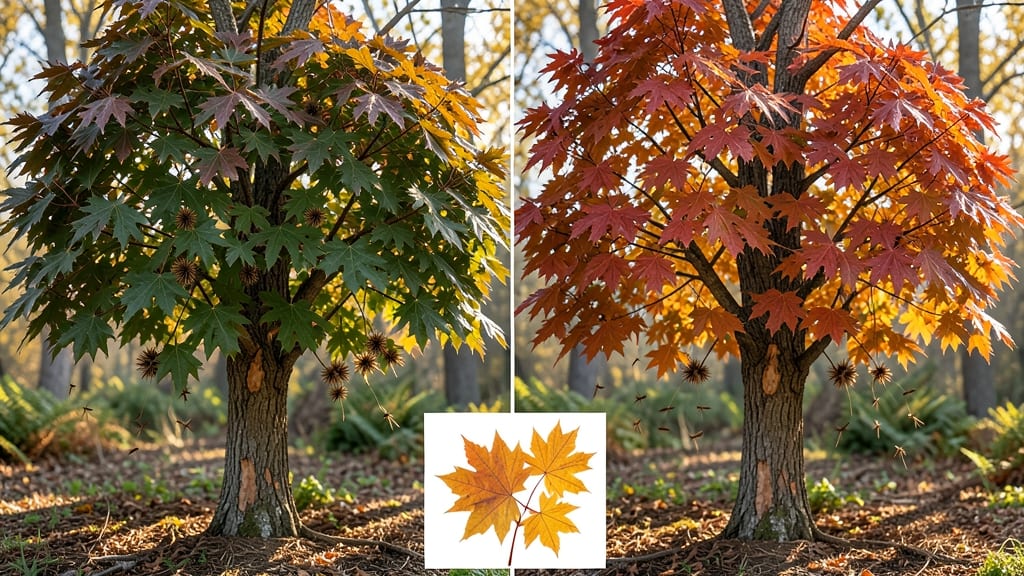
Sweetgum vs maple leaf isn't just about leaves—it's about the dramatic statement each tree makes in your yard. 🌳 The sweetgum's star-shaped leaves and spiky seed pods create bold texture, while maples offer delicate, lobed foliage that dances in autumn winds.
One casts deep shade; the other provides dappled light for understory plants.
Sweetgums grow into tall, wide canopies (50-70 feet) with a rugged, almost tropical vibe, while maples stay more refined (30-60 feet), perfect for formal gardens. The sweetgum's fall colors lean fiery red, while maples famously blaze yellow, orange, or purple—sometimes on the same tree.
Both attract wildlife, but sweetgums feed birds with their seed pods, while maples offer nectar for pollinators.
Pair them for contrast: plant a sweetgum as a backyard anchor with maples framing a patio or entryway. Their different leaf shapes create visual interest year-round, and the sweetgum's winter silhouette adds structure when maples lose their leaves.
For shade lovers, the sweetgum wins—but if you crave color drama, maples steal the show.
Space sweetgums 30-40 feet apart for their wide spread, while maples handle closer spacing (20-30 feet). Both thrive in moist, well-drained soil, but sweetgums tolerate urban conditions better. The choice boils down to whether you want wild, textured drama or elegant, seasonal color shifts in your landscape.
The first product explained
Meet the Sweetgum Tree—a standout star in the world of shade and ornamental trees! Known for its striking, star-shaped leaves and vibrant fall colors, this tree is a favorite for homeowners and landscapers alike. Let’s dive into what makes the Sweetgum a must-have for your yard or garden.
🌳 Key Specifications
The Sweetgum, scientifically named Liquidambar styraciflua, is a fast-growing, deciduous tree that can reach heights of 50–75 feet at maturity, with a spread of 30–50 feet. Here’s what sets it apart:
- Growth Rate: Moderate to fast (1–2 feet per year).
- Lifespan: 100+ years with proper care.
- Soil Preference: Adaptable but thrives in well-drained, slightly acidic soils.
- Sunlight Needs: Full sun to partial shade.
- Hardiness Zones: 5–9 (USDA).
✨ Standout Features
Why do so many gardeners obsess over the Sweetgum? Here’s why:
- Year-Round Interest: From spring blooms to fiery red/purple fall foliage, it’s a visual feast.
- Unique Bark: Deep grooves and ridges add texture as it matures.
- Wildlife Magnet: Attracts birds and pollinators with its flowers and seeds.
- Low Maintenance: Resistant to pests and diseases (though watch for spider mites in dry conditions).
- Versatile Landscape Use: Perfect for specimen planting, windbreaks, or large shade trees.
🎯 Target Users
This tree is ideal for:
- Homeowners seeking dramatic shade and seasonal color.
- Landscapers designing statement trees for parks or commercial properties.
- Eco-conscious gardeners who love native plants that support local wildlife.
- Urban planners needing fast-growing, hardy trees for streetscapes.
💰 Price Point
Pricing varies based on size and supplier, but here’s a general range:
| Size | Price Range (USD) |
|---|---|
| 1–3 ft (Container-Grown) | $40–$80 |
| 4–6 ft (Balanced Burlap) | $100–$200 |
| 8–10 ft (Field-Grown) | $250–$500+ |
Pro Tip: 💡 Buy from local nurseries in early spring for the best selection and healthiest trees!
The second product explained
Meet the Maple Leaf: The Classic with Elegance 🌿✨
The Maple Leaf tree isn’t just a tree—it’s a timeless statement piece that blends natural beauty with practical charm. If you’re looking for a tree that delivers stunning autumn foliage, year-round interest, and a touch of sophistication, the Maple Leaf is your go-to.
Whether you’re a homeowner, landscaper, or urban planner, this tree checks all the boxes for curb appeal and shade.
🌳 Key Specs & Features
- Species: Acer saccharum (Sugar Maple) or Acer platanoides (Norway Maple)
- Mature Height: 40–70 ft (varies by variety)
- Spread: 30–50 ft (broad, rounded canopy)
- Growth Rate: Moderate (1–2 ft per year)
- Sunlight Needs: Full sun to partial shade (thrives in well-drained soil)
- Seasonal Highlights:
- Spring: Bright green leaves, delicate flowers
- Fall: Vibrant red, orange, or yellow foliage (iconic for autumn displays)
- Winter: Bare branches with textured bark (adds winter interest)
- Shade Provision: Dense canopy offers excellent shade in summer
- Wildlife Value: Attracts birds and pollinators (especially with samaras/seeds)
- Lifespan: 100–300 years (with proper care!)
🎯 Who’s It For?
The Maple Leaf is a crowd-pleaser, ideal for:
- 🏡 Homeowners who want a low-maintenance, high-impact tree for front yards or landscapes
- 🌆 Urban planners seeking shade trees for parks, campuses, or streetscapes
- 🎨 Landscape designers prioritizing color contrast and seasonal variety
- 🍁 Nature lovers who adore fall foliage and want a tree with year-round appeal
- 🐦 Wildlife enthusiasts looking to support local ecosystems
💰 Price Point & Value
Pricing varies based on size, variety, and supplier, but here’s a general range for container-grown or balled-and-burlapped Maple Leaf trees:
| Size | Price Range (USD) | Best For |
|---|---|---|
| 5–7 ft (container) | $150–$300 | Small yards, patios, or instant landscaping |
| 10–15 ft (balled-and-burlapped) | $400–$800 | Mature look in 3–5 years |
| 20+ ft (specimen trees) | $1,000–$3,000+ | Statement pieces for large properties |
💡 Pro Tip: Smaller Maples (like ‘Autumn Blaze’ or ‘October Glory’) are faster-growing and budget-friendly, while heritage varieties (e.g., ‘Crimson King’) command a premium for their show-stopping color.
With its durability, adaptability, and breathtaking foliage, the Maple Leaf isn’t just an investment in your landscape—it’s an investment in timeless beauty.
Head-to-head comparison
When choosing between a Sweetgum (Liquidambar styraciflua) and a Maple Leaf (Acer campestre) for your yard, it’s all about matching their unique traits to your needs—whether you’re dreaming of dazzling fall colors or a sturdy shade provider.
Let’s break down how these two stars stack up in key categories so you can pick the perfect tree for your space! 🌳🍂
🌞 Sunlight & Growth Conditions
The battle for sunlight tolerance is where these two trees really shine (or don’t!). Here’s how they compare:
- Sweetgum: Thrives in full sun to partial shade. It’s a sun-seeker but can tolerate some shade, especially in hotter climates. Perfect if you have an open yard or a spot with morning sun and afternoon shade. 🌞🌿
- Maple Leaf: Prefers full sun to light shade, making it a versatile pick for urban gardens or areas with filtered sunlight. It’s more adaptable to shade than the Sweetgum but won’t reach its full potential in deep shadows.
Winner: Tie! Both handle sun well, but the Maple Leaf edges out in adaptability to partial shade.
🌿 Growth Rate & Size
If you’re short on patience or space, this category matters! Here’s how fast (or slow) these trees grow:
| Category | Sweetgum | Maple Leaf |
|---|---|---|
| Height at Maturity | 60–75 ft (with a spread of 30–50 ft) | 20–30 ft (with a spread of 20–30 ft) |
| Growth Rate | Moderate to fast (1–2 ft per year) | Slow to moderate (6–12 inches per year) |
| Best For | Large yards, statement trees, or privacy screens | Small gardens, urban landscapes, or hedgerows |
Winner: Maple Leaf for compact spaces; Sweetgum for bold, fast-growing drama.
🍁 Foliage & Seasonal Interest
This is where things get colorful! Let’s compare their leaves, flowers, and seasonal flair:
- Sweetgum:
- ✅ Fall Foliage: Stunning red, orange, and purple hues (though spiky seed pods can be messy!). 🍁🔥
- ✅ Spring/Summer: Deep green, glossy leaves with a star-shaped pattern.
- ❌ Flowers/Fruit: Insignificant flowers; seed pods (called "gumballs") are a nuisance in fall.
- Maple Leaf:
- ✅ Fall Foliage: Soft yellow to golden-brown tones—subtle but elegant. 🍂✨
- ✅ Spring/Summer: Small, rounded leaves with a smooth, textured appearance.
- ✅ Flowers/Fruit: Tiny yellow-green flowers in spring; samaras (winged seeds) add light, airy interest.
Winner: Sweetgum for dramatic fall color; Maple Leaf for low-maintenance elegance.
💰 Price & Maintenance Costs
Your wallet will thank (or groan at) this comparison! Here’s what to expect:
| Category | Sweetgum | Maple Leaf |
|---|---|---|
| Initial Cost (Tree) | $50–$150 (young tree); $300+ for larger specimens | $40–$120 (young tree); $200+ for mature sizes |
| Ongoing Costs |
|
|
| Lifespan | 50–100 years (with proper care) | 30–50 years (shorter lifespan but low-maintenance) |
Winner: Maple Leaf for budget-friendly, low-maintenance living; Sweetgum if you’re okay with occasional cleanup.
🛡️ Durability & Disease Resistance
No one wants a tree that’s a magnet for pests or prone to snapping in storms. Here’s the breakdown:
- Sweetgum:
- ✅ Strong Wood: Resistant to breaking in wind or ice.
- ⚠️ Vulnerabilities:
- Susceptible to anthracnose (a fungal leaf spot) in wet climates.
- Gumballs can attract rodents or become a tripping hazard.
- Maple Leaf:
- ✅ Tough as Nails: Highly resistant to pests and diseases (including deer!).
- ✅ Urban-Ready: Handles pollution, compacted soil, and drought better.
- ⚠️ Weakness: Can suffer from aphids or verticillium wilt in poor conditions.
Winner: Maple Leaf for resilience; Sweetgum if you’re in a dry climate and willing to monitor for pests.
🌆 Landscape & Aesthetic Versatility
Last but not least—how will these trees look in your space? Here’s the vibe check:
- Sweetgum:
- 🎨 Style: Bold, tropical vibes with its spiky seed pods and glossy leaves. Great for statement trees or woodland gardens.
- 🏡 Best Placements: Backyard corners, large lawns, or as a focal point near patios.
- 🚫 Avoid: Driveways (gumballs = messy!) or small yards.
- Maple Leaf:
- 🎨
Which one should you choose?
So, which tree reigns supreme in your yard—sweetgum or maple leaf? The answer depends on your priorities, space, and what kind of dramatic flair you’re craving! 🌳✨ Here’s the final verdict to help you decide:
🌿 Pick the Sweetgum If...
- You love bold, textured drama: Sweetgums are the rockstars of shade trees—star-shaped leaves and spiky seed pods create a wow factor year-round.
- You’re in a warm or humid climate: These trees thrive in Zones 6-9 and handle heat and moisture like a champ. 🌡️🔥
- You want low-maintenance shade: Once established, sweetgums need minimal fuss (though those seed pods? They do need cleanup!).
- You’re okay with messy seasons: Fall colors are fiery, but spring cleanup is a must for the "gumballs."
🍁 Pick the Maple Leaf If...
- You crave classic, elegant beauty: Maple leaves are the epitome of refined foliage—smooth, vibrant, and perfect for postcard-worthy yards.
- You’re in a cooler climate (Zones 4-8): These trees are hardy and adaptable, making them ideal for northern gardens. ❄️🍂
- You want year-round interest: From spring blossoms to fiery fall colors, maples deliver all season long.
- You prefer low-mess trees: Fewer seed pods = less cleanup (though sap can be a sticky situation in spring!).
🏆 The Ultimate Tiebreaker:
Still undecided? Here’s the final showdown:
| Category | Sweetgum Wins | Maple Leaf Wins |
|---|---|---|
| Growth Speed | ✅ Faster-growing (great for quick shade!) | ⏳ Slower but steady |
| Fall Color | 🔥 Deep red/purple (but inconsistent) | 🍁 Vibrant red/orange (reliable spectacle) |
| Wildlife Appeal | 🐦 Birds love the seed pods | 🐝 Bees and butterflies adore the flowers |
| Landscaping Flexibility | 🌳 Best for large yards or statement pieces | 🏡 Works in urban spaces or smaller gardens |
Pro Tip: 💡 If you’re torn, consider planting both! A sweetgum as a bold centerpiece with maple leaf trees lining a driveway or border creates a stunning contrast.
No matter which you choose, you’re winning with shade, beauty, and curb appeal. Now go forth and plant your perfect tree! 🌟