
Plants
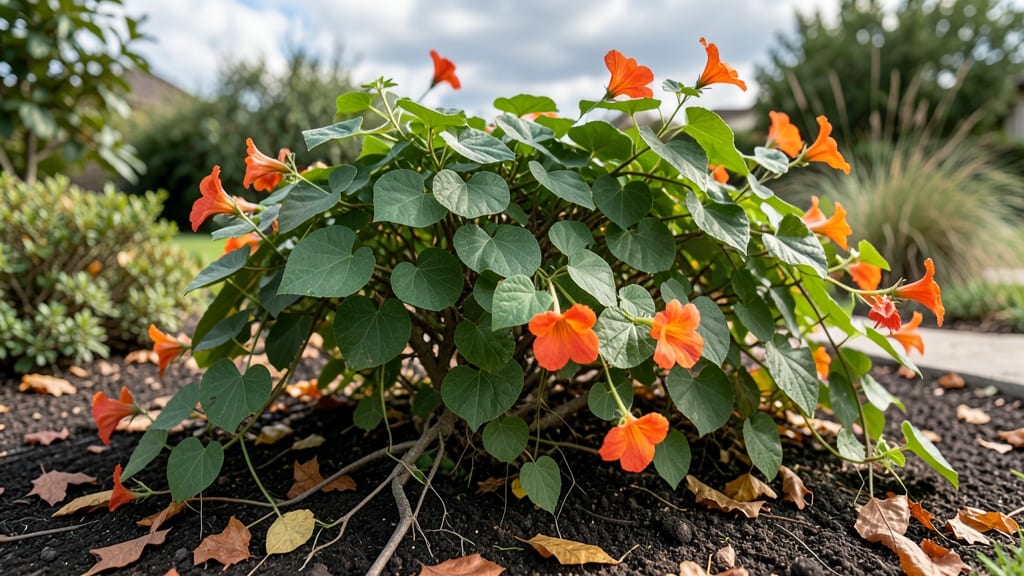
Mastering trumpet vine leaf identification could save your garden—and your health. 🌿 That heart-shaped leaf with its glossy surface and pointed tip is unmistakable once you know the key traits, but confusing it with poisonous lookalikes like moonflower could lead to costly mistakes.
The real trumpet vine (Campsis radicans) has deep green, smooth-edged leaves with 3-7 prominent veins radiating from the center. The underside is paler, and the leaf stems twist slightly.
Moonflower (Ipomoea alba), its dangerous doppelgänger, has rougher edges and a white, waxy coating on the underside—never the glossy sheen of trumpet vine.
Why this matters: Misidentifying trumpet vine can lead to wrong pruning, missed pest issues (like aphids hiding on undersides), or even accidental poisoning if confused with toxic vines.
Healthy leaves should be firm to the touch and free of powdery white residue (a sign of mildew) or dark spots (leaf spot fungus).
Once you spot these differences, you’ll prune with confidence, spot problems early, and enjoy those vibrant orange-red blooms all summer long. Here’s how to tell them apart for good.
Root Causes Behind Leaf Confusion
Identifying trumpet vine leaves can feel like solving a botanical puzzle—especially when similar plants trick the eye. The confusion often stems from a mix of natural look-alikes, environmental factors, and even human misconceptions.
Let’s break down the key reasons why distinguishing trumpet vine leaves from their poisonous doppelgängers can be so challenging.
Trumpet vine (Campsis radicans) shares striking similarities with other vines, particularly those in the Bignoniaceae family. These traits create a visual "camouflage" that plays tricks on gardeners and hikers alike.
- Leaf Shape & Arrangement: Trumpet vine leaves are compound (made of multiple leaflets) and grow in whorls of 7–11. Catalpa and Crossvine (another Bignoniaceae member) mimic this pattern, but their leaflets may be slightly broader or more rounded at the tips.
- Color & Texture: Both trumpet vine and Catalpa produce heart-shaped leaflets with a glossy sheen. However, Catalpa leaves often have a slightly paler underside and may develop yellowing edges in stress.
- Flower Resemblance: The trumpet-shaped blooms of Campsis are hard to mistake, but Honeysuckle (e.g., Lonicera sempervirens) can fool observers with its tubular flowers—though its leaves are opposite (paired at nodes) rather than whorled.
Pro Tip: 🔍 Count the leaflets and check the stem arrangement. Trumpet vine’s whorls of 7+ leaflets are a dead giveaway.
Leaves don’t stay static—they change with seasons, sunlight, and soil conditions. These shifts can blur the lines between trumpet vine and its look-alikes.
| Factor | Trumpet Vine | Look-Alikes (e.g., Catalpa) |
|---|---|---|
| Spring Growth | Bright green, hairless leaflets; rapid vine expansion. | Slower emergence; fuzzy undersides on young leaves. |
| Summer Stress | May develop yellow edges if overwatered, but veins stay prominent. | More prone to brown spots (fungal issues) or curling. |
| Fall Color Shift | Turns golden-yellow; retains shape until frost. | Often bronze or reddish; may drop earlier. |
Pro Tip: 🌡️ Observe leaf temperature. Trumpet vine leaves stay warmer to the touch in sunlight due to their thicker cuticle—look-alikes may feel cooler.
Some toxic plants thrive in the same ecosystems as trumpet vine, increasing the risk of misidentification. The most notorious culprits include:
- Milkweed (Asclepias spp.)
- Leaves are lance-shaped (not compound) and grow in opposite pairs.
- Milky sap is a red flag—trumpet vine has clear sap.
- Virginia Creeper (Parthenocissus quinquefolia)
- Leaves have 5 leaflets (not 7–11) and turn deep red in fall.
- Clings to surfaces with disk-shaped suckers; trumpet vine uses twining vines.
- Poison Ivy (Toxicodendron radicans)
- Leaves are 3-parted ("leaves of three, let it be") and grow in alternate patterns.
- Trumpet vine’s whorled, 7+ leaflets are a key differentiator.
Pro Tip: ⚠️ Memorize the "3-leaf rule" for poison ivy—any vine with 3 leaflets is a hard pass for trumpet vine.
Not all trumpet vines look identical—genetic diversity and hybrids can create "rogue" leaves that defy expectations.
- Cultivar Differences: Some cultivated varieties (e.g., Campsis × tagliabuana) have darker green or narrower leaflets.
- Hybridization: Crosses with Bignonia capreolata (crossvine) may produce leaves with intermediate shapes.
- Juvenile Leaves: Young trumpet vine plants often have smaller, paler leaflets that resemble honeysuckle.
Pro Tip: 🌱 Check the flowers. True trumpet vine blooms are bright orange-red; hybrids may have pink or yellow variations.
Our brains love patterns—and sometimes, we latch onto one trait (like leaf shape) while ignoring others. This tunnel vision leads to mistakes.
- Shape Focus: Zooming in on leaflet curves without checking arrangement or stem texture.
- Color Confusion: Assuming all glossy green leaves are trumpet vine, ignoring vein patterns or leaf base attachment.
- Seasonal Blind Spots: Comparing summer leaves to fall foliage without accounting for color shifts.
Pro Tip: 🎯 Use the "5-Step Check":
- Leaflet count (7–11 = trumpet vine).
- Arrangement (whorled vs. opposite).
- Stem texture (smooth vs. hairy).
- Sap color (clear vs. milky).
- Flower shape (trumpet-shaped vs. tubular).
Quick fixes for leaf confusion
Got tangled in trumpet vine leaf identification? Don’t panic—clear solutions await! Whether you’re dealing with toxic lookalikes, pest damage, or environmental stress, these targeted fixes will help you distinguish and care for your plant correctly.
Below, we’ve mapped common issues to practical fixes, along with prevention tips to keep your trumpet vine thriving.
Cause: Confusing trumpet vine (Campsis radicans) with toxic plants like milkweed or oleander can lead to dangerous mistakes—especially if you’re foraging or gardening near wildlife.
How to Fix It:
- 📏 Compare Leaf Shapes: Trumpet vine leaves are palmate (3-11 leaflets radiating from a single point) with smooth edges and pointed tips. Milkweed leaves are oval and opposite, while oleander leaves are long, narrow, and leathery.
- 🌸 Check the Flowers: Trumpet vine blooms in bright orange or red trumpet-shaped flowers (hence the name!). Oleander flowers are pink or white, clustered, and milkweed flowers are pale purple or greenish.
- 🌱 Root & Stem Test: Trumpet vine stems are woody and twining, while milkweed has a milky sap (toxic) and oleander stems are thick and brittle.
Prevention Tip: 💡 Bookmark a plant ID app (like PlantNet or iNaturalist) for quick on-the-spot verification. Snap a photo and cross-reference with a database to avoid mix-ups.
Cause: Aphids, spider mites, or Japanese beetles love trumpet vine leaves, leaving behind yellowing, spotted, or skeletonized foliage.
How to Fix It:
- 🚿 Blast Off Pests: Use a strong spray of water (from a hose) to dislodge aphids and spider mites. Repeat every 2-3 days until they’re gone.
- 🍳 Homemade Neem Oil Spray: Mix 1 tbsp neem oil + 1 tsp mild soap + 1 quart water. Spray leaves evenly (early morning or late evening). Reapply every 5-7 days.
- 🔪 Manual Removal: For Japanese beetles, drop them in soapy water after handpicking. Wear gloves to avoid skin irritation.
Prevention Tip: ✨ Encourage natural predators like ladybugs and lacewings by planting marigolds or dill nearby. These bugs feast on pests and keep your trumpet vine safe!
Cause: Overwatering, underwatering, nutrient deficiency, or temperature extremes can stress trumpet vine leaves, turning them yellow, brown, or wilted.
How to Fix It:
- 💧 Watering Woes:
- Overwatered? Let the soil dry 2-3 inches deep before watering again. Ensure pots have drainage holes.
- Underwatered? Water deeply until it drains from the bottom. Trumpet vines prefer moist but well-drained soil.
- 🍽️ Nutrient Boost: Feed with a balanced fertilizer (10-10-10) in spring and summer. For yellowing between veins (iron deficiency), use an iron chelate supplement.
- ☀️ Sunburn or Frost: If leaves are crispy or blackened, move potted plants to a shadier spot in extreme heat. In cold climates, mulch the base to protect roots.
Prevention Tip: 📊 Test your soil every 2 years to check pH and nutrient levels. Trumpet vines thrive in slightly acidic to neutral soil (6.0-7.0 pH).
Cause: Too much shade, lack of pruning, or poor sunlight causes trumpet vines to stretch weakly, producing small leaves and sparse blooms.
How to Fix It:
- ☀️ Maximize Sunlight: Trumpet vines need full sun (6+ hours daily). If indoors, place near a south-facing window or use grow lights.
- ✂️ Prune Strategically:
- After flowering, cut back 1/3 of the vine to encourage bushier growth.
- Remove weak or crossing stems to improve airflow and reduce disease risk.
- 🌿 Support Growth: Train vines on a trellis, arbor, or fence to guide their growth upward.
Prevention Tip: 🎯 Prune in early spring to shape the vine and remove dead wood. This keeps it healthy and blooming all season!
Final Pro Tip: 🌿 Keep a plant journal! Note when you prune, water, and fertilize. Over time, you’ll spot patterns and adjust care for a lush, pest-free trumpet vine. Happy gardening! 🌸
Frequently asked questions
How can I quickly tell trumpet vine leaves apart from poison ivy?
Trumpet vine leaves grow in whorls of 7-11 leaflets (never 3), while poison ivy has 3 leaflets arranged alternately. Also check the stems: trumpet vine twines clockwise, while poison ivy grows in a zigzag pattern and has hairy vines.
What do healthy trumpet vine leaves look like compared to diseased ones?
Healthy leaves are deep green, smooth-edged, and firm to touch with prominent veins. Diseased leaves show yellow spots (fungal leaf spot), white powder (powdery mildew), or blackened edges (bacterial infection). Dark spots with yellow halos indicate serious fungal issues needing treatment.
Why do some trumpet vine leaves look different from others in my garden?
Variations occur due to sun exposure (shadier leaves are paler), nutrient levels (yellowing indicates deficiency), or hybridization if planted near crossvine. Young plants also have smaller leaves that mature into the classic shape. Check soil pH and sunlight patterns to rule out stress factors.
Can I use trumpet vine leaves for anything besides decoration?
Yes! While not edible, trumpet vine leaves make excellent compost (nitrogen-rich) and can be used in herbal remedies (infusions for muscle pain). Some gardeners also dry them for natural dyes or use them as mulch. Just avoid touching if you have sensitive skin—some people report mild irritation.
What should I do if I accidentally pruned the wrong vine thinking it was trumpet vine?
First, check if the removed vine had milky sap (milkweed) or opposite leaves (poison ivy). If it was a non-toxic lookalike like catalpa, no action is needed. For toxic plants, wear gloves, double-bag the clippings, and dispose of them with household waste. Consult a local nursery for verification if unsure.