
Trees
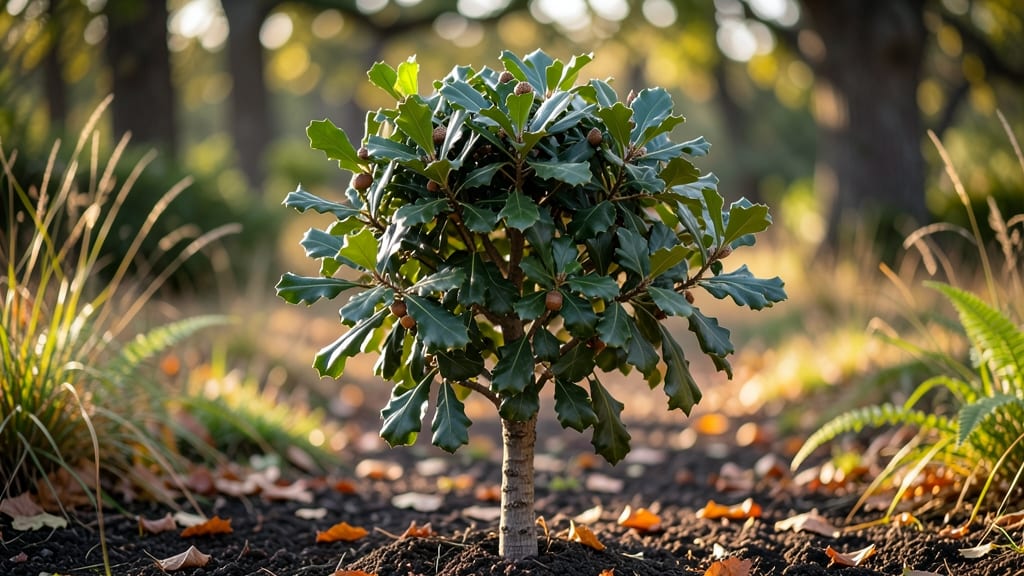
Growing an oak leaf bush transforms your yard into a four-season statement piece with almost no effort. 🌿 These plants—whether you choose Pyracantha coccinea 'Oakleaf' or a true oak shrub—deliver rich, lobed foliage that looks like miniature trees, plus berries that birds adore.
The best part? Once established, they thrive on neglect, making them perfect for busy gardeners or anyone tired of constant pruning.
Start with the right spot: full sun to partial shade and well-draining soil. If your yard has heavy clay, mix in compost to prevent root rot. Water deeply once a week after planting, then taper off—oaks hate soggy feet.
For variety-specific care, Pyracantha varieties need slightly more moisture, while true oaks (like Quercus shrubs) prefer drier conditions. The key is matching the plant to your climate: coastal areas handle more shade, while inland zones need more sun.
Pruning is minimal but strategic. In late winter, trim back any dead or crossing branches to maintain that natural tree-like shape. The berries—bright red or orange—appear in fall and last through winter, providing color when little else does.
You’ll end up with a low-maintenance plant that grows 3-10 feet tall, depending on the variety, and becomes the backbone of your landscape without demanding your attention.
Watch for powdery mildew in humid summers—spray with neem oil if you see white dust on leaves. Oak leaf bushes also attract deer, so consider a barrier if they’re a problem in your area.
Once established, these plants are nearly indestructible, rewarding you with year-round structure and seasonal interest. Start with one this spring, and you’ll wonder why you didn’t add more sooner.
📚 In This Guide
- What you need
- Instructions
- Tips and common mistakes
- Wrapping up and next steps
What you need
- ● Oak leaf bush (Quercus ilex or related species): 1 nursery-grown plant (3–5 gallons, 18–24" tall) or
- ● Seeds (if propagating from scratch—note: slow germination, 6+ months)
- ● Well-draining soil: Mix of 60% native soil, 30% compost, and 10% coarse sand or perlite (pH 6.0–8.0).
- ● Organic mulch: 2–3 inches of wood chips, pine straw, or shredded bark (retains moisture, suppresses weeds).
- ● Watering can or hose with a gentle spray nozzle (1–2 gallons per watering, deep but infrequent).
- ○ Fertilizer (optional but helpful for young plants): Balanced 10-10-10 granular fertilizer or
- ● Slow-release osmocote (apply once at planting).
- ● Hand trowel or small shovel (for digging holes 2x wider than the root ball).
- ● Garden gloves (to protect hands from thorns and rough bark).
- ● Pruners (bypass or anvil type) (sterilized with rubbing alcohol).
- ● Measuring tape (to ensure proper spacing: 10–15 feet apart for mature bushes).
- ● Sunlight assessment: Full sun (6+ hours daily) or partial shade (morning sun, afternoon shade in hot climates).
- ○ Drip irrigation system (optional but recommended): Automates watering for drought-prone areas.
- ● 💡 Test your soil first—oak leaf bushes thrive in sandy or loamy soil but struggle in heavy clay. Amend as needed!
- ● 🌡️ Avoid frost pockets—these shrubs tolerate cold (USDA Zones 7–9) but despise soggy roots in winter.
- ● ✨ Label your plant if propagating from seed—germination can take up to a year!
How to plant and maintain oak leaf bushes for year-round structure
Here's the straightforward approach I've used to keep oak leaf bushes lush and low-maintenance for decades.
🌱 Step 1: Choose the Right Location and Soil Conditions
Oak leaf hydrangeas thrive in partial shade to full sun—they tolerate morning sun with afternoon shade better than harsh afternoon exposure. I always plant mine where they receive 4-6 hours of dappled sunlight daily, especially in hotter climates. The key is avoiding midday sun that can scorch the leaves.
Prepare the soil by amending it with 2-3 inches of organic compost mixed into the top 12 inches of native soil. Oak leaf bushes prefer slightly acidic to neutral soil (pH 6.0-7.0). If your soil is heavy clay, add coarse sand or perlite to improve drainage. The roots need room to spread without sitting in soggy conditions.
🪴 Step 2: Plant at the Correct Depth and Spacing
Dig a hole twice as wide as the root ball but no deeper. This encourages roots to spread horizontally rather than settling at the bottom. Place the bush in the hole so the top of the root ball sits level with the surrounding soil—never bury the stem too deep, as this invites rot. I always tap the sides of the hole gently to remove air pockets before backfilling.
Space plants 4-6 feet apart for mature size. If you're planting multiple bushes, arrange them in odd-numbered groupings (3, 5, or 7) for natural visual balance. Water deeply right after planting to settle the soil around the roots. You'll know it's done right when the soil looks uniformly damp but not muddy.
☀️ Step 3: Water Consistently During Establishment
Keep the soil evenly moist but not soggy for the first 6-8 weeks after planting. Water when the top 2 inches of soil feel dry to the touch. Overwatering is the biggest mistake—oak leaf bushes develop root rot if their feet stay wet. I use a soaker hose set on low for 20 minutes, 2-3 times per week, to encourage deep root growth.
Once established, these bushes are drought-tolerant, but they reward consistent moisture with larger, more vibrant foliage. Mulch with 2-3 inches of wood chips or shredded bark around the base, keeping it 3 inches away from the stem to prevent rot. This helps retain moisture and regulate soil temperature.
✂️ Step 4: Prune Strategically for Shape and Health
Oak leaf hydrangeas need minimal pruning—just light shaping in late winter or early spring before new growth begins. I remove dead, diseased, or crossing branches first, cutting back to the nearest outward-facing bud. This keeps the bush open and airy, reducing humidity-related diseases.
For shaping, I never cut more than 1/3 of the plant's height in one season. The goal is to maintain a rounded, natural silhouette rather than a geometric form. If a branch grows too leggy, I trim it back to a strong lateral branch. You'll see new growth emerge within 2-3 weeks of pruning, signaling the plant is responding well.
🌿 Step 5: Fertilize for Vibrant Foliage and Blooms
Feed your oak leaf bush once in early spring with a balanced, slow-release fertilizer (10-10-10 or 20-20-20). Apply it 6 inches away from the stem and water it in thoroughly. Avoid high-nitrogen fertilizers—they encourage leafy growth at the expense of flowers. I also top-dress with 1-2 inches of compost in early spring to boost organic matter.
If your bush isn't blooming as much as you'd like, it might need more phosphorus. Switch to a 5-10-5 or 10-20-10 fertilizer in late winter to encourage flowering. Stop fertilizing by mid-summer to allow the plant to harden off for winter. You'll notice the difference in larger, more abundant blooms the following season.
Tips & tricks for perfect oak leaf bush care
These hard-won insights will help your oak leaf hydrangeas thrive with minimal fuss—just like my garden has for years.
Lighting Strategy: In Step 1, when positioning your bush, pay close attention to the 4-6 hours of dappled sunlight guideline. Morning sun with afternoon shade is ideal, but if you're in a hotter climate, I've found that east-facing locations provide the perfect balance. The key is avoiding the intense afternoon rays that can scorch tender leaves—think of it as giving your bush a gentle sunbath rather than a tanning session.
Soil Prep Secret: For Step 1's soil preparation, don't just mix in the 2-3 inches of organic compost—work it into the top 12 inches of soil thoroughly. I like to use a garden fork to loosen the native soil first, then blend in the compost. This creates a perfect root environment where your bush can spread its roots freely without hitting compacted layers. The slightly acidic to neutral pH (6.0-7.0) is crucial—you can test your soil with a simple kit from your local garden center.
Planting Depth Visual: In Step 2, when placing your bush in the hole, use this trick: the top of the root ball should sit level with the surrounding soil. To visualize this, imagine the root ball as a donut—the stem is the hole in the middle, and you want that hole to remain visible above ground. Burying too deep suffocates the plant, while planting too shallow exposes roots to drying out. After backfilling, gently tap the sides of the hole to eliminate air pockets that could disrupt root growth.
Watering Hack: For Step 3's watering routine, I've found that the 20-minute soaker hose method works best when applied in the early morning. This gives the roots time to absorb moisture before the heat of the day. During those first 6-8 weeks, I check moisture by sticking my finger 2 inches into the soil—if it feels dry, it's time to water. The goal is to keep the soil consistently moist but never soggy, which is where proper drainage becomes your best friend.
Pro Tips for Oak Leaf Bush
- These hard-won insights will help your oak leaf hydrangeas thrive with minimal fuss—just like my garden has for years.
- Lighting Strategy: In Step 1, when positioning your bush, pay close attention to the 4-6 hours of dappled sunlight guideline.
- Soil Prep Secret: For Step 1's soil preparation, don't just mix in the 2-3 inches of organic compost—work it into the top 12 inches of soil thoroughly.
Frequently asked questions
How fast does an oak leaf bush grow, and when will it reach maturity?
Oak leaf bushes are slow but steady growers—expect 12–24 inches per year under ideal conditions. Most reach mature height (6–10 feet) in 5–10 years, though some varieties like Quercus ilex (holm oak) may take longer. Patience pays off with their sturdy, evergreen structure!
How often should I water an oak leaf bush, especially in hot or dry climates?
Young bushes need deep watering 1–2 times per week (check soil moisture 2 inches down—it should be slightly dry but not bone-dry). Mature plants are drought-tolerant but appreciate weekly watering during dry spells. Mulch heavily (3–4 inches) to retain moisture and protect roots.
Do oak leaf bushes really require "minimal pruning"? What’s the best way to shape them?
Yes! They tolerate light pruning—focus on removing dead, diseased, or crossing branches in late winter or early spring. For shaping, prune just after flowering (if applicable) to avoid overthinning. Use clean, sharp shears and avoid heavy cuts—these bushes thrive with a natural, layered look.
What pests or diseases should I watch for, and how do I treat them?
Common issues include:
- Spider mites/scale: Spray with neem oil or insecticidal soap.
- Oak leaf blister gall (harmless but unsightly): Prune affected leaves in early spring.
- Root rot: Ensure well-draining soil and avoid overwatering.
Can oak leaf bushes survive winter in cold climates? What’s the hardiness range?
Most oak leaf bushes (e.g., Quercus palustris) handle USDA Zones 4–9, but younger plants may need winter mulch or burlap wrap for protection. Holm oaks (Quercus ilex) prefer Zones 7–10. If you’re in Zone 3–4, opt for dwarf varieties or container-grown bushes for flexibility.
Are there any good alternatives if I want a similar look but with faster growth?
If you love oak leaf bushes but want quicker results, try:
- Italian buckeye (Aesculus hippocastanum): Faster-growing, glossy leaves, but deciduous.
- Holly (Ilex spp.): Evergreen, thorny, and low-maintenance (but needs acidic soil).
- Boxwood (Buxus): Compact and easy to prune, but less cold-hardy.
Wrapping up and next steps
Growing an oak leaf bush is a rewarding way to add year-round structure and beauty to your landscape with minimal fuss. Whether you're drawn to its glossy foliage, resilience, or low-maintenance charm, this versatile plant thrives with just the right care—sunlight, well-draining soil, and occasional pruning.
Now that you’re armed with the knowledge, why not take the next step? Visit your local nursery, grab a healthy sapling, and give your outdoor space a touch of enduring elegance. Happy planting! 🌿✨